
Remnant – Issue No. 4
In Spain, the answer has increasingly been immigrants. Whole villages in "España vaciada," the emptied interior, have been brought back from the edge by families from Latin America and Morocco.


Global Efforts to Revitalize Rural Areas: Spain, Wyoming, Vietnam, China — and the Empty Houses of Japan
This week we're thinking about empty houses around the world, and the complicated puzzle of who, if anyone, comes to fill them.
Japan has one of the highest stocks of empty houses in the world. The 2023 national housing survey counted roughly nine million akiya — vacant homes — or about one in seven houses in the country, a figure that has doubled since 1993 and is projected to keep rising as the population ages. The vacancy rate is highest in the rural prefectures: 21.2% in both Wakayama and Tokushima, and over 20% in Kagoshima, Kōchi, and Ehime. These are largely the houses young people left behind for Tokyo and Osaka — the same migration that emptied the interior of Spain and is now thinning out small towns and rural areas in the United States as well.
We usually look at depopulation from the buyer's side: cheap house, big land, what a deal. This week we are taking a different angle. A hollowed-out village doesn't only need its houses bought — it needs enough children to keep the school open, enough riders to keep the bus running, a clinic and a shop that can still make payroll. Governments know this, and around the world they are trying very different things to reverse it.
In Spain, the answer has increasingly been immigrants. Whole villages in "España vaciada," the emptied interior, have been brought back from the edge by families from Latin America and Morocco. In rural America the same arithmetic is running in reverse: in Wyoming, where deaths will soon outnumber births, the one bright spot in the population numbers was international migration — until the state started cooperating with ICE, and people who considered themselves Wyomingites began to "self deport". In Vietnam and China, governments are implementing multi-year programs to pull mountain villages out of poverty with roads, electricity, homestays, and public funding. And in Britain there is a smaller scale version of the same migratory impulse increasing in the US— families "ditching England" for cheaper, emptier ground in Wales and Scotland.
Japan, meanwhile, has built one of the most generous sets of repopulation programs in the world, and the details aren't widely known outside the country. There are akiya banks — municipal databases of empty homes, listed for next to nothing. There is a national relocation grant that will pay a family that leaves greater Tokyo for the regions up to several million yen. There are towns that will hand you a renovation subsidy on top of that. The houses are nearly free; the country is willing to paying people to come back, or move there for the first time. There is, however, a big BUT – owning property does not guarantee (or have anything to do with) residency or visa status, so there is that.
This issue we are entirely in Japan, three houses across three islands. Along the way: how the akiya banks and the relocation grants actually work, what a foreign buyer is and isn't allowed to do, and — in the Lifestyle section — dried persimmons, Nagasaki champon, the five things we read this week that put all of this in context, and our usual conversation. Let's go.
Japan
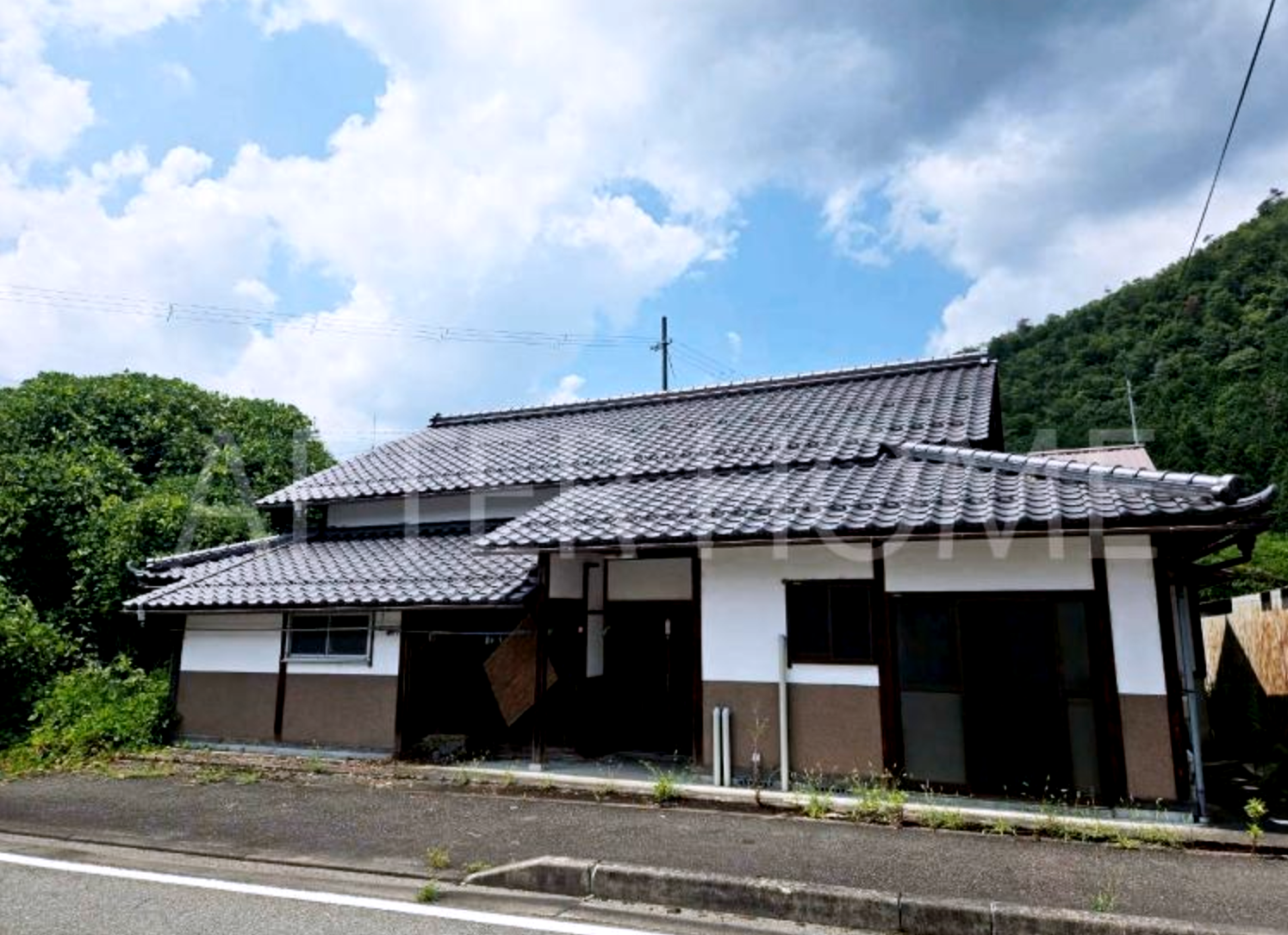
Featured: the renovated farmhouse in thatched-roof country
7K Home in Nantan City, Kyoto — $38,000
The home sits in Shizuhara, Miyama-chō, in Nantan City, Kyoto Prefecture — deep countryside in the north of the prefecture, roughly an hour and a half by car from central Kyoto, in a region famous for its kayabuki thatched-roof villages. The headline village, Miyama Kayabuki no Sato, is a nationally designated preservation district and one of Japan's best-known examples of a place that turned its old houses into the reason to visit: preserved roofs, working farms, a steady stream of tourists. It is an example of exactly the kind of small revitalization story this whole issue is circling.
The house itself is a 7K single-story wooden home built in 1960, with 114.04 m² of floor space on 242.72 m² of land — about 73 tsubo. ("7K" means seven rooms plus a kitchen; it is a big, generous footprint for the money.) It has been kept up and, better, recently improved: a 2017 renovation brought in a new system kitchen, bathroom, toilet, sink, and flooring, and the roof was replaced in 2010. It has the detail we always quietly hope for in an old Japanese house — a horigotatsu, the sunken, heated floor-well you tuck your legs under in winter.
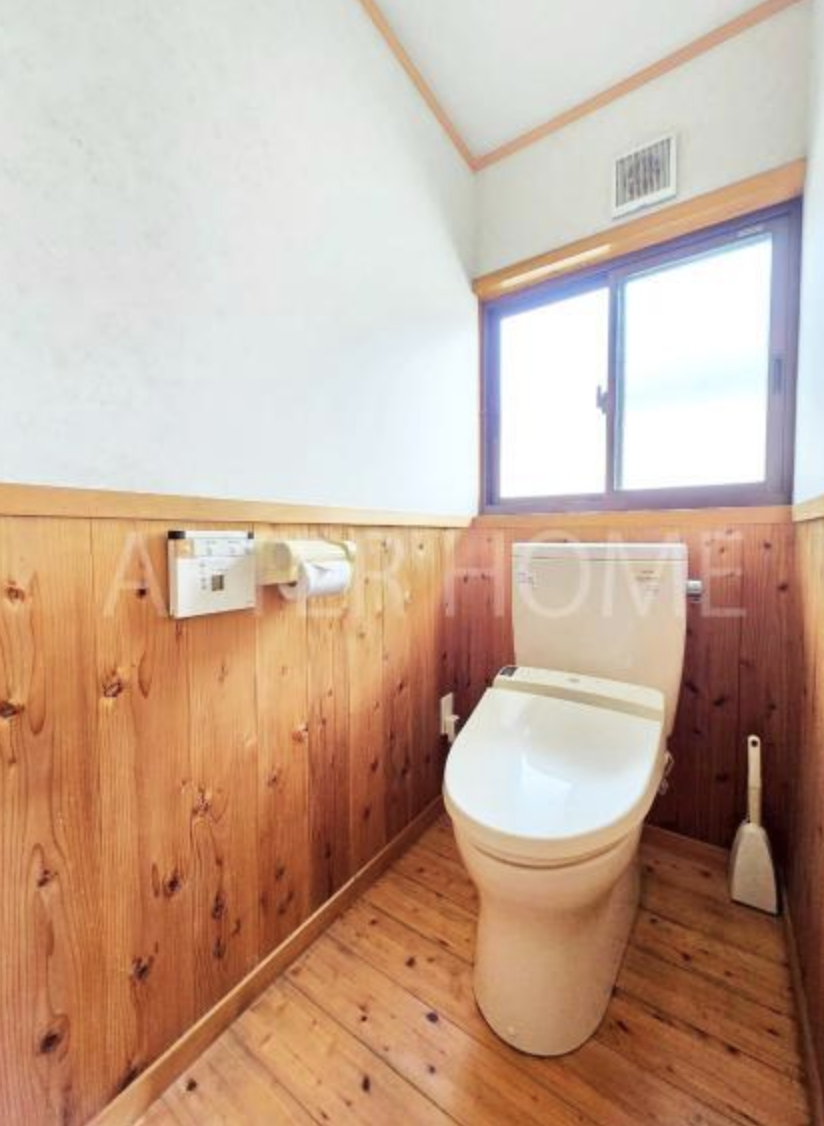
This one's move-in ready. So many of the cheap houses we feature come with major renovation requirements.This one doesn't. Including a photo of the toilet because look at those gorgeous floors and walls and light, and let's face it, that's real life.
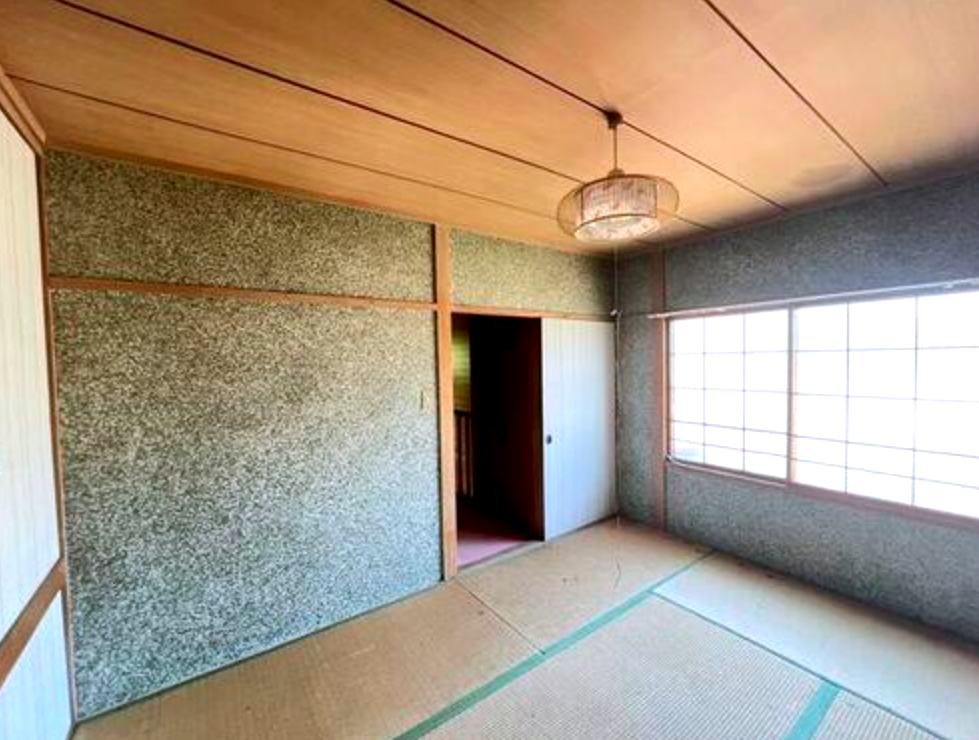
North: the port-town house in a place with real winters
Classic 4LDK Home in Otaru, Hokkaido — $5,122
Now we go all the way up. Otaru is a coastal city just northwest of Sapporo, on the Sea of Japan side of Hokkaido — a place with a genuinely romantic streak, all canal warehouses, glassworks, herring-boom architecture, and some of the best seafood markets in the country. This house sits in a quiet residential pocket of Shinko 5-chōme: a 4LDK (four rooms plus living-dining-kitchen) older wooden home, the kind with big windows and original woodwork and a layout that belongs to an earlier time, aka it needs LOTS OF work.
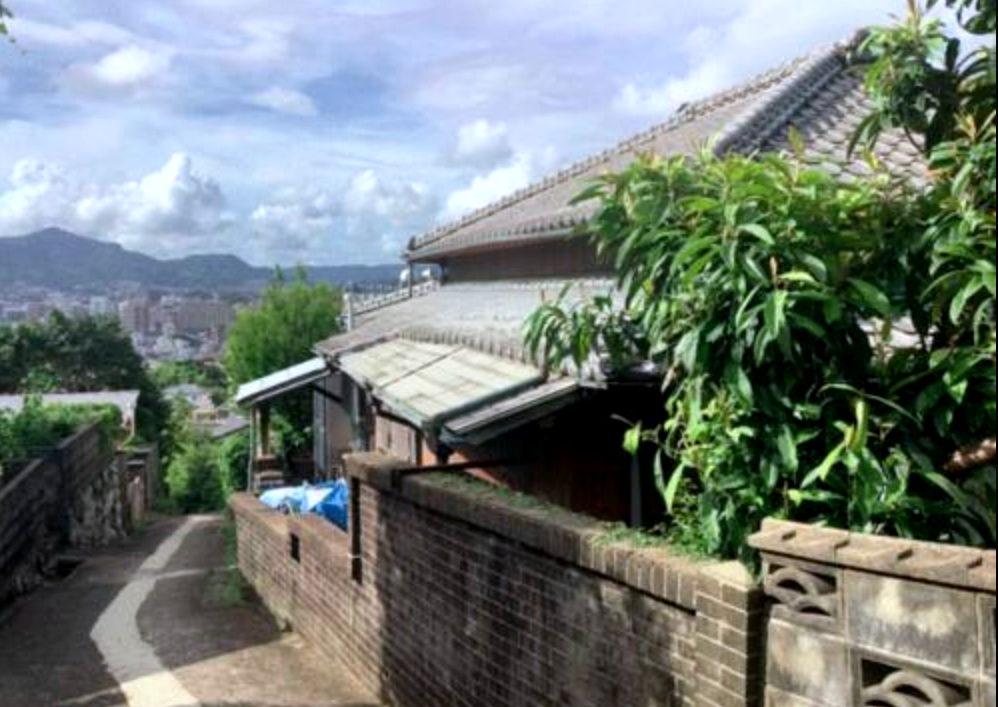
South: the sixty-eight-dollar house
Traditional Home in Sasebo, Nagasaki — $68
And now the bottom of the map, and the number that made us read it twice. Sasebo is a port city at the far southwestern edge of Japan — Kyushu, Nagasaki Prefecture. This listing is a traditional 4DK home in the Daikokuchō neighborhood: tatami rooms, wooden interiors, shōji sliding doors, connected to public water, electricity, and gas. Parking is "to be confirmed." One of those lines that makes us raise our eyebrows and giggle nervously.
The price is $68, the price of dinner for four at a burger joint. This math is probably about an old house in a waning town that has has become a liability rather than an asset. The house is close to free because the responsibility is kind of enormous – the saying can of worms likely applies. You would be committing to renovation, property taxes, upkeep, and the paperwork of an international purchase, and who knows what else. If any house in this issue is going to make you open a spreadsheet at midnight, it's this one, the calculation being: is it worth it?
The Fine Print
A few things from our research this week, in case you want to keep going.
The akiya bank is the front door. Most rural Japanese municipalities run an akiya bank (空き家バンク) — a public register of vacant homes that owners want gone, listed at prices that frequently start in the low thousands of dollars and sometimes at nothing. They are run town by town, often only in Japanese, and the listing is genuinely only the beginning: you generally work through a local agent or the town office to actually transact. Sites like Old Houses Japan exist to bridge that gap for foreign buyers, since akiya banks themselves are not set up for an English-speaking audience.
The national relocation grant is real. Japan's central government runs a Regional Revitalization relocation support program (地方創生移住支援事業) aimed at thinning out greater Tokyo and refilling the regions. The structure: up to ¥1,000,000 for an individual, or up to ¥1,000,000 per household, plus an additional sum per child under 18 — that per-child top-up was tripled from ¥300,000 to ¥1,000,000 in April 2023, so a family with two children can reach roughly ¥3,000,000 (about $20,000). It's administered by municipalities — on the order of 1,300 of them, covering most of the country outside the Tokyo–Kanagawa–Osaka core — and it comes with real conditions about where you move from, where you move to, and (usually) working or starting a business there. Read the fine print of the specific town before you count on a number. A good starting point: MailMate's 2026 guide to Japan's relocation grants and Akiya Japan's overview.
Renovation subsidies stack on top. Many municipalities offer their own akiya renovation grants — frequently in the ¥1,000,000–¥5,000,000 range — to anyone willing to fix up and occupy an empty house. These are separate from the relocation grant and separate again from the purchase price, which is how you get the genuinely startling combinations: a near-free house, a renovation subsidy, and a relocation grant, all at once, in the same town.
On being a foreigner. Japan places no nationality or residency restriction on buying property — a non-resident foreigner can own a house and the land under it outright. The catch worth saying clearly: buying a house does not grant you a visa or the right to live in Japan. Ownership and immigration are two entirely separate systems, and the second one is the harder one.
Lifestyle & Culture Notes
What Would It Actually Be Like?
Three houses, three different versions of daily life in Japan.
Miyama, Kyoto — $38,000. This is the one you could move into without a renovation, and the one most committed to the countryside. You're deep in the hills of northern Kyoto Prefecture, about an hour and a half from the city. There's a bus stop nearby, but rural bus service is thin — realistically you'd want a car. Schools, a post office, the JA farm co-op, and markets are all close. Winters in the Tamba highlands are cold and snowy. The community is small, aging, and oriented around the preserved thatched-roof village nearby; settling in would take patience and learning Japanese.
Otaru, Hokkaido — $5,122. Otaru is a city — canal, port, glassworks, fish market — about forty minutes by train from Sapporo, so you can walk to shops and commute to a major city. The catches are the house and the winter. The house needs renovation, with insulation the first priority, and Hokkaido winters are long and snowy. If you want urban convenience on a small budget and don't mind a real project and cold weather, this is the one.
Sasebo, Nagasaki — $68. The cheapest house and the mildest weather. Sasebo is a Kyushu port city near the Kujukushima islands, with a US naval base that gives the place an international texture and more English than you'd expect. That naval role is old, and it has a heavy history: as one of Japan's main naval arsenals, Sasebo was firebombed on the night of June 28–29, 1945, and roughly half the city burned. It is ~60 km south of Nagasaki City where the second atomic bomb was dropped. Daily life is now considered quiet and coastal with a residential street near schools and shops, ferries out to the islands, winters far gentler than Hokkaido's. At $68 you'd be taking on a big renovation project and the responsibilities of ownership, not a finished home, but in a mild climate, by the sea.
Recipes from the Map
Autumn in rural Kyoto means persimmons, kaki apparently traditionally hung in under farmhouse eaves to dry, which sent us down the hoshigaki rabbit hole. Hoshigaki are Japanese dried persimmons: you peel firm, astringent Hachiya persimmons, hang them by their stems, leave them alone for a week, and then gently massage each one for a few seconds every day for about six weeks until a pale natural sugar bloom forms on the skin. The result is a kind of self-candied fruit.
From the far south, Nagasaki champon, the city's signature noodle dish. Pork, seafood, a pile of cabbage and bean sprouts, springy noodles, and a broth made unexpectedly creamy with a splash of milk. It's a whole meal in one bowl.
What we're reading
Five things from our tabs this week.
- Latino Immigrants Help Revive Spain's Empty Villages, via Colombia One. In towns like Burbáguena, a refugee-reception center and arriving families pushed the population from 200 to over 350, and the pharmacy, bar, and bakery reopened because there were finally people to need them. Repopulation, one family at a time.
- As immigrants self-deport from Wyoming, small towns could get 'hollowed out', via Wyoming Public Media. The same arithmetic, running backwards. Nearly a third of rural Wyoming's recent growth came from international migration — and now, after the state began cooperating with ICE, people who built whole lives there are leaving anyway. Read it next to the Spain piece, it really begins to put things into perspective.
- From poverty trap to model village: one scholar's 10-year mission in rural China, via Xinhua. A development professor turns a Yao village in Yunnan into homestays and "rural CEOs," and per-capita income climbs from ¥4,000 to over ¥26,000 in a few years. State-driven and very on-message, but the mechanics of how you make a dying village a place worth staying are fascinating.
- Leverage to improve the lives of highland communities, via Vietnam.vn (originally Báo Quân đội Nhân dân). The state-program view, on the ground in Son La province: more than 5,800 billion VND (roughly $230 million) through Program 1719 over 2021–2025, building roads, water systems, and housing across ethnic-minority mountain communes.
- The families ditching England for Scotland and Wales, via The Telegraph. Internal migration toward less expensive regions, where a detached home with land can cost what an apartment (flat) costs back home.
Live from our group chat
This is the part where we let you eavesdrop on the week's rabbit hole.
Malia: I spent last night pricing flights to Sasebo.
Wally: You do this every issue. Last month it was the nearly-free goat shed in Portugal and can I make a living on goat husbandry.
Malia: The goats were a serious plan. Cheese, milk, body care products... I love that daydream for me. The actual work, not so sure about.
Wally: The thing I keep snagging on is that a house is only that cheap because the town is struggling, and the towns that figured out how to make people come aren't cheap anymore.
Malia: And the irony of the fact that some of these towns are now thriving by welcoming immigrants while other places are busy deporting them...
That is issue four. Thanks for reading.
Until next week, Wally & Malia
Remnant is a weekly newsletter about distressed and beautiful houses around the world. We are not real estate agents. We just got a little obsessed and started digging. What will you do with what we find?