
Remnant — Issue No. 3
We have been thinking more generally about infrastructure and resources, things you can't really know until you spend several seasons in a place.


Off-Grid Houses in Portugal & Italy: Water Is the New Luxury
This week we're thinking about water. LA's water system is one of the great feats of early 20th century engineering and one of the great feats of early 20th century theft, depending on who you ask. We pipe it in from the Colorado River and the Sacramento Delta and the Owens Valley, we use it, and most people don't think about it too much unless unless there's a drought and that jerky neighbor (you know the one) is watering the 'lawn.'
We have been thinking more generally about infrastructure and resources, things you can't really know until you spend several seasons in a place. We came across an off-grid, fully functioning and self sustaining property near a lake with a borehole that provides water, and that put all of the properties connected to municipal water into perspective: what happens if it runs out? Our Portugal properties are central, halfway between Lisbon and Porta. As you'll see, the featured property opted out of public amenities on purpose. Our Bergamo (Northern Italy) property opted out by virtue of its extreme remoteness. It's included mostly for humor's sake, but also – preppers and/ or fugitives from the law take note! One never knows, maybe we have a reader in search of just such a remote mountain property accessible only on foot by mule track. Either way, the through-line is the same: a house that does not depend on the grid is a different kind of house in 2026 than it was twenty years ago. Food for thought.
Here are some fun facts about water, and then we will get to the houses. Fresh water is 2.5 percent of all the water on Earth. Less than 1 percent of that is accessible to humans — the rest is locked in glaciers or stored in aquifers so deep it takes centuries to replenish. The UN has been saying for some time that the majority of the world could face water shortages by the mid-2020s. The mid-2020s is now. Meanwhile, in the green hills of central Portugal, about five minutes from a major reservoir, there are two properties — one fully off-grid with producing fruit trees (the interior is beautiful!), one raw land with perfect goat home waiting for a plan — and both of them have their own private water supply.
We are not suggesting you buy land for the water rights. We are simply noting that a property with private, deep-source water in a drought-adjacent country feels somehow soothing.
This issue we are in two countries. First Portugal, in one small corner of the interior, at two very different price points: a fully functioning off-grid quinta with two houses, a 40-tree olive grove, and a 150-meter borehole; and a plot of fertile terraced land that by LA standards is looking pretty good. Then Italy, top and bottom — a farmhouse in the Bergamo Alps you can reach only on foot, and a truly charming southern listing down in Sicily. Along the way we have the practical details on Portugal's short-term rental license, some things we read about water, straw houses, and 'farm-to-shelter' architectural design. And of course, the lifestyle section at the bottom with quinces, figs, and our ongoing conversation.
Portugal
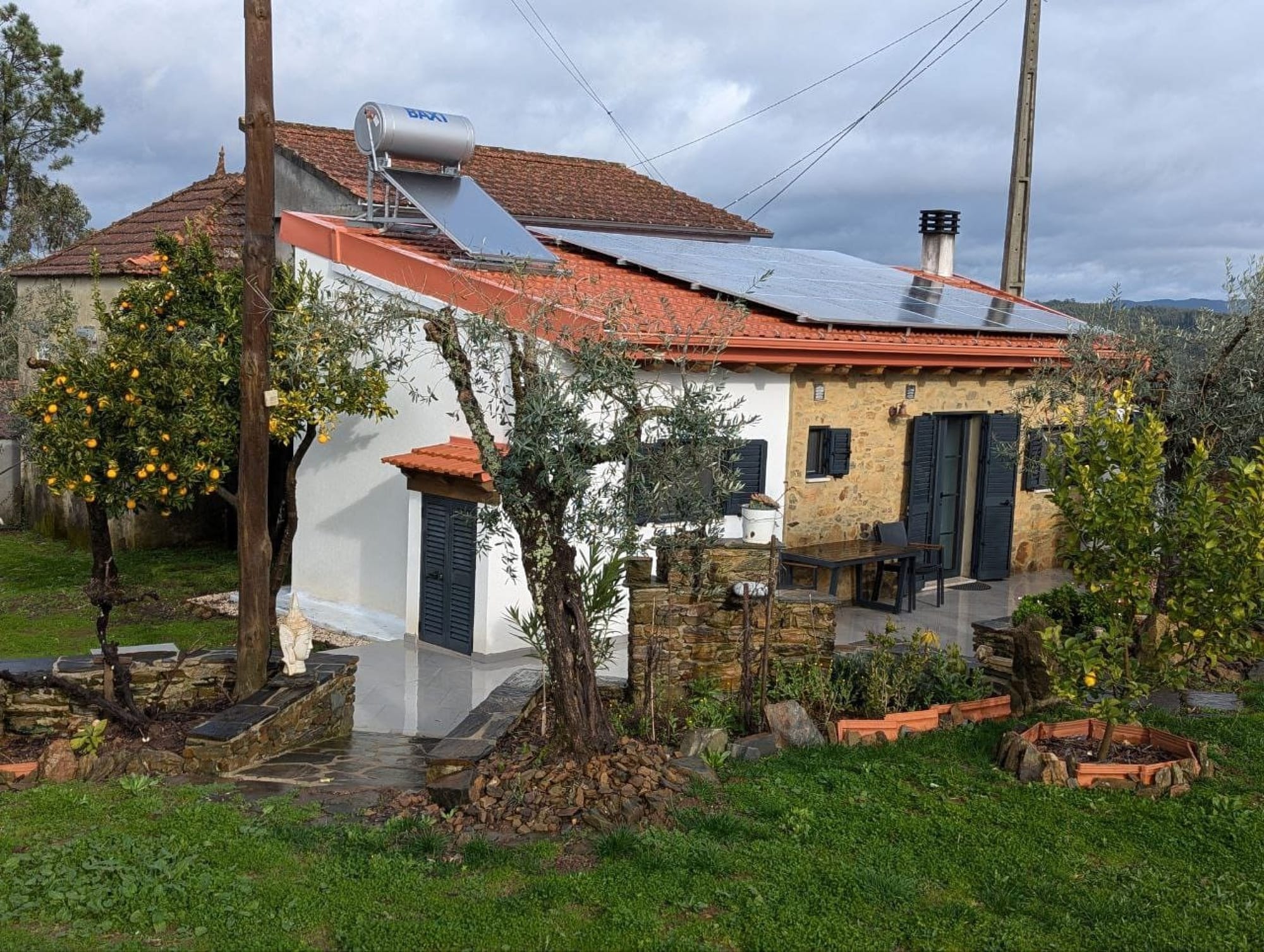
Featured: off-grid, on water, five hundred meters from a lake
Near Pedrógão Grande, Central Portugal · €299,000 (~$323,000)
This property in Pedrógão Grande sits in the forested interior of central Portugal, in the Leiria district, about 45 minutes from Coimbra. The town has around 3,500 people. It was also the site of the 2017 fires that were the deadliest in Portugal's modern history. That matters here because it is part of why you can still find land in this region at these prices, and it is part of what you are agreeing to when you buy it. Fire risk in interior Portugal is something to be seriously considered.
The Portuguese term 'quinta' originally meant a property that produced one-fifth of its harvest for the landlord. Now it just means a rural estate. This one sits on 3,805 square meters of productive land, about 500 meters from the Barragem do Cabril reservoir. The orchard contains lemons, oranges, mandarins, grapefruit, blood oranges, apples, plums, persimmons, figs, cherries, peaches, quinces, pears, pomegranates, walnuts, sweet chestnuts, hazelnuts, old grapevines for wine and table grapes, and 40 olive trees. Underground water lines run to multiple points across the property, with a dedicated tank for irrigation storage.
The property has two structures. The smaller one — 45 square meters, move-in ready, built in 2023 by German contractors — is the house you live in while you figure out the second. It has a solar thermal system, cork insulation, double-glazed windows, a fitted kitchen, a Danish wood-burning stove (Justus brand), and raised sleeping platforms in both the living area and the bedroom. It is efficient and compact and genuinely lovely and comfortable. The larger house is 90 square meters over two floors, partially renovated, currently used as a studio and storage. Both floors are independent and can be adapted separately, including for AL rental accommodation (Alojamental Local, transl. local lodgings.)
The part that makes this a different kind of property is the water. The entire quinta runs off a 150-meter deep groundwater borehole into bedrock. That depth matters. Shallow wells and surface sources drop in drought years. A 150-meter borehole reaches aquifer water that takes decades to deplete. The property also runs entirely off-grid on a Studer photovoltaic system with six lithium batteries and two 4,000-watt inverters, storing over 14 kWh of power. Both water and electricity connect to the municipal mains as a backup.
€299,000 is not the cheapest number in this newsletter. What you would be buying here would be a sustainable yet comfortable and aesthetically pleasing lifestyle: two structures, a producing orchard, a proven off-grid power system, private water from a 150-meter borehole – all ~ 500 meters from a lake. There is also a lower section of the land with a small woodland, pre-installed electricity and water hookups, and room for a campsite or a few AL cabins if you want to run those numbers. Oh, and there's also a very cute pool.
More from Portugal
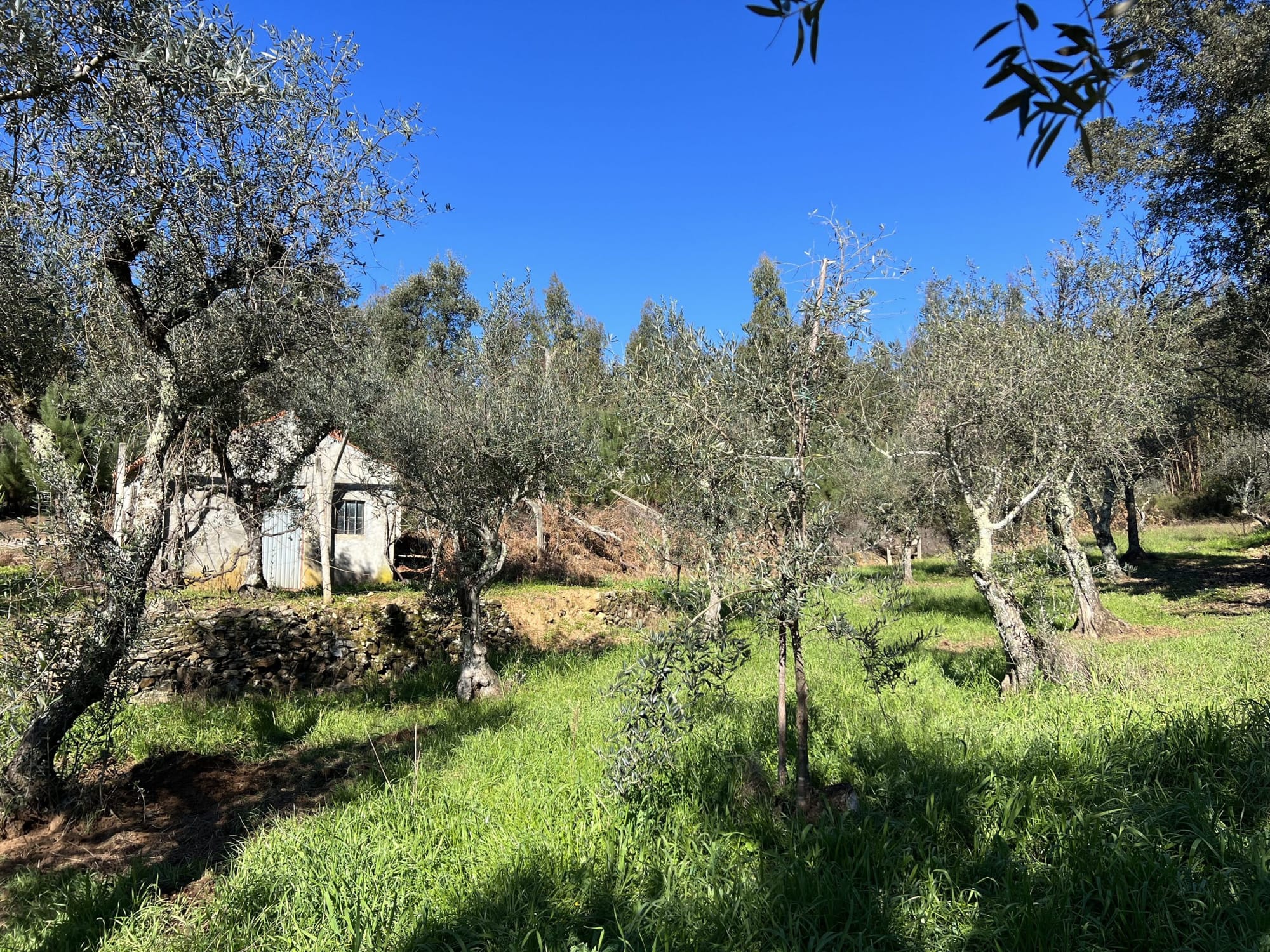
Vale do Forno, near Pedrógão Pequeno · €39,000 (~$42,000)
This one's the goat-venture option! Note that it does have water, which goats and other living things need. (Note, you will probably also need a house for yourself). Below, find a fun article via Dwell about the route a Washington D.C. couple took for their new build, sourcing local materials like they saw on Chef's Table. Vale do Forno is a plot of 8,690 square meters of terraced agricultural land, forest, and fruit trees, about five minutes from both the Barragem do Cabril and the Barragem da Bouçã. There is a small stone outbuilding on the property, 16 square meters, in good condition. The catch: it is not registered as a residential building and cannot legally be used as one. The land itself has its own water from both a well and a borehole — two sources, more water than the current use requires — and good sun exposure and a forest behind it that provides firewood. Electricity and sewage would be your project.
The seller mentions the possibility of purchasing the adjacent plot, over a hectare of additional land, and that by combining the two parcels it becomes possible to build a permanent residence on the property. That is a construction project, not a renovation — a different scope and a different category of commitment. But at €39,000 for the base parcel, with its own water supply and nearly a hectare of producing land, it is the kind of listing that makes you want to click 'save.'
Italy
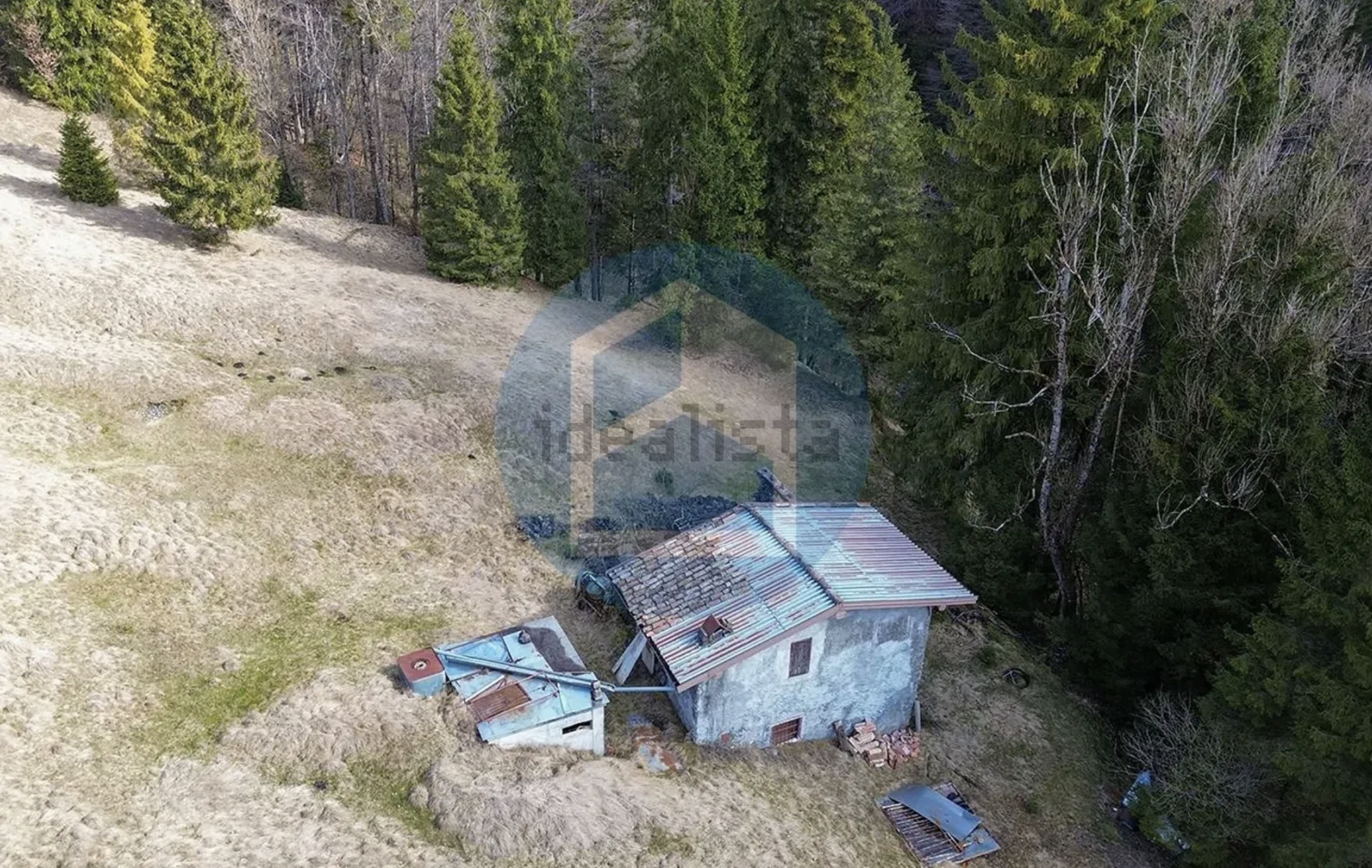
North: the alpine farmhouse you can only reach on foot
Songavazzo, Bergamo Alps (Lombardy) · €14,000 (~$15,000)
This is the one that made us LOL, and then made us think. Songavazzo is a small municipality in the Alta Val Seriana, at the foot of Monte Pora, in the province of Bergamo — proper northern Italy, alpine and green and steeeeeeep. The listing is a partly renovated stone farmhouse: about 20 square meters on the ground floor, about 20 on the first floor, plus a 10-square-meter external storage room. Part of it is renovated. Part of it, in the listing's own words, is dilapidated. And it comes with roughly 50,000 square meters — five hectares — of sloping land.
The property is accessible only on foot. To get there you drive to the town of Onore, where the paved road runs out, and then you continue along a mule track up the valley — about five kilometers of walking. There is no driveway. There will not be a driveway. Everything you bring in, you carry or you load onto something with four legs. The agent's own pitch, which we could not improve on, reads: "Ideal solution for those who desire an isolated and not easily accessible property."
This is a partially ruined remote hideaway in the Alps. The price is what radical inaccessibility costs in 2026: almost nothing, because almost no one will sign up for this kind of thing these days. But the thing that makes it impractical is the same thing that makes it the purest version of this issue's idea. A five-kilometer mule track is its own kind of off-grid. No road means no traffic, no neighbors arriving by car, no infrastructure to depend on because there is no infrastructure to reach you. Whether that is a nightmare or the entire point depends entirely on who you are, and what you are looking for. If you're considering this one, maybe watch the 2022 film The Eight Mountains first.
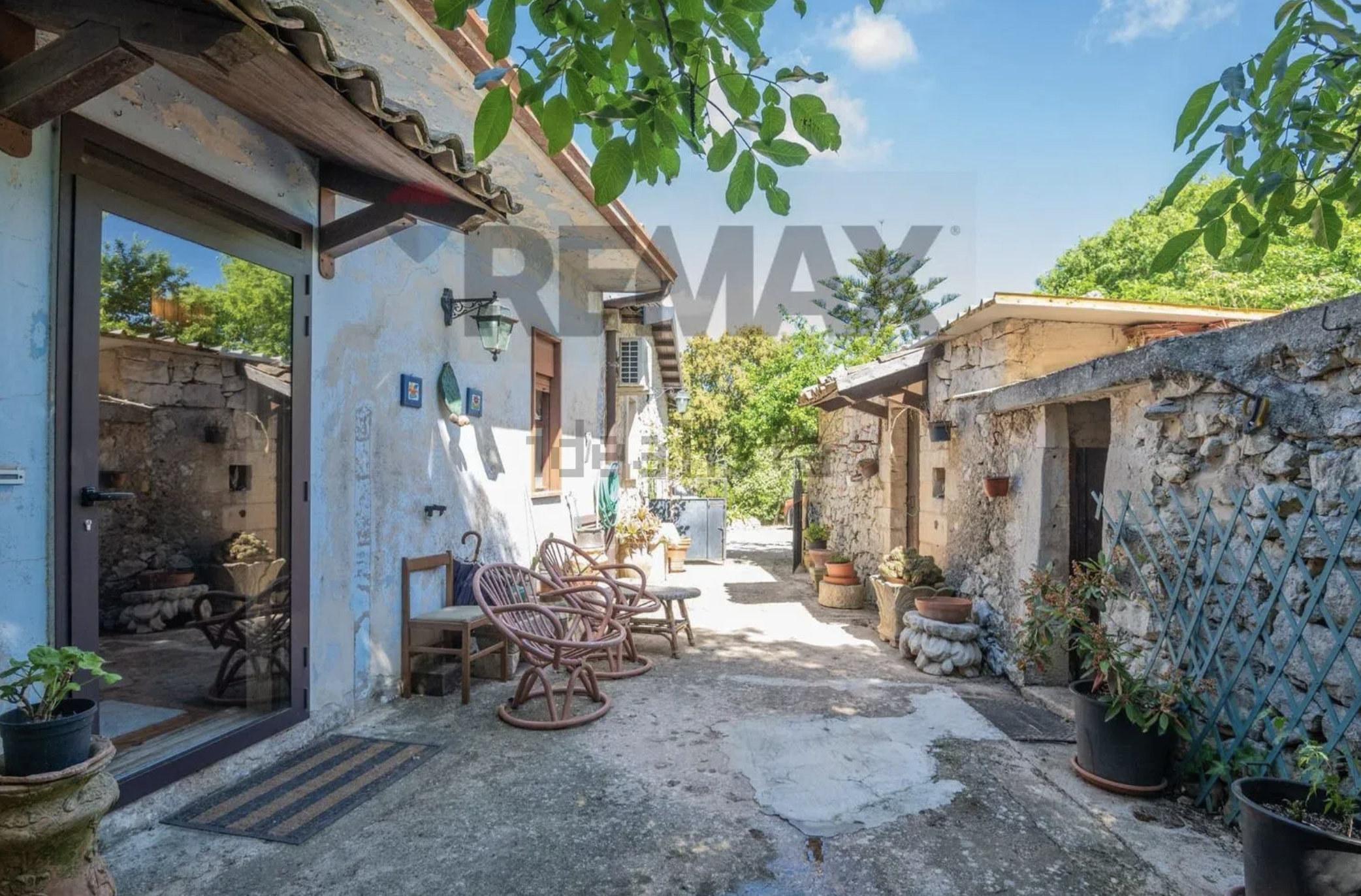
South: the charming one, in a place that does not see much rain
Contrada Bruscè, Ragusa, Sicily · €290,000 (~$313,000)
Now we go to the bottom of the map. Ragusa is in Sicily's far southeast, a baroque city in a province known for stone, cheese, and some of the prettiest hill towns in the Mediterranean. This listing is the opposite of the mule-track farmhouse in nearly every way. It is a traditional Sicilian rustic house — casa rustica — in Contrada Bruscè, a residential area minutes from the city center, near supermarkets, schools, and main roads. You drive in through a large private gate. Nothing about it is hard to reach.
Here is what you get for €290,000. The plot is about 1,481 square meters, walled in the characteristic Sicilian dry stone, planted with ornamental and mature trees. The main house is roughly 112 square meters of traditional masonry under a pitched roof of Sicilian tile: a central living room, kitchen, two bedrooms, a bathroom, and an oven/laundry room. There is a separate accessory building of about 89 square meters — currently the kind of flexible space the listing calls a storeroom, annex, workshop, or taverna. And there is real upside in the dirt: the plot sits in an approved subdivision plan with residual building rights — up to roughly 200 square meters of permitted build and 575 cubic meters of volume — so a buyer could expand or add a second structure.
So why is this in an off-grid issue? Because of what it does not have, and where. This house has functional mains water, electricity, and sewage — it is a normal, connected home. But it is a normal connected home in Sicily, which spent 2024 in its worst drought in nearly two decades, declared a state of emergency, and put up to two million people on water rationing, with tap water in many towns arriving only every several days. Reservoirs across the island ran near empty; the region is now considered to be in a state of chronic drought emergency. Ragusa province sits in the dry southeast. The point this property makes — without meaning to — is the inverse of the Portuguese quinta's. The quinta is expensive and remote but owns its water outright. This house is comfortable and connected and depends entirely on a public supply that is, right now, under significant strain.
It is a lovely house. We would want to know whether there is room — and budget — for a well, a cistern, or rainwater capture before we fell in love with it. Also, we want to pose the question: what is the value of community in times like these? From a sustainability perspective. Seems like something worth considering.
The Practical Details
A few things from our research this week, in case you want to keep going.
Portugal's Alojamento Local (AL) is the country's short-term rental license — the legal path to running something like an Airbnb on your property. Getting one requires a fiscal number (NIF), registration with the local câmara (town hall), a physical inspection, and fire safety compliance. The rules tightened in 2023 after concerns about the program's effect on housing supply in the cities, but the restrictions apply primarily to urban centers — Lisbon, Porto, and a handful of coastal municipalities. In rural interior zones like Pedrógão Grande and Pedrógão Pequeno, the AL remains a relatively accessible path, and the kind of property that comes with an orchard, lake views, and a woodland camping area is exactly what the short-term rural tourism market is currently looking for. Here's a place to start: The Complete 2026 Guide to the Alojamento Local (AL) License in Portugal
Portugal's borehole registration is a piece of the puzzle worth knowing about. Private boreholes in Portugal must be registered, In Portugal, groundwater abstraction is licensed by APA (Agência Portuguesa do Ambiente) through the regional ARH, via a water-use title (TURH); applications go through the SILiAmb portal. SNIRH is the national water-resources information system. A registered borehole is an asset that appears on the property's paperwork and counts in any future sale. Consult the National Hydric Resources Information System.
The Lifestyle Section
A view from four windows
You stand at the window, gazing out upon your new home.
From the Portuguese quinta, an orchard heavy with fruit running down to the Barragem do Cabril, where on a 38-degree July afternoon people swim off the warm rocks.
A few minutes away at Vale do Forno, terraces of fruit and forest with their own water and a tidy little stone outbuilding that, legally speaking, can't be a human dwelling — but is, by happy coincidence, a goat house ready to go.
From the Ragusa house, baroque stone and morning coffee in the piazza, the Mediterranean a half-hour south at Marina di Ragusa.
And from the Bergamo farmhouse, the Alta Val Seriana opening out cool and green in summer, silent under snow in winter replete with alpine huts and grazing meadows and not a single car.
Four windows, four possible lives.
You look down.
What shoes are you wearing?
What we're cooking
The orchard at the Quinta has quinces trees! Quince is almost exclusively a cooked fruit as raw, it is hard and astringent and will likely make your face pucker. Cooked, it turns pink and perfumed and tastes like something between an apple and a rose. In Portugal they make marmalada from it, which is the origin of the English word marmalade. We want to make it, too.
Also, the property has fig trees, and fig season in central Portugal runs August through October. A simple fig jam from figs you grew yourself, on bread from the market in Pedrógão, is the kind of thing you wax poetic about at dinner parties for approximately the rest of your life.
What we're reading
Here are four things from our tabs this week.
- A “Farm-to-Shelter” Home Asks: Why Can’t Architects Make Buildings the Way Chefs Approach Food? via Dwell. Diary of a 'brown house.'
- Beware of Wolves, but Straw Houses Could Help With Climate Change via New York Times. Probably not the best idea for fire prone areas – but maybe a good fit for the Alps!
- Climate change is the key driver of extreme drought in water-scarce Sicily and Sardinia, via World Weather Attribution. The scientific version of the thing the Ragusa listing made us nervous about: the 2023–24 Sicilian drought was made roughly 50 percent more likely by human-caused climate change, and the island's reservoirs are not bouncing back. Read it next to any southern-Italy listing.
- The Portuguese government is maintaining the ‘Emprego Interior Mais’ programme via Rural Digital Nomads. The program offers up to €6,000 for moving to and working in qualifying rural interior regions. Pedrógão Grande and its surrounding municipality are in the qualifying zone.
Live from our group chat
This is the part where we tell you what the rabbit hole looked like for us this week.
Wally: The whole borehole thing is fascinating. One hundred and fifty meters is deep. For reference, the Eiffel Tower is 330 meters and you can see it from across the city. The one beneath this week's quinta is nearly half an Eiffel Tower going straight into the ground. And there's an irrigation system to the orchard! I sent Malia the listing and she replied almost immediately with a recipe for quince paste. We are doing great.
Malia: Then I sent the €14,000 one in the Alps and he genuinely thought I'd lost my marbles. I was like the only catch is that you have to walk five kilometers up a mule track to reach it. I keep picturing the moving day. I keep picturing carrying my worldly belongings, just a couple of them, up that mountain on my back. What would choose to bring?! I really like the Sicily place. Tempting.
That is issue three. Thanks for reading.
Until next week, Wally & Malia
Remnant is a weekly newsletter about distressed and beautiful houses around the world. We are not real estate agents. We just got a little obsessed and started digging. What will you do with what we find?