
Remnant – Issue No. 26


A zero-yen house in Toyama, a 1954 village school near Tomar, a Connemara schoolhouse and a railway shed in the Charente, plus how change of use works in France
We came across a number of interesting articles this week, among them a piece about Kamiichi, a town on the Sea of Japan side of the country that is apparently giving away houses. According to Metro Mode, a Swedish lifestyle site, when heirs in Kamiichi don't want to keep paying property tax and upkeep on a parent's empty house (see Issue 24), they can hand it to the town's zero-yen house bank, and the town will find someone gung ho to move to the countryside and pay those taxes.
On this side of the pond, the state of Iowa recently committed more than $18.5 million in historic preservation tax credits to eight historic buildings. Among them, Burlington's 1910 high school, later Apollo Middle School, which sat empty for decades and is about to become 45 affordable apartments for folks age 55 and older. The Davidson Bros. Company Warehouse (1901) in Des Moines will be office space, and the Union Bakery building in Iowa City, built in 1862, will be transformed for mixed commercial and residential use (apartments above storefronts). In Dubuque, three rundown rowhouses from 1896 that had been converted into 18 one-bedroom and studio apartments, many of which have been vacant for years, will be restored to nine townhouse apartments with their original porches.
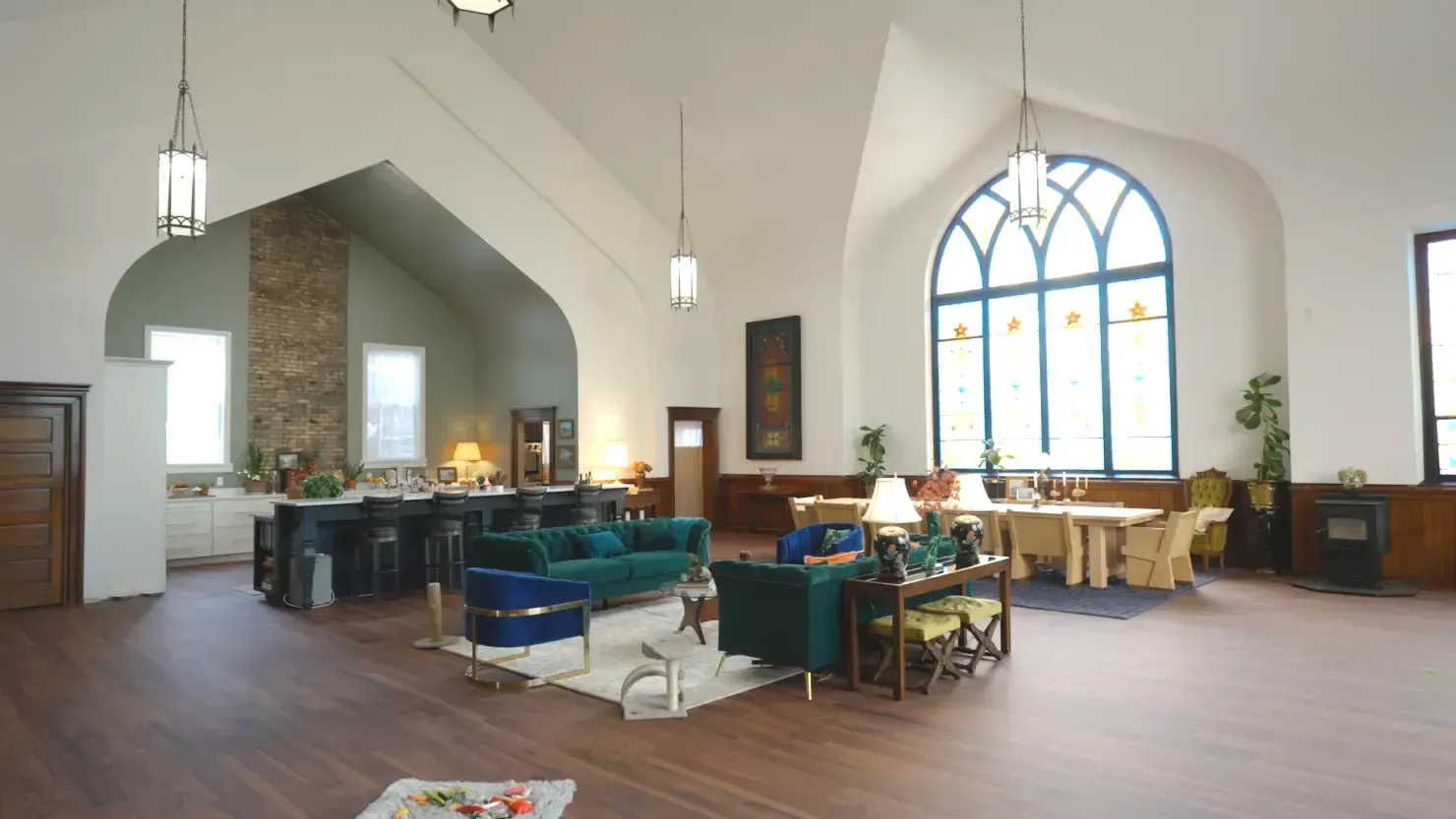
For a single-house take on this week’s Midwestern repurposing theme, CNBC Make It interviewed “chouse” (church + house) owner and renovator Whitney Anderson, originally from New York City. In 2024, she bought an 1898 Methodist church in Michigan, complete with bell tower, pews, stained glass windows, and a parsonage. Originally listed at $125,000, she negotiated it down to $45,000, and has since put about $200,000 into fixing it up, doing the demolition and most of the flooring herself. Take a peek at the photos, they’re stunning.
In rural counties in upstate New York, where there aren't many shelters, it's become common to temporarily put up unhoused families in motels. In June, a fire at a Knights Inn in Broome County tragically killed six people, three of them children, making clear the need for better solutions. In a Shelterforce article from this past week, Tarik Abdelazim and Mallory Rappaport walk through what some counties are doing instead, such as in Seneca County, where a land bank (a public agency that takes over tax-delinquent property) bought two empty lots, where five permanent homes for people transitioning out of homelessness are set to be finished in 2027.
And in eastern Senegal, about 400 miles from Dakar and close to the border with Mali, the Timbuktu Institute surveyed 180 households in Goudiry and Bakel. Here, in one of West Africa's oldest regions of emigration, nearly every family had someone working abroad, and in Bakel, 87 percent of households rely on money from relatives overseas. The study found that, like in so many places on the globe, migration is driven by a lack of economic and social opportunity for young people. The researchers conclude that what’s needed is “a holistic approach” rather than more border control, which seems worth applying far beyond Senegal.
So, this week we went looking for buildings with home potential that started out as something else. We found a 1954 village school outside Tomar, a schoolhouse in Connemara and a railway shed in the Charente, plus, of course, one of Kamiichi's free houses.
This week: four buildings from free to €195,000, how change of use works, Portugal's seven thousand schools, three dishes from the map, what we're reading, and our silly group chat.
Portugal
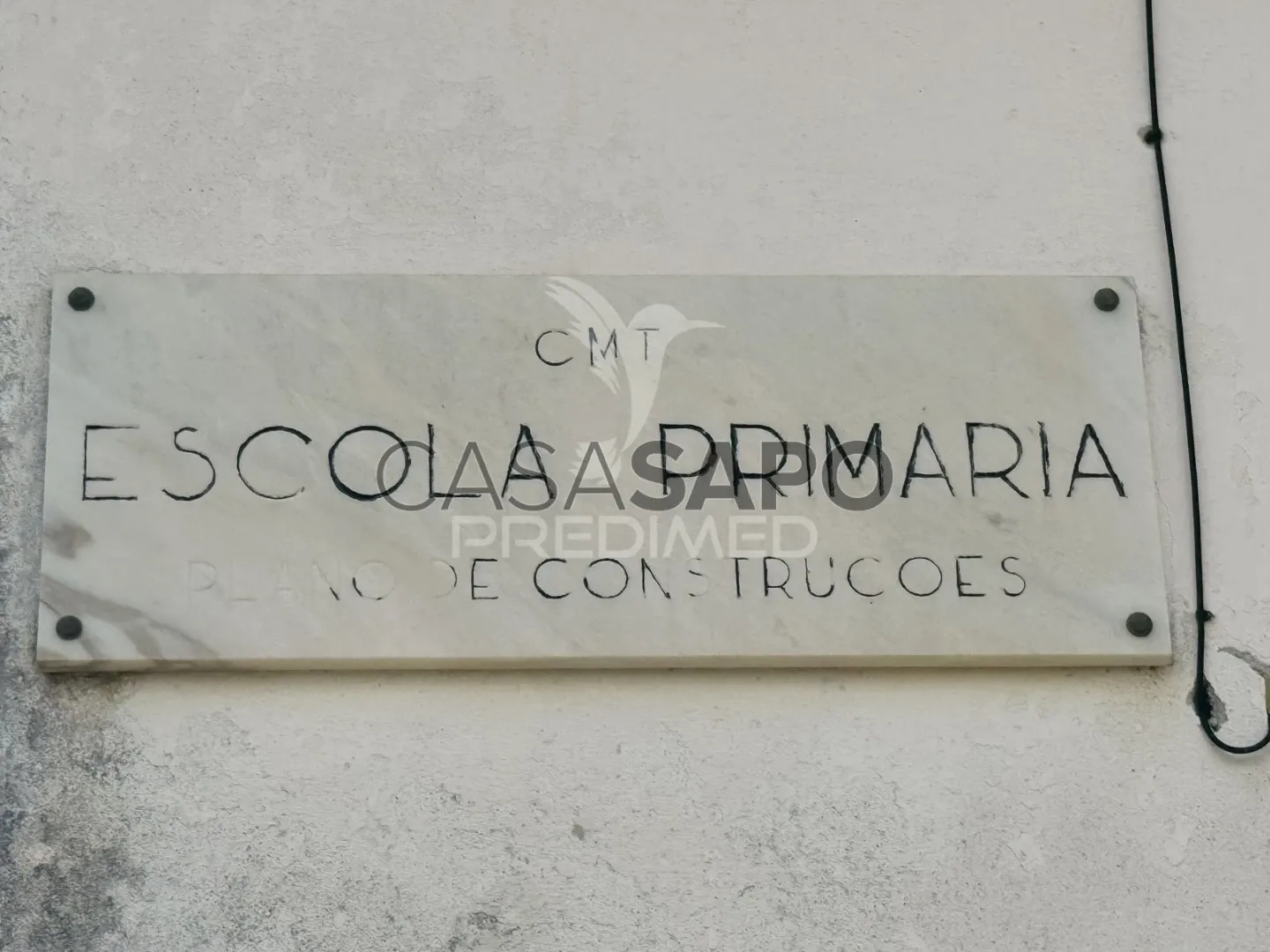
Peralva, Paialvo, Tomar · €150,000 · 1,188 m² lot
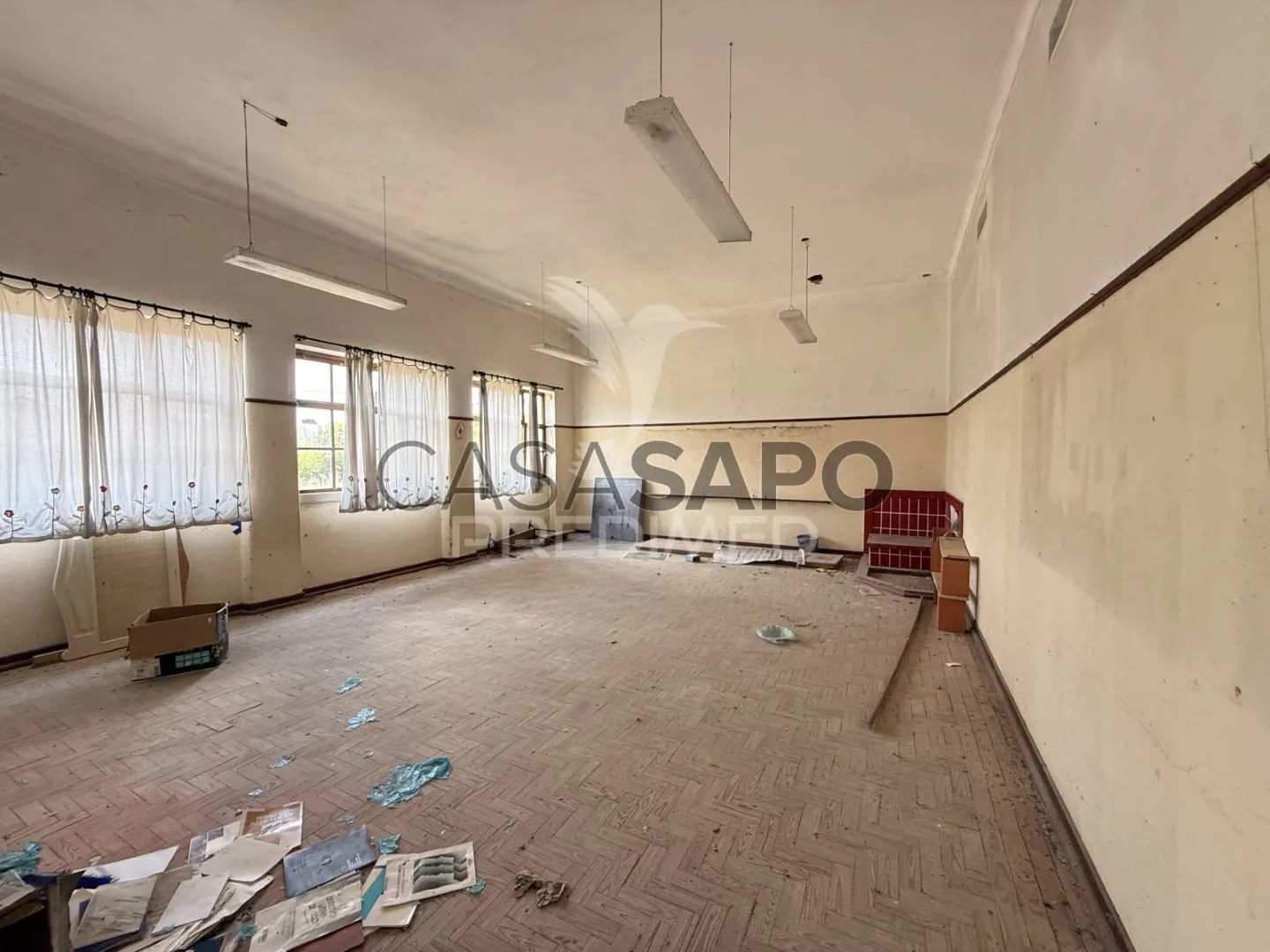
This is the old Peralva primary school, built in 1954, on a lot of 1,188 square meters (about 12,800 square feet, a little over a quarter acre). It comes with an approved, licensed project to turn it into a one-bedroom house that keeps the school's original shape and features, plus a pool, a separate annex, gardens and parking, and the agent says you could start work without a long wait for permits. The listing doesn't say how big the building is, our best reference is this photo of the main room.
Paialvo is in the countryside of Tomar, the town in central Portugal that the Knights Templar made their headquarters. Their Convent of Christ still sits on the hill above the town. Tomar's historic center was laid out on a cross-shaped grid, a plan that later shaped the rebuilding of downtown Lisbon.
Predimed Imobiliária.
Ireland
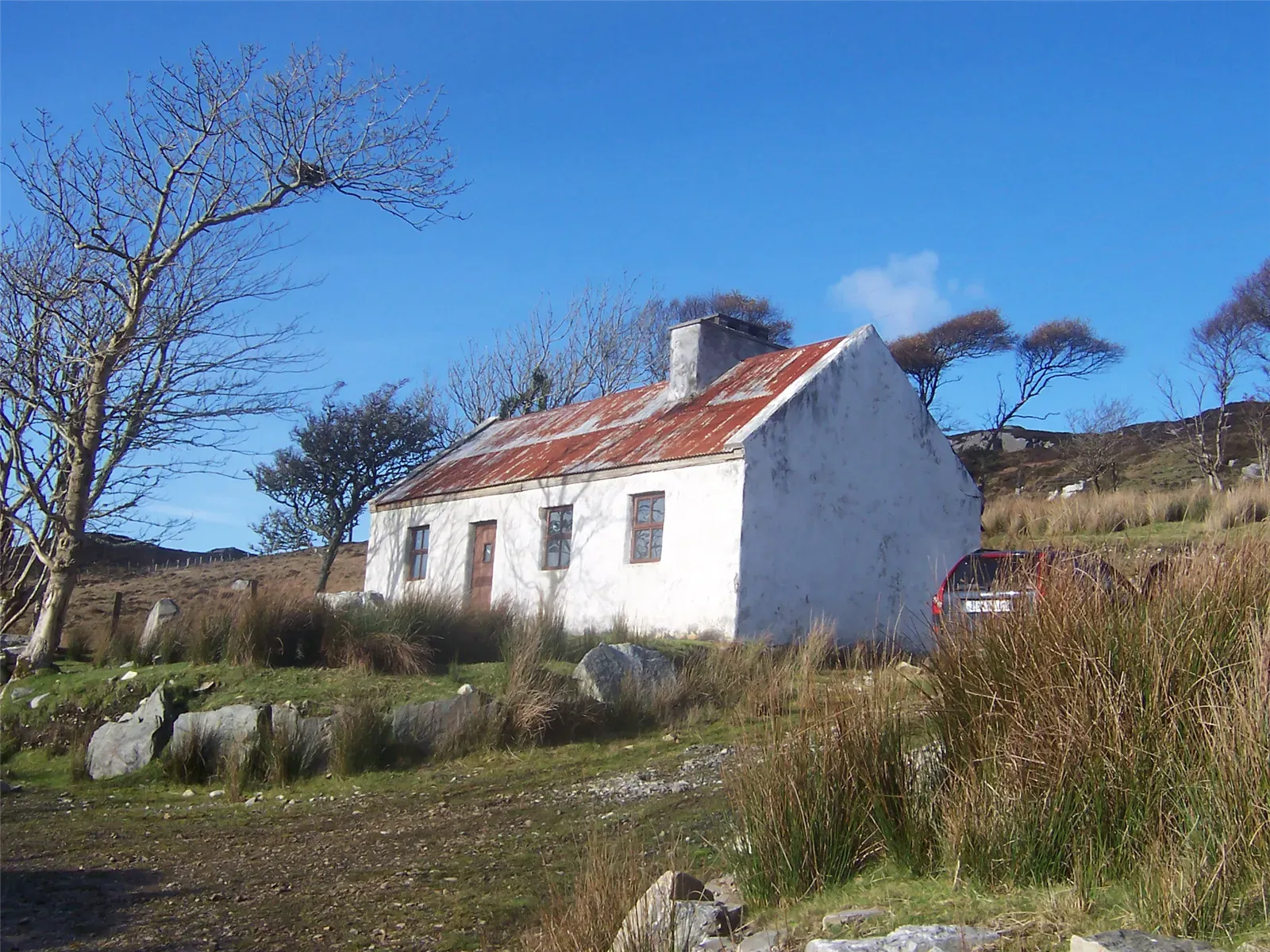
Goulane, Clifden, Co. Galway · €195,000 · 49 m²
This is a traditional former schoolhouse of 49 square meters (about 530 square feet, roughly the size of a two-car garage) on about an acre on a quiet country road. It's listed as one bedroom and one bathroom, and it needs substantial renovation. It faces south, so you'd get the sun along with the views across the Connemara bog to Cashel Hill, Errisbeg and the lakes.
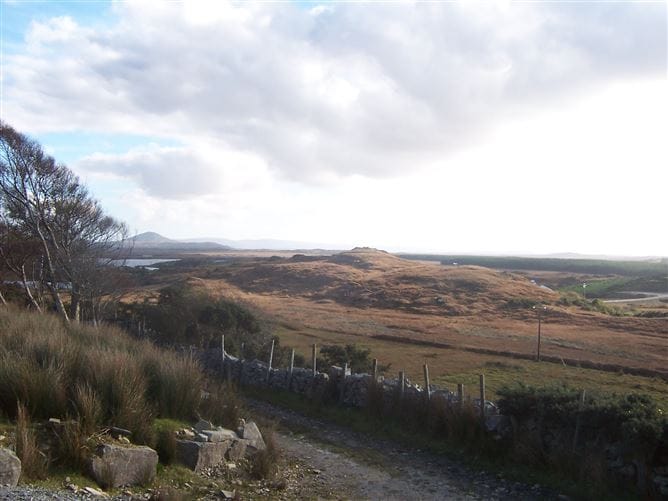
Clifden is the main town of Connemara, on Ireland's west coast. In 1907 Guglielmo Marconi opened a transatlantic wireless station in the bog a few miles south of town, and on June 15th, 1919, John Alcock and Arthur Whitten Brown, finishing the first nonstop flight across the Atlantic, mistook that bog for a green field, and landed next to the station.
Matt O'Sullivan Auctioneers.
France
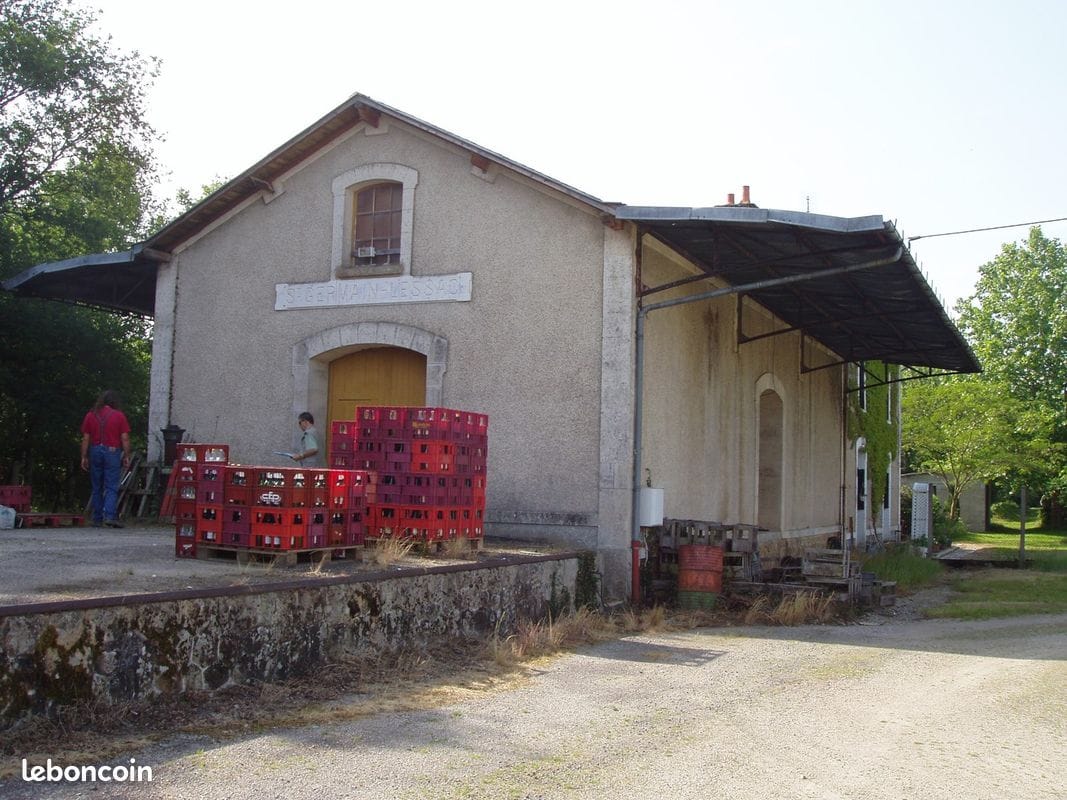
Lessac, Charente · €42,500 · 1,000 m² plot
The ad's title says "old station," and the description says it's a former SNCF warehouse with its original platform, on a plot of 1,000 square meters (about 10,800 square feet, a quarter acre). On paper it isn't a house yet, the ad lists it as "other," so making it one means a change-of-use filing at the mairie (see the Fine Print). The tenant has moved out, vans can drive up onto the platform and straight inside through sliding doors, there's a raised loading bay at the front. The seller gives the building as 15.5 by 7 meters (about 51 by 23 feet), tall enough for a second floor. The ad also lists 200 square meters, which those dimensions don't add up to, so ask. Property tax is €649 a year and the notary fees are estimated at €3,400. No interior photos.
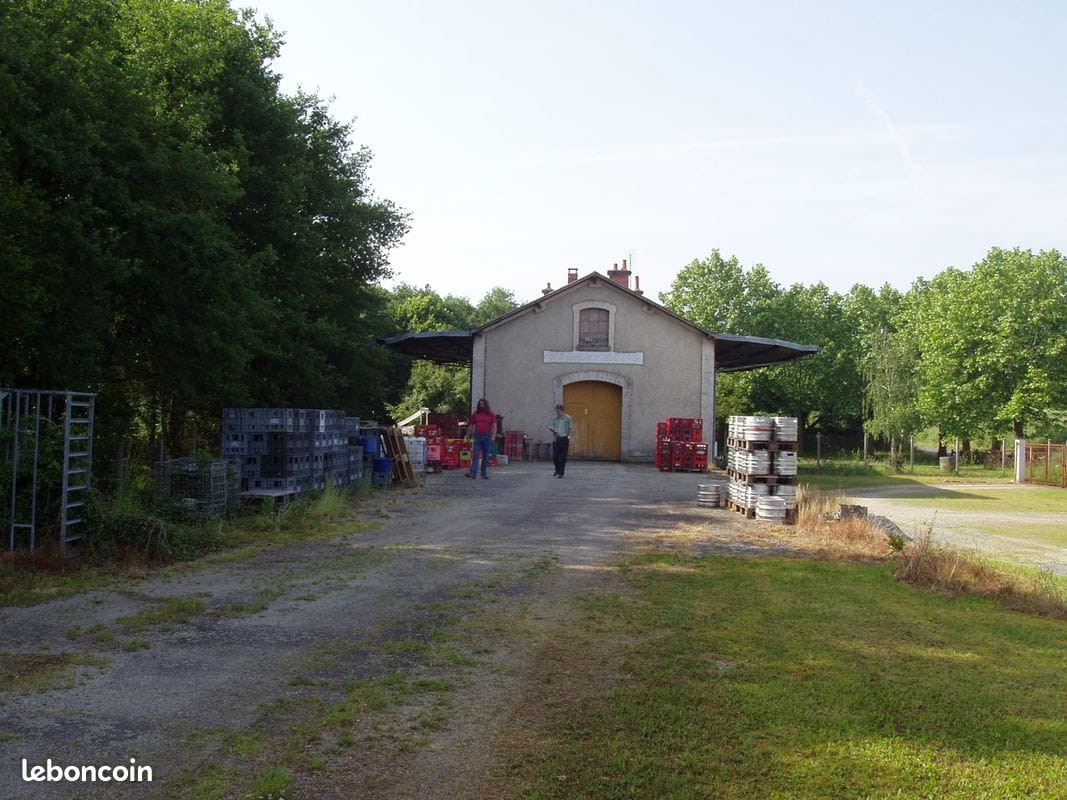
Lessac is a village of a little over 500 people in the Charente Limousine, next to Confolens. In Confolens, the station built in 1885 is now the start of a vélorail, a 5.7-mile ride on pedal-powered carts along the old track to Manot.
Private seller on leboncoin, ad 3273072158.
Japan
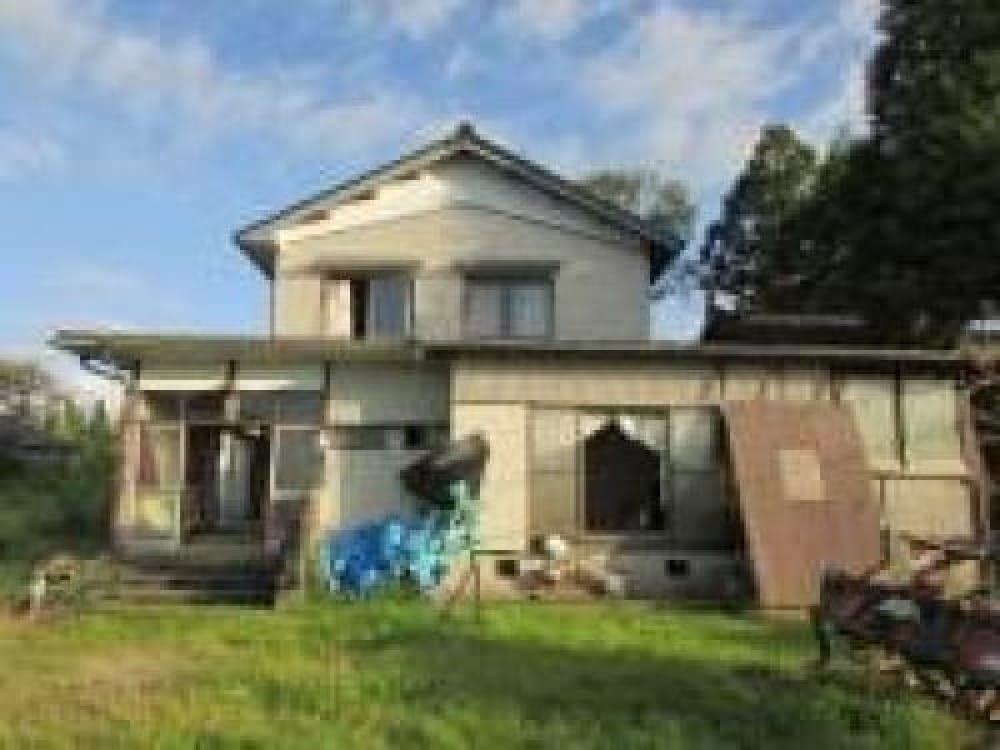
Aodeshin, Kamiichi, Toyama · ¥0 · 163 m²
This is No. 43 in Kamiichi's zero-yen house bank, a two-story wooden house with a tile roof, built in 1967, with 163 square meters inside (about 1,760 square feet) on 911 square meters of land (about 9,800 square feet). It's a 7DK, which means seven rooms plus a dining kitchen, five tatami rooms downstairs and two upstairs. There's also a dozo, a thick-walled storehouse, from 1898, and the town will demolish it before handover. The town wants a household of at least two people, so bring someone, Shin-Miyagawa Station is about an 18-minute walk, and there's a viewing on November 20th, booked in advance, first come first served. The town's sheet also spells out the catch: you pay to register the house and the land in your name, and because legally it's a gift, you file a gift tax return.
Kamiichi is a town of about 20,000 people, roughly 25 minutes by train from Toyama Station, and most of it is mountains, with Mount Tsurugi above it.
Kamiichi zero-yen house bank, No. 43, via the Town Hall Construction Division, 076-472-2477.
The Fine Print
Repurposing/ change of use, in France. Every building in France has an official use, such as housing, commerce or warehouse, and turning a warehouse into a home is a change of use, a changement de destination. You file a déclaration préalable, a prior declaration, at the mairie when the work leaves the facade and the load-bearing structure alone, and a full building permit when it changes either of them, according to the French government's public service site. A change of use can change your property tax too, so you also declare it to the tax office.
Ireland. The Vacant Property Refurbishment Grant pays up to €50,000 toward fixing up a vacant house, plus €20,000 more if it's derelict, and it now runs until 2030. A former school is eligible to qualify, since the grant also covers turning a former commercial or public building into a home, as long as it has been empty for at least two years and you have planning permission, according to the county councils’ 2026 guidance.
Lifestyle & Culture Notes
Seven Thousand Schools
Here we are in Portugal’s far north in Peneda-Gerês National Park where an architect turned the one-room primary school of Garção into a house, keeping its pitched roof and adding a square new wing that looks out over the Lima River. It’s one of more than 7,000 schools Portugal built between the 1940s and the end of the 1950s, under a program called the Plano dos Centenários, so that every child would have a school close to home. Many of the small rural ones closed in the 1990s, when their pupils moved to bigger schools in town. The neighboring town of Ponte de Lima has been turning its old schools into social housing.
Recipes from the Map
Fatias de Tomar via Wolly Patisserie. This dessert, which originated in a Tomar convent, is for our gluten free sweet tooth-havers. It's made with whipped egg yolk steamed in a special pot, then sliced and soaked in sugar syrup (so not paleo unless you use alternate sweetener).
Masuzushi via Yama Seafood. Cured trout and vinegared rice packed into a round wooden box lined with bamboo leaves.
Pâté de pommes de terre du Limousin via Cookidoo. The potato pie of the Limousin, next door to Lessac. Sliced potatoes and sausage meat baked in shortcrust pastry.
What we're reading
How NY Communities Are Repurposing Vacant Properties to Fight Homelessness via Shelterforce, by Tarik Abdelazim and Mallory Rappaport of the Center for Community Progress, from November 6th. More than 30 land banks now operate in New York State.
Gratis hus i Japan – därför skänker ägarna bort sina hem via Metro Mode, from November 5th, in Swedish. It also covers Hakusan and Hokuto, two other towns with zero-yen programs.
Migration and human security in eastern Senegal: moving beyond the security lens via the Timbuktu Institute, from November 4th, on a study made with the Rosa Luxemburg Foundation. Fifty-five percent of the households surveyed named France as the main destination.
She bought an abandoned church for $45,000 via CNBC Make It, from October 6th. Whitney Anderson posts the renovation on Instagram, which led to an appearance on the Magnolia Network show Home Reimagined, plus sponsorships and some free materials and labor.
More than $18.5 million in tax credits support 8 historic projects across Iowa via the Iowa Economic Development Authority, from November 2nd. Sixteen projects applied for almost $51 million.
Live from our group chat
Malia: If we buy the old station in Lessac, you're the stationmaster.
Wally: Why? [already knows why]
Malia: You’d finally have a platform for announcing all your arrivals and departures.
That's issue twenty-six. Thanks for reading.
Until next week, Wally & Malia
Remnant is a weekly newsletter about distressed and beautiful houses around the world. We are not real estate agents. We just got a little obsessed and started digging. What will you do with what we find?