
Remnant – Issue No. 25


Houses in Guadalajara, Haskovo and Lesbos from €49,900, and Spain’s padrón
Today in Los Angeles the air is sweet and clear after a rainy Halloween night. Good air inspires, and today it has us reading poetry. In Linda Gregg’s poem “The Design inside Them,” from her 1991 collection The Sacraments of Desire, the women of a Greek village sit out in front of their houses every evening at six, crocheting flowers, leaves and birds in white string to cover their windows, tables and pillows, and comparing prices in Mytilene, the main town on Lesbos, with prices at home. One of them serves the speaker syrup-soaked cake and a glass of water. A fifteen-year-old daughter wants a Walkman (she’ll never be like the women crocheting). Her little sister keeps wandering off to see a neighbor’s goat and the new kittens, and coming back to her mother. Gregg’s poems try to put into words what doesn’t last and can’t be held, like the way the old transforms into something new through the young, though of course the young don’t stay young, and places change. This all speaks to a familiar, human predicament, and much of what we do here at Remnant is to interrogate (and also entertain) the somewhat bizarre yearning to make a home "somewhere else." The poem concludes with the line: "Gathers up again as the old swallows and flowers." What will this look like for us and ours, we wonder, this freaky swallowing and flowering that time inevitably enacts?
Here are a few of those stories from this week’s news, from Bulgaria to Spain, Berlin to Athens and Albania to Italy, playing out in ways that are interesting and complicated, existential and frustrating, just like Gregg's poem.
Iván Radev Ivanov left Haskovo, in southern Bulgaria, in 2008 to join his sister in Torre del Burgo, an asparagus-growing village of 493 people northeast of Madrid, in the province of Guadalajara, and he’s still there, working in asparagus and construction. “Quiero quedarme en el pueblo” (I want to stay in the village), he told Infobae last year. So many Bulgarians have come to live and work that people around there now call the town Torre del Búlgaro. On paper, close to nine in ten residents are foreigners, but the mayor, José Carlos Moreno Díaz, says that count includes seasonal pickers who stay three to five months a year, and that among people who live there year-round the share is closer to half. “We were about to pull out the plantations until the Bulgarians arrived,” he told Cronista in July. Just imagine if they had pulled out the asparagus, what then? This spring, Spain opened a one-time program that let undocumented people already living in the country apply for residence and work permits. Applicants had to show they’d been in the country since before 2026, with five months there without a break, a clean criminal record, and a job, family in Spain or a certificate of vulnerability. El Correo Gallego reported that in eleven weeks 1,174,978 people applied, more than twice what the government had expected. More than half of them were under the age of 34.
Since 2020 Greece has let wealthy foreigners who invest at least €500,000 pay a flat €100,000 a year in tax on everything they earn abroad, and about 500 people have applied in six years, according to Finance Ministry figures in a recent Financial Times report. Along the coast south of Athens, in Glyfada, Voula and Vouliagmeni, low-rise houses with gardens are being torn down to build fancy apartment blocks with pools. A couple who moved there from Berlin with two young children told the FT their stay is “probably more a three to five-year experiment.” We are wondering who will live in the unaffordable apartment blocks when the ultra-wealthy experimenters leave?
In Calabria, at the toe of Italy’s boot, Acquaformosa was founded around 1501 by Albanian families fleeing the Ottoman advance. Their descendants still speak Arbëresh, an old form of Albanian. Since 2011 the village has taken in a new generation of people who had to leave home: refugees placed there through Italy’s state reception program, run by a local association called Matrangolo. It has hosted 4,100 people from about 60 countries, and today 106 of the village’s 930 registered residents are foreign citizens. Children without Italian citizenship make up 16 of the 43 pupils in the village schools, and Domani credits the association with keeping those schools open. When people leave the program they have to find their own place to rent, and the association’s vice president, Lidia Vicchio, told Domani that many landlords won’t rent to anyone who isn’t Italian. In September, Prime Minister Giorgia Meloni proposed a legal cap on the number of foreign pupils in each class, saying Italian children shouldn’t feel sidelined in their own classrooms. Cosenza Channel reported that in San Basile, another Arbëresh village nearby, the elementary school did not have enough local Italian citizens to run. Only after children from refugee families in the local reception program enrolled were they able to reopen.
This week: a village house in Spain’s asparagus valley for €49,900, a renovated brick house near Haskovo for €58,999, a renovated stone house on Lesbos for €120,000, how Spain’s padrón works, the gjitonia, two sweets and an elixir from the map, what we’re reading, and our group chat.
Spain
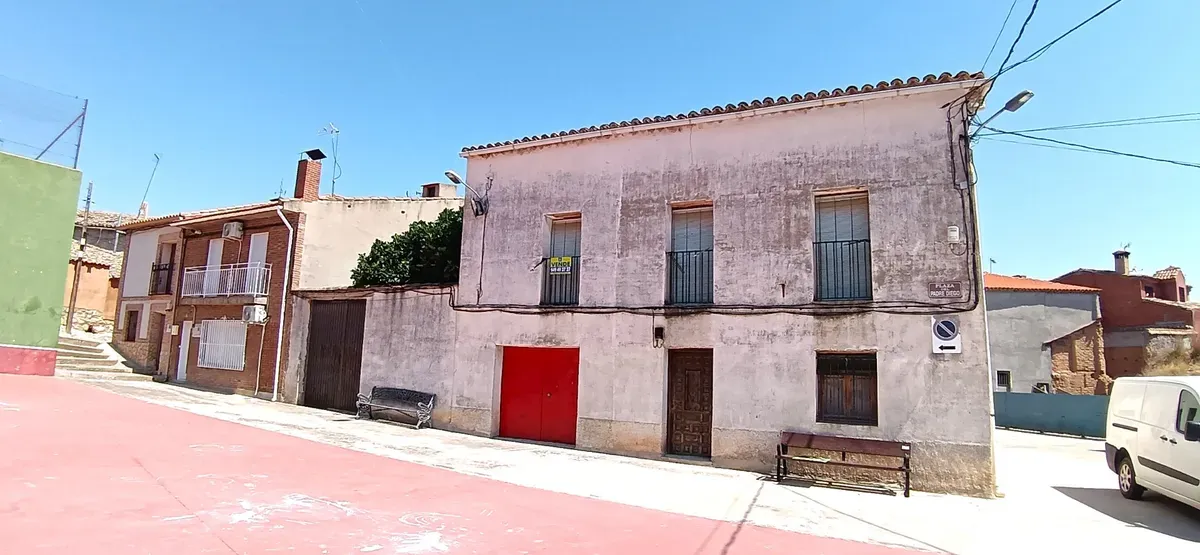
Valdearenas, Guadalajara · €49,900 · 156 m²
This is a village house from 1900 on two floors plus an open attic, 156 square meters in all (about 1,680 square feet). Downstairs there’s a separate living room, a kitchen with a fireplace, a bathroom with a media bañera, which is a short sit-in tub, a pantry, and a door straight into the garage. Upstairs are four large bedrooms, each with its own balcony, and above them the attic, one open room the agent suggests for a study or a reading corner. It still has its original wooden interior joinery and concrete floors, it needs renovating, the hot water runs on butane, and it’s exempt from an energy certificate. The agent puts it 20 minutes from Guadalajara and 50 from Madrid, and the exact address is withheld at the agent’s request.
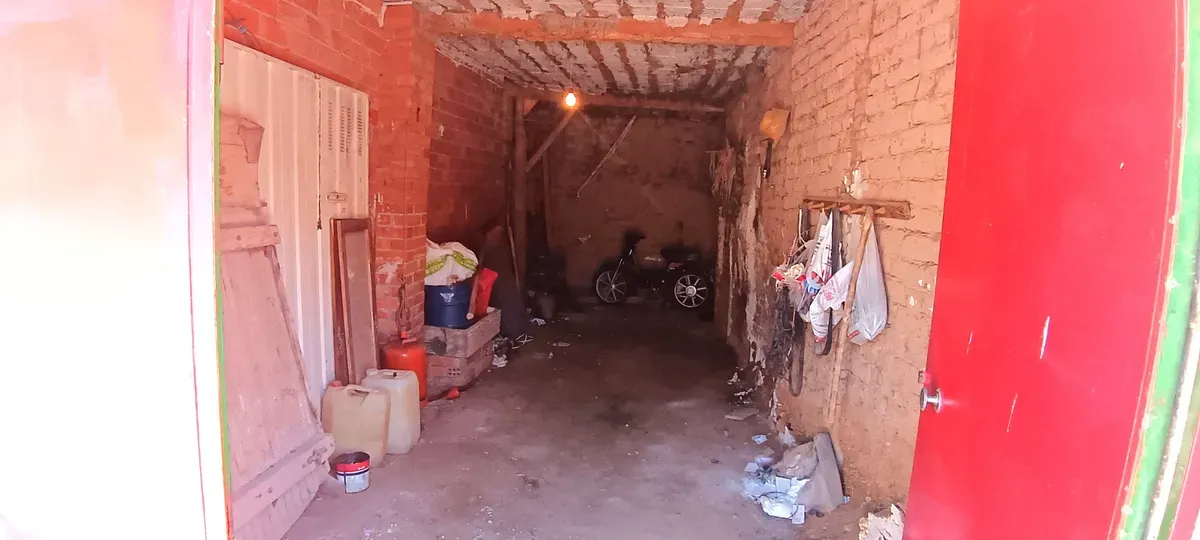
Valdearenas sits in the valley of the Badiel, a small river that runs down to the Henares, and 88 people live there, against 595 households in 1877. Its parish church, Nuestra Señora de la Asunción, was begun in the 13th century. In the 1960s the diocese of Sigüenza ordered it restored, the experts recommended dismantling and rebuilding it, and the rebuilding never happened, reportedly for lack of money, which leaves the ruins the listing mentions. Its San Roque fiesta on August 16th has traditionally included an encierro, a bull run, out in the open fields. The GU-107 road runs up the same valley from Torre del Burgo, and both towns are inside the growing area named in a 2024 application for protected status for the Espárrago Verde de Guadalajara, the province’s green asparagus, which is cut from April to June.
Live in Spain, Guadalajara, reference IS-01836.
Bulgaria
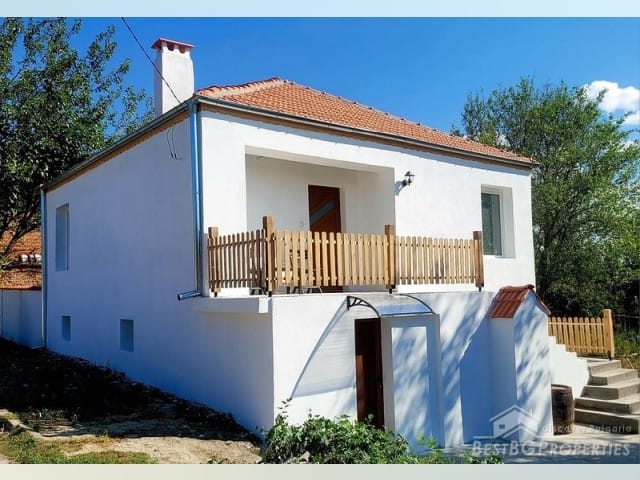
Dimitrovgrad municipality, Haskovo · €58,999 · 110 m²
This is a solid brick house on two floors, with 110 square meters inside (about 1,180 square feet) on a yard of about 1,100 square meters (about 11,800 square feet, a little over a quarter acre). Downstairs there’s an entrance hall, a bathroom and three rooms, and upstairs a large living room, a hall and a second bathroom, though the listing’s summary says there’s only one bathroom, so ask. It’s had a new roof and chimney, new gutters, new windows on both floors, outside insulation and a new electrical panel and pipes. The yard is fenced and lit, with two wells, a concrete deck ready for a barbecue and a spot prepared for a garage, and the agent says it has a view of “the Balkans and Mount Dragoina.” The listing doesn’t name the village, and puts it 45 kilometers from Plovdiv, 28 from Haskovo and 11 from Parvomay.
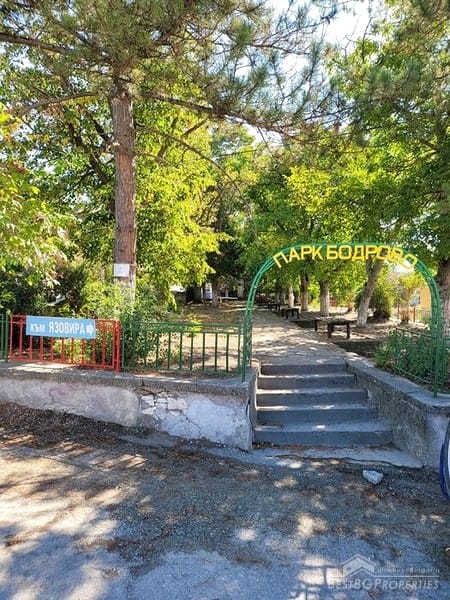
Dimitrovgrad itself was founded by government decree on September 2nd, 1947, out of three villages, Rakovski, Mariyno and Chernokonyovo, and youth brigades built much of it by hand as a model industrial town for the new communist state. Its big chemical plant was originally named after Stalin. Haskovo, 28 kilometers away, is where Iván Radev Ivanov set out from in 2008.
Bestbgproperties, Zlatka Georgieva, reference 17824.
Greece
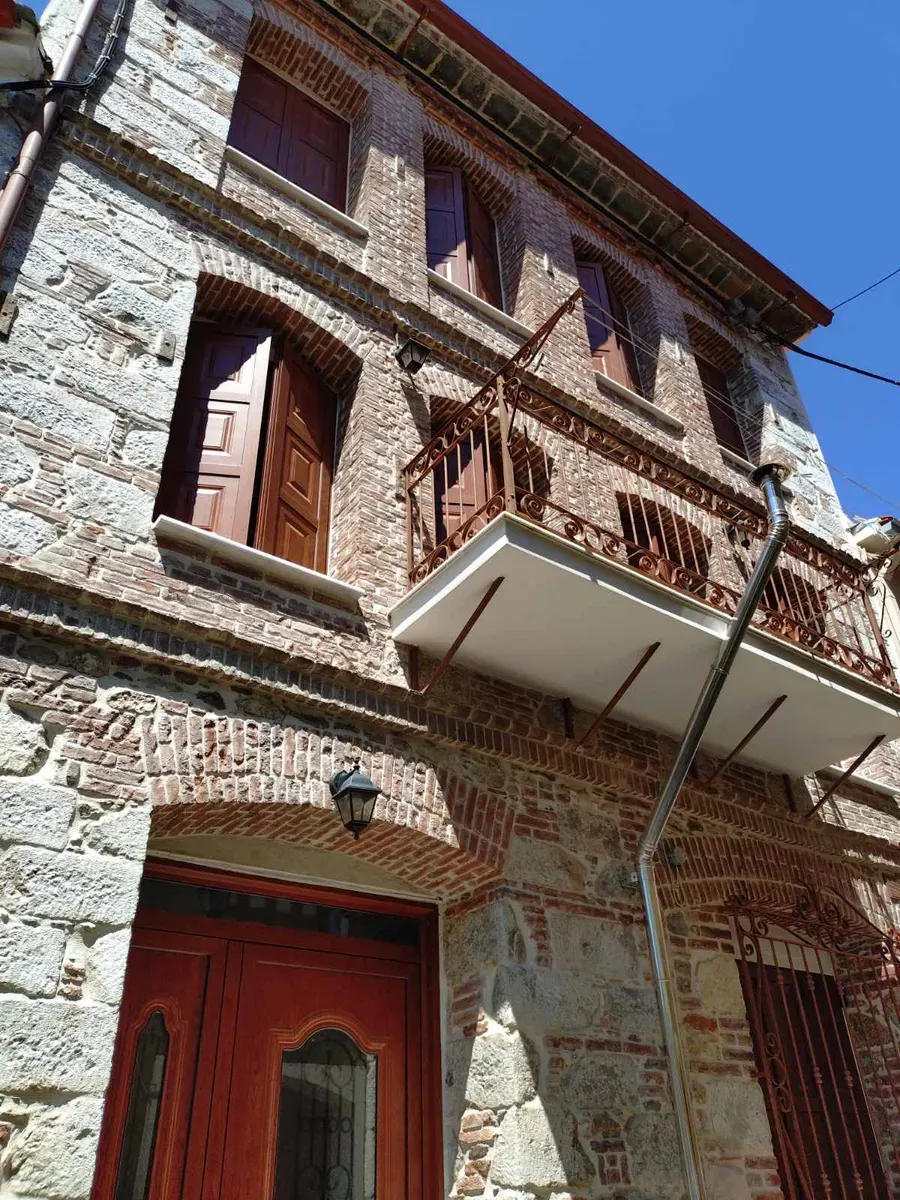
Central Market area, Lesbos · €120,000 · 100 m²
This is a renovated stone house of 100 square meters (about 1,075 square feet) on two levels plus a loft, on a plot of the same size, in what the agent calls the Central Market area, “in the heart of Lesvos.” It has two bedrooms, two bathrooms, a kitchen, a living room, a storage room and a veranda, and it comes furnished, with a fireplace, its own heating, air conditioning, a solar water heater and a security door. The agent suggests the loft for storage or a small office. The listing doesn’t give a year built or name the exact town.
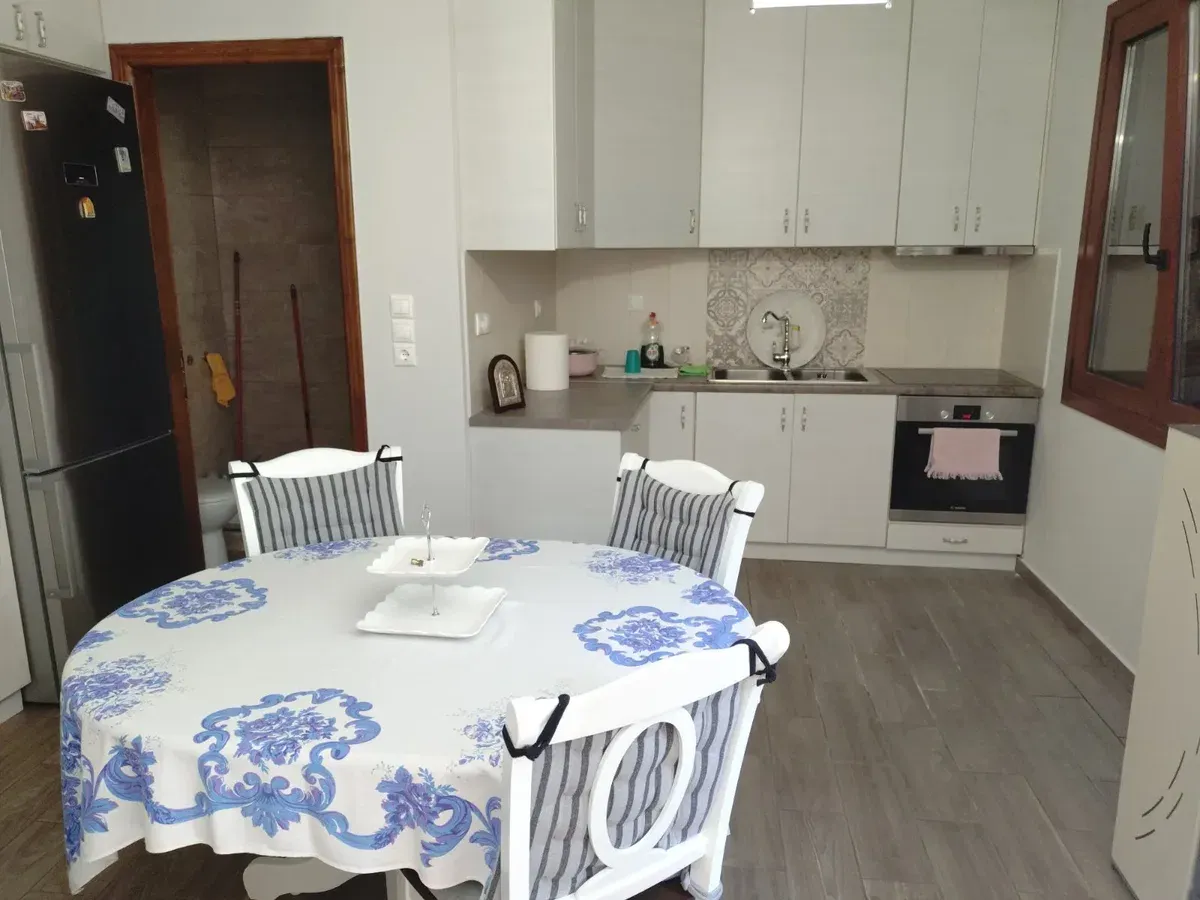
Ktimatoemporiki, reference Le4-9284.
The Fine Print
The padrón. Every town in Spain keeps a register of the people who live in it, called the padrón, and you sign up at the town hall, the ayuntamiento. Spain’s ombudsman, the Defensor del Pueblo, has told town halls that registering residents “no es de carácter discrecional” (isn’t optional), and that when someone can’t show a deed or a lease, the town should confirm they live there some other way, by an inspection or a police report, and then register them. It’s how you get on the books for local healthcare and enroll a child in the village school. In a small town the count also decides money and services: the mayor of El Pino de Tormes, in Salamanca, wrote to his residents that state funding is shared out by population, and so are the days each week the doctor and nurse come to the village health center. Valdearenas had 88 people on its padrón at the start of 2025.
Bulgaria. A reminder from Issue 10: a non-EU citizen can’t own land in Bulgaria in their own name, so the usual route for an American is a Bulgarian single-member company to hold the garden.
Greece. A reminder from Issue 17: Lesbos is one of Greece’s border areas, so a buyer from outside the EU needs approval from a regional committee that includes the defense ministry, and should budget five to six months for an answer. A sale made without it is void.
Lifestyle & Culture Notes
Gjitonia
In the Arbëresh villages of Calabria, a gjitonia is a small cluster of houses built around a little square where the alleys meet, usually grown up around one older, grander house, and families were often known by the gjitonia they lived in. In Frascineto, according to Italy’s heritage trust, the FAI, the balcony in front of each door was where women sewed, knitted and talked with the neighbors in the warm months. Neighbors worked each other’s fields, swapped food and cleaned the shared spaces, and families left their children with each other when something urgent came up. In the evenings everyone gathered at one family’s hearth to watch television and talk, and in winter some people went from house to house to keep warm. The same page says life in a gjitonia also had a shadow side, which meant gossip, envy and quarrels, and that the whole way of life, the good and the bad, mostly belongs to the past.
Recipes from the Map
Bizcochos borrachos via Fascinating Spain. Guadalajara’s “drunken” sponge cakes go back to the 19th century. They’re little rectangles of sponge soaked in a syrup of sugar, sweet wine and water, then dusted with cinnamon.
Baklavou of Mytilini via Gourmed. It’s a wedding sweet from Lesbos, layers of phyllo and ground almonds soaked overnight in a rosewater syrup.
Mursalski tea via Jídlo na cestách, by Dan Špaňhel. Bulgaria’s mountain tea is brewed from the stalks and flowers of an herb that grows high in the Rhodope and Pirin mountains. It's pale gold, mild and naturally sweet.
What we’re reading
Da popolo accolto a comunità che accoglie via Domani, by Chiara Sgreccia, from September 19th, in Italian. It’s about Acquaformosa, where the Matrangolo association now runs reception projects in seven other small towns in the province of Cosenza as well.
Il borgo calabrese ripopolato dai migranti via Il Post, by Angelo Mastrandrea, from February 27th, in Italian. Camini, in the province of Reggio Calabria, has nearly 400 people, about half of them immigrants, and its nursery and primary schools have reopened, along with the post office and the ATM. A local Syrian transplant makes 800 glass bottles for olive oil for Libera, the anti-mafia association.
In Calabria crescono gli stranieri ma non si ferma lo spopolamento via Corriere della Calabria, from October 27th, in Italian, on this year’s immigration report from the research center IDOS. Calabria had 110,463 foreign residents at the end of 2025, up 4.8 percent in a year, and still lost 7,075 people, while more than 475,000 Calabrians are registered as living abroad.
The super-rich are moving to Athens - what does that mean for everyone else? via the Financial Times, by Eleni Varvitsioti, the FT’s Greece and Cyprus correspondent, from October 31st, republished free to read by To Vima. New developments on the Athens Riviera sell for €15,000 to €20,000 a square meter, according to the Voula estate agent Paulina Billiri, and a Glyfada resident, Eleni Papadopoulou, has posted nearly 700 photos of the disappearing villas on Instagram as @Vintage.Glyfada.
Live from our group chat
Malia: Gjitonia sounds nice. It takes a village!
Wally: We are not Italian-Albanian.
Malia: Gjitonia should be for everyone ... except for the gossip, envy and quarrels.
That’s issue twenty-five. Thanks for reading.
Until next week, Wally & Malia
Remnant is a weekly newsletter about distressed and beautiful houses around the world. We are not real estate agents. We just got a little obsessed and started digging. What will you do with what we find?