
Remnant – Issue No. 24

Akiya in Imari and Shunan from ¥600,000, two Galician houses from €18,000, and Japan’s program for transferring inherited land to the state
When my grandmother died, her house was full of baskets (full of random things, covering every surface and even hanging from the ceilings) and mice (she used only humane traps), yet it never would have crossed our minds to say we didn’t want to deal with it and renounce the inheritance. In the US, an heir doesn’t take on the debts of someone who has passed away. In Japan and Spain, debts are one reason heirs turn down inheritances, because an heir who accepts takes them on along with the house. A Japanese heir has three months to file with the family court, a Spanish heir goes before a notary, and in both countries you either accept the whole estate, good, bad and ugly, or none of it. There’s one middle option, which is accepting with an inventory that caps what you owe at what the estate is worth.
Last year, 323,524 people in Japan turned down an inheritance, about 70 percent more than a decade earlier, according to judicial statistics Nikkei reported this past week. Older houses, and houses a long way from a train, are hard to rent or sell, and they keep costing property tax, repairs and insurance whether anyone lives in them or not.
Spain’s notaries recorded 54,866 renunciations in 2024, up from 18,933 in 2011. In Galicia, in the country’s northwest corner, almost 4,000 people turned down an inheritance last year, the most on record, and the reasons Xataka gathered include ruined buildings, plots split down to almost nothing among relatives, the job of keeping the land cleared against wildfire, and relatives with whom the heir had no relationship. The same article points out that in Spain, inheritances and gifts from family have become “the key that allows thousands of young people to acquire their own homes.” In San Xoán de Río, in Ourense, the town is issuing more building permits as families restore houses they’ve inherited.
Then there's the question of what happens when there's no heir. In Catalonia, if someone dies without a will and without relatives out as far as first cousins, the regional government becomes the heir. It checks first whether the home could be social housing, auctions what can’t, and gives the money to social, welfare and cultural groups, starting with the town where the person last lived. This month’s auction, set for October 8th, opened at just over €20,000 for a house in poor condition in Santa Coloma de Queralt.
This week: four houses in Japan and Galicia, from ¥600,000 (about $3,800) to €33,600, a Japanese program that lets heirs pay the state to take inherited land, as long as there’s no house on it, a short guide to jiko bukken, the Japanese homes where someone has died under fraught circumstances, two recipes from the map, what we’re reading, and our silly group chat.
Japan
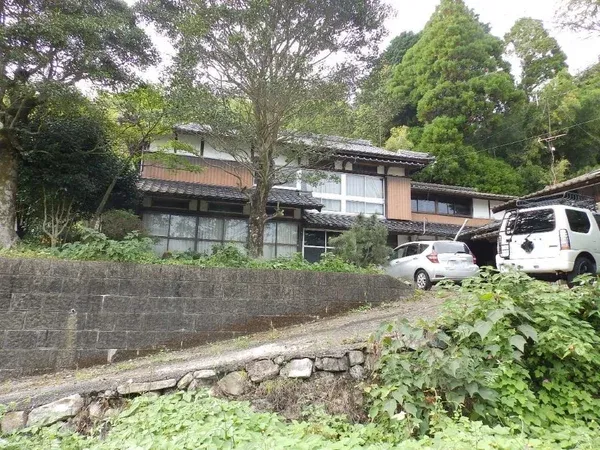
Ōkawachi, Imari, Saga · ¥1,000,000 (roughly $6,400) · 241 m²
This is a two-story wooden house from 1957 in a quiet mountain area of Imari, on Kyushu, with 241 square meters inside (about 2,600 square feet) on a lot of 626 square meters (about 6,700 square feet), plus 190 square meters of adjoining wild land that comes with it. It’s a 6DK, meaning six rooms plus a dining kitchen, every room is at least 9.72 square meters, and there’s a garden and parking for three cars. The city’s akiya bank (its register of empty houses) says it needs major renovation. There’s public water and propane, the toilet empties into a tank that gets pumped out, and there’s an outbuilding on the land that has never been registered, which is worth asking about before anything else. Akiya Hopper puts the total cost with taxes, fees and the broker’s commission at about ¥2,360,000, give or take ¥420,000, which is roughly $15,000. Kami-Imari Station is 5.4 kilometers away, the elementary school 3.4, and the supermarket 4.7.
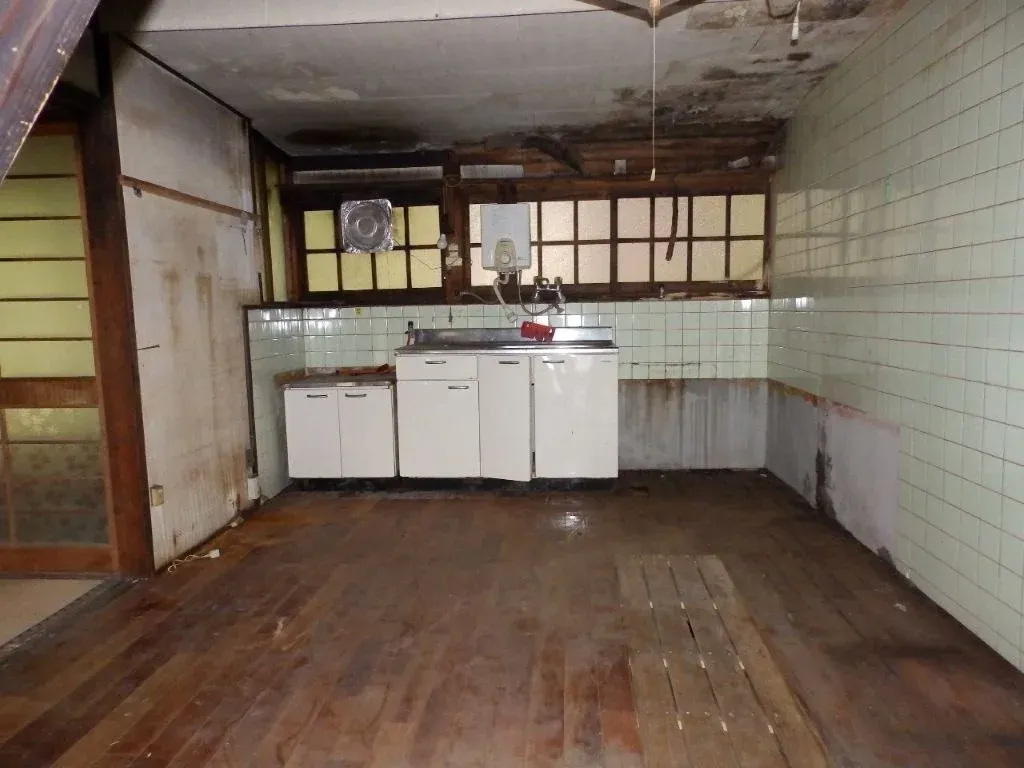
Ōkawachi is also the part of Imari that holds Okawachiyama, the “Village of the Secret Kilns.” When porcelain was one of the most valuable things made in Japan, the Nabeshima clan ran production there directly and kept the village isolated so the technique wouldn’t get out. About thirty workshops still line its narrow lanes, several with their tall chimneys, and across the river there’s a monument to the Korean potters who were brought to Japan to make it. A bus runs to the village from Imari Station about every two hours, and the ride takes fifteen minutes and costs ¥200.
Imari City akiya bank, No. 413, via Matsunaga Real Estate, 0955-25-9179.
Suma, Shunan, Yamaguchi · ¥600,000 (roughly $3,800) · 97 m²
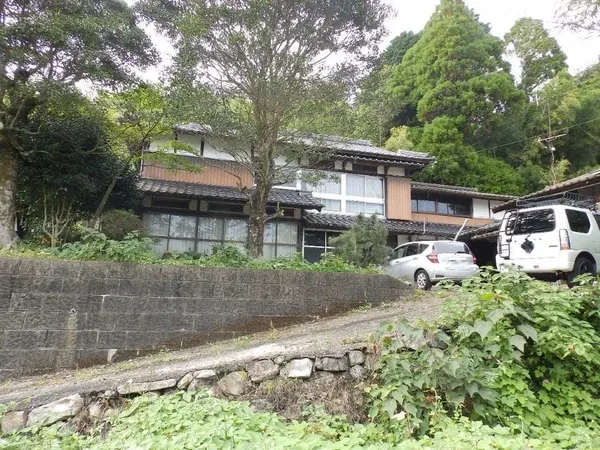
This two-story wooden house went up in 1934 and was fully renovated in November 1999, and the city’s listing says it’s still looked after a few times a year. It’s a 5DK with 97 square meters inside (about 1,050 square feet) on 223 square meters of land (about 2,400 square feet), with a separate 15-square-meter storehouse (about 160 square feet, the size of a small bedroom). The toilet, the bath boiler and the kitchen floor all need work, it’s sold as is, and the city says the repair costs are open to negotiation, along with the price. Parking may be arranged with the neighbors. The elementary school is 200 meters away, but the junior high is 15.7 kilometers off, and the Kano interchange on the Chugoku Expressway is about forty minutes by car. Akiya Hopper puts the total at about ¥1,930,000, give or take ¥400,000, roughly $12,300.
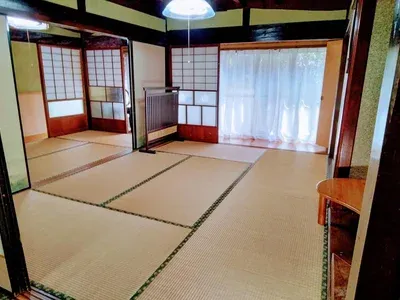
Shunan was formed in 2003 out of four towns, Tokuyama, Shinnanyo, Kumage and Kano, and it runs from a petrochemical coast on the Seto Inland Sea up into the Chugoku Mountains. The city is also home to the Yashiro roosting ground for hooded cranes, which is a designated special natural monument.
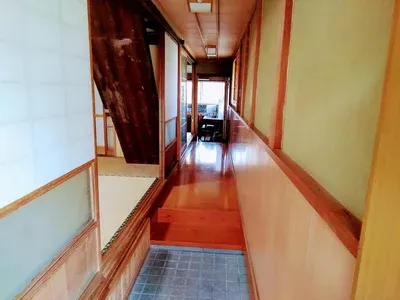
Shunan City Housing Division, Vacant House Countermeasures Office, 0834-22-8385, quote “No.263 大字須万 5DK.”
Spain
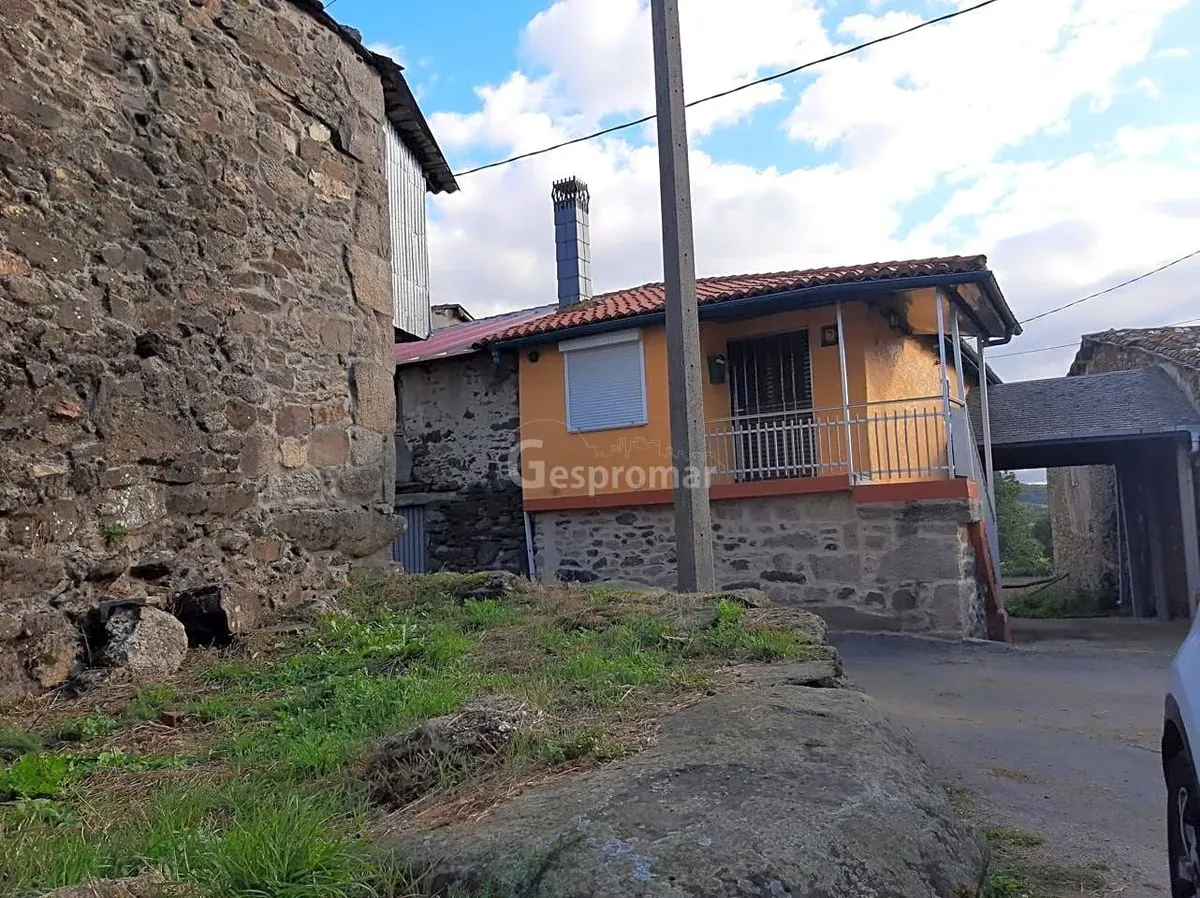
Acevido, San Xoán de Río, Ourense · €33,600 · 220 m²
This is a country house of 220 square meters (about 2,370 square feet) in the parish of Acevido, and the agent calls it very well kept. There are four bedrooms, one bathroom, a living and dining room and a kitchen, and downstairs a big room the agent suggests for a garage, a storeroom or a wine cellar. The price also covers a 43.5-square-meter hayloft (about 470 square feet) and two plots next to the house, one of 254 square meters (about 2,700 square feet) and one of 1,746 square meters (about 18,800 square feet, a little under half an acre). It faces southeast and has a garden and private parking. The listing gives no year built and says nothing about water or power, so ask. Its last line is “No lo pienses y ven a verla!,” which means “Don’t think about it, come and see it!”
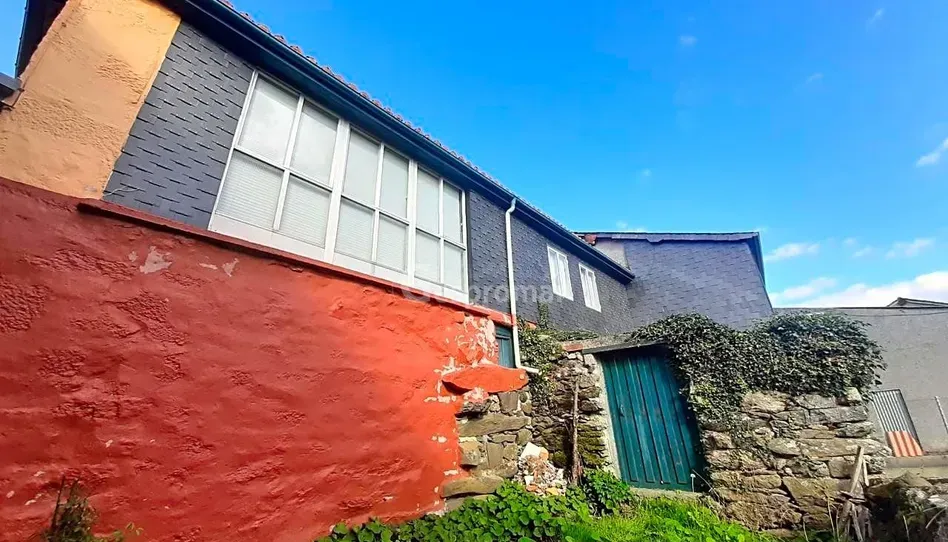
San Xoán de Río had more than 3,000 people in the 1980s, according to its mayor, and has about 500 now. It’s Spain’s first EU Startup Village, together with A Pobra de Trives next door, and the town has been mapping its empty houses to fill a social rental pool aimed mainly at women. In March 2027 it plans to open fifty cabins for startup founders, investors and staff, at €350 a month with meals, gigabit fiber and mentoring included.
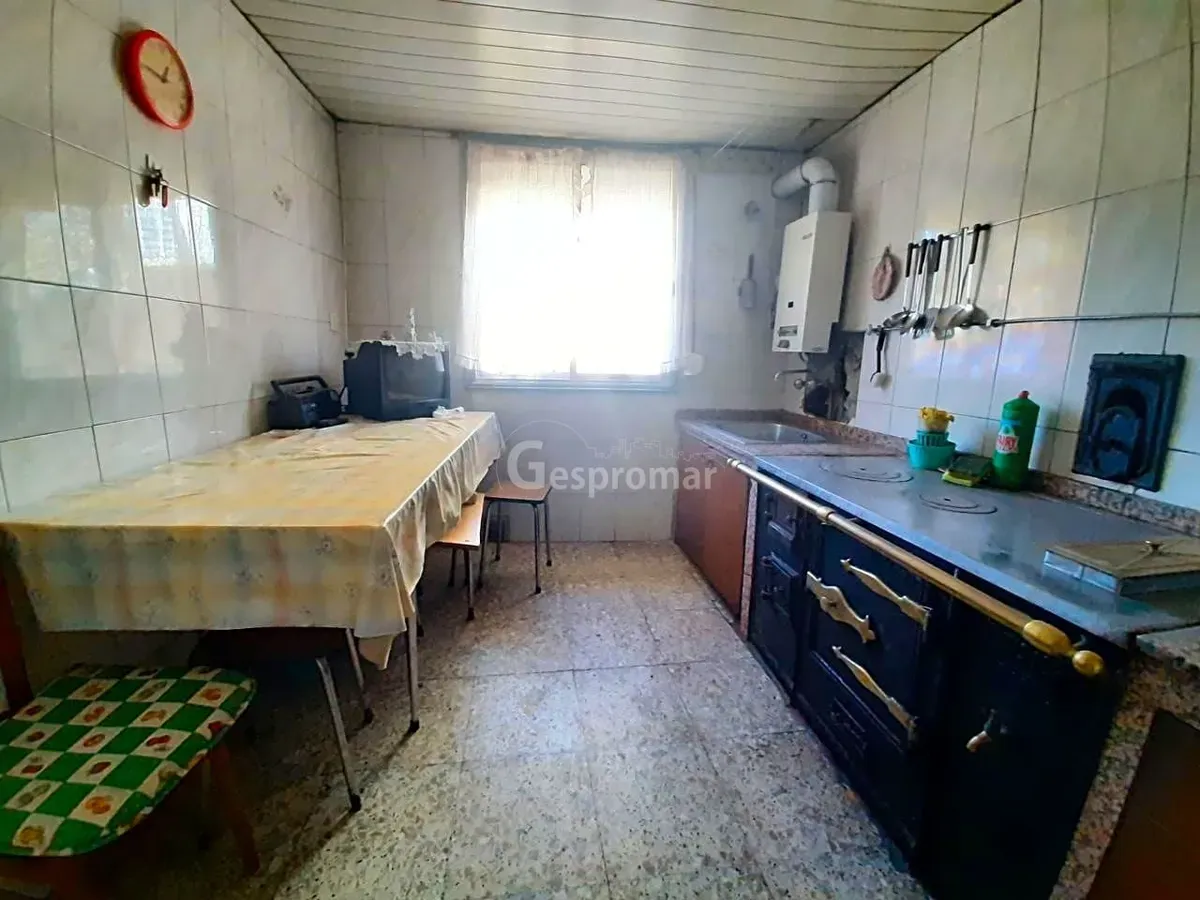
Gespromar, reference CC00007.
A Pobra de Trives, Ourense · €18,000 · 141 m²
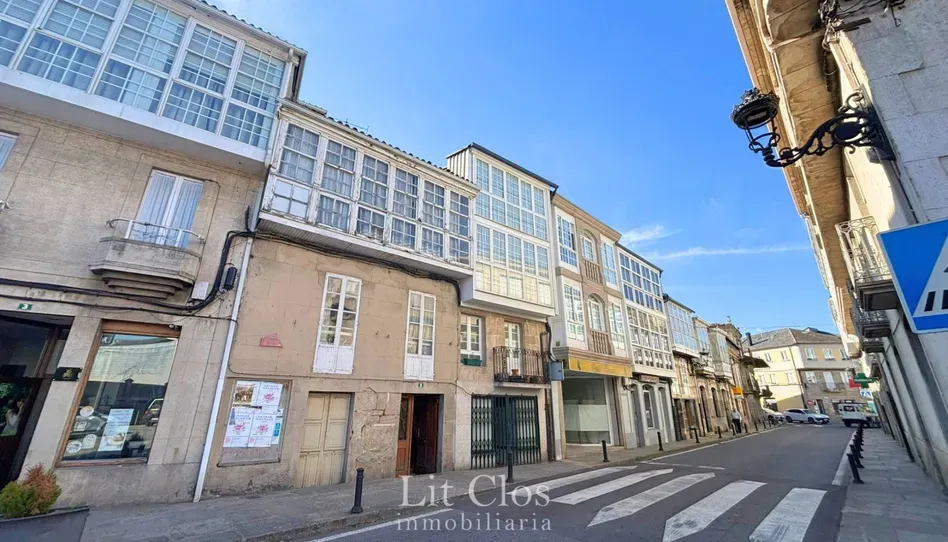
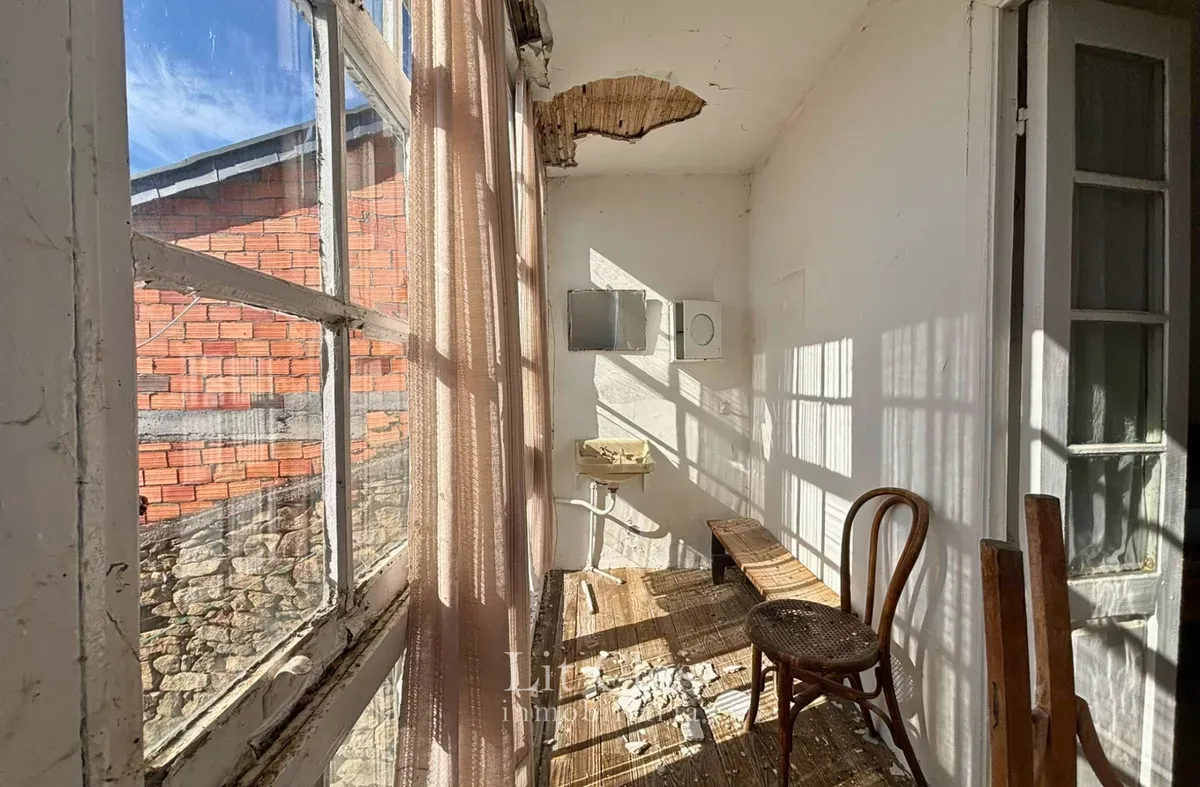
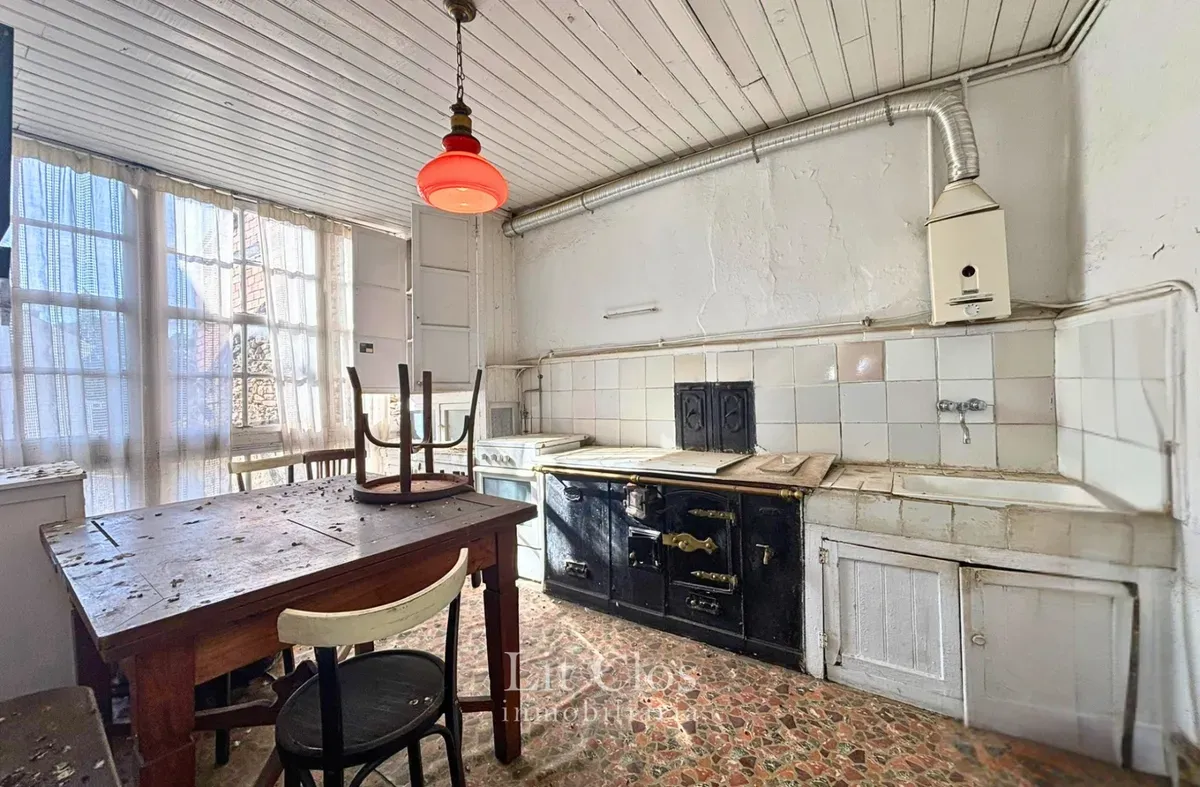
Built in 1900 in the middle of A Pobra de Trives, this house has 141 square meters (about 1,520 square feet) and glazed galleries (enclosed glass balconies) on both sides of the front. Downstairs is storage. Upstairs there are two large bedrooms, an extra room with no window, a separate kitchen, a living room, a bathroom and a storage space under the stairs. It needs renovating throughout, it has no parking, and it’s exempt from an energy certificate.
The town’s oldest street, Calle Real, is lined with the same kind of galleries, and the regional tourism office says they keep the houses warm. Until the middle of the twentieth century, local families gambled their fortunes in the town’s granite casino, which is a private house now. About nine kilometers away, Ponte Bibei, a Roman bridge over the Bibei River built under Trajan, probably between 114 and 119 AD, is 75 meters long and still in use.
Lit Clos Inmobiliaria, reference TRIVES, WhatsApp 711 210 618.
The Fine Print
Since April 27th, 2023, heirs in Japan have been able to apply to hand over inherited land to the state. It costs a ¥14,000 review fee per parcel, plus a charge meant to cover ten years of upkeep, which is a flat ¥200,000 per parcel for most land and is worked out by area for some urban residential land, farmland and forest, according to the Ministry of Justice.
The state takes land only. A parcel with a building on it is turned away, and so is land that’s contaminated, mortgaged, in dispute, used by other people as a path, or on a dangerous cliff, so a house has to come down before its land can go back.
As of September 30th, the ministry had received 6,125 applications and taken in 3,231 parcels, and it had turned down 189, four of them because there was still a building on the land. Another 1,162 applicants withdrew, and 595 of those said they had found a use for the land after all.
Since April 1st, 2024, heirs in Japan also have to register inherited property in their own names within three years of learning they’ve inherited it, or face a fine of up to ¥100,000. If you’re looking at an akiya, ask to see the registry record with the seller’s name on it.
Lifestyle & Culture Notes
Jiko bukken, a short FAQ
What is a jiko bukken? It’s a Japanese home where someone died by suicide, was killed, died in a fire, or died alone and wasn’t found for a while. Under guidelines Japan’s land ministry issued in 2021, agents have to disclose it for three years on a rental and indefinitely on a sale. A natural death doesn’t count, unless the body went undiscovered too long.
How much cheaper are they? Roughly 30 percent cheaper in big cities and 50 percent or more in smaller towns, according to the South China Morning Post, and some sit empty for more than 500 days.
Who lives in them? In an October 2025 survey of 500 people by the property firm AlbaLink, 54.2 percent said they’d live in one if the rent were cheap. Foreigners and older people, who often have a hard time renting in Japan, are among the people drawn to them, Nippon.com reports. A man named Matsubara has lived in twelve since 2012, wrote a book about it that sold more than 100,000 copies, and saw it made into a film. His advice is to make sure your friends and family are comfortable with the idea first, because some people avoid him because of it.
Can a home be cleared? A firm called Kachimode will send investigators to stay from 10 p.m. to 6 a.m. with video cameras, thermal imaging and sensors for temperature, humidity, air pressure and noise, and write up a report the agent can show buyers, for ¥88,000 (about $560 USD). “In the overwhelming majority of cases the supposed paranormal activity cannot be reproduced and is dismissed,” says its president, Kazutoshi Kodama. Another company, Jōbutsu Estate, cleans the home, holds a Shinto purification and Buddhist prayers, and then issues a certificate stating that the person who died has found peace.
How do people check? With Oshimaland, the top search result for jiko bukken in Japanese, a map that marks reported incidents with little flames that anyone can add to and update.
Recipes from the Map
Kawara Soba via Myojo USA. Yamaguchi’s roof-tile noodles go back, the story goes, to soldiers in the 1877 siege of Kumamoto Castle who had nothing to cook on but a kawara, a curved roof tile, and an innkeeper at Kawatana Onsen near Shimonoseki brought back the dish in 1962. This version swaps the tile for an electric skillet and the green tea soba for Myojo’s own yakisoba noodles, and tops the noodles with soy-and-mirin beef, strips of thin egg crepe, green onion, grated daikon, lemon and seaweed, with a warm tsuyu for dipping.
Flan de castañas via Directo al Paladar, by Carmen Tía Alia, in Spanish. She calls it a typical Galician dessert and takes the shortcut of a jar of chestnut cream, so there’s no boiling or peeling and no added sugar: 370 grams of the cream (about 13 ounces), 360 milliliters of milk (about 1½ cups) and three eggs, poured over caramel and baked in a water bath at 180°C (about 350°F) for 40 minutes. Before the potato arrived from the Americas, chestnuts were the go-to side dish in Galicia, according to Páxinas Galegas.
What we’re reading
Japan Sees Surge in Inheritance Refusals Over Hard-to-Sell Homes via Seoul Economic Daily, by Kang Ji-won, from October 20th, working from Nikkei and translated from Korean by AI. The same piece reports that new condominiums in Tokyo averaged a record ¥142.49 million in the first half of this year.
En Galicia hay miles y miles de familias renunciando a sus herencias cada año via Xataka, by Carlos Prego, from April, in Spanish. It has the notaries’ table by region, where Andalusia led in 2024 with 10,889 renunciations, and it notes that the figures count people renouncing rather than estates, since one inheritance can be turned down by several heirs.
Spain’s first Startup Village is putting empty homes back on the map via idealista, by Cesca Rampley, from October 12th, on San Xoán de Río, where a program called Mulleres de Río gives older women decision-making roles in local government.
Generalitat subasta 22 pisos en Cataluña por herencias sin testamento via Moncloa, by Bea Tejero, from September, in Spanish. The priciest lot was half of a 172 square meter beachfront penthouse in Palamós, from €541,100, and across the whole program the Generalitat says 55 properties have gone to social housing and €46.2 million back to society.
Las herencias de viviendas baten récord via Infobae, by Esther García López, from September 16th, in Spanish. More than 208,000 Spanish homes changed hands by inheritance in 2025, a record, and in June nearly one in four transfers was an inheritance.
Live from our group chat
Wally: Would you live in a jiko bukken if it came with a certificate?
Malia: (*_ *)
That’s issue twenty-four. Thanks for reading.
Until next week, Wally & Malia
Remnant is a weekly newsletter about distressed and beautiful houses around the world. We are not real estate agents. We just got a little obsessed and started digging. What will you do with what we find?