
Remnant – Issue No. 23


Houses in Italy, Bulgaria and Ireland in October 2026: An Abruzzo Ruin, a Bologna Apennines House, a Stara Zagora Stone House and Two Irish Cottages from €9,900
They say wherever you go there you are. This week, the news articles we came across have us thinking about how wherever you go, a lot of the same patterns are happening externally as well. However, we bring ourselves places, and inevitably change them, and they work on us too. The old adage assumes a kind of rigidity, as if neither we nor the places we go could really change, and it leaves out how much both do. And just as our inner lives contain shadows, so too there is a shadow side to revitalization – gentrification – and it raises questions of privilege and quality of life no matter where you live. We still think moving somewhere new can be symbiotic, good for you and for the place, so long as we're also paying attention to who was there before us and what the needs of the existing population are.
Here in Los Angeles, we live in a residential neighborhood that also has a fair number of empty warehouses and factories, and it's seeing revitalization developments every day. Rents here are still relatively low compared with fully developed, 'vital' neighborhoods, which is what makes the newer businesses possible. Some businesses, like the quirky little coffee shops, feel more ephemeral, like we shouldn't get too attached, since commercial landlords in LA can raise the rent sharply when a lease comes up, but the popular food halls in renovated factory buildings look like they're here to stay, and places like those are a big part of what's revitalizing the neighborhood. In between the new places there are still plenty of empty buildings, and not long ago a house near us where people had been squatting burned down.
On the other side of the city, in El Sereno, Caltrans bought up houses for a freeway extension it never built, and some of them sat empty for decades. In March 2020 a group calling themselves the Reclaimers moved in, and the state let them stay. When more families moved into other empty Caltrans houses there the night before Thanksgiving that year, the California Highway Patrol cleared them out. One of them was Sasha Atkins, a single mother and hairstylist who lost her jobs in the pandemic. "No one wants to break into a home and have to reclaim a home," she told NPR. People do this when they have no other choice.
Across a continent and an ocean, at the top of the Adriatic near Italy's border with Slovenia, Trieste's old port sits just behind the train station, full of "dilapidated warehouses, dead railway lines and empty wagons," as Fabrizio Foschini describes it in a new report for the Afghanistan Analysts Network. Afghans have been the largest group arriving in Trieste on the Balkan route for five years, nearly 30,000 of them since 2021, and a lot of them start in the station square, where volunteers from Linea d'Ombra hand out meals and information every evening, and ask about a place to sleep in the Silos area of the old port.
Italy grants asylum to Afghans at some of the highest rates in the EU, but most of them move on to countries where the wages are better. "Behind each of us there is half a village back home, that we have to support," one man told Foschini. In 2025, though, 41 percent of the Afghans surveyed in Trieste said it was where they meant to stay. Periodic evictions from the port warehouses haven't worked, Foschini writes, and he describes "the wealth of empty buildings available in deindustrialising (and depopulating) Trieste."
This week: five houses in Italy, Bulgaria and Ireland, from €9,900 to €115,000, Italy's new tax break for buying a ruin, seven proposals for Crotone's old town and seven of our own, two recipes from the map, what we're reading, and our group chat.
Italy
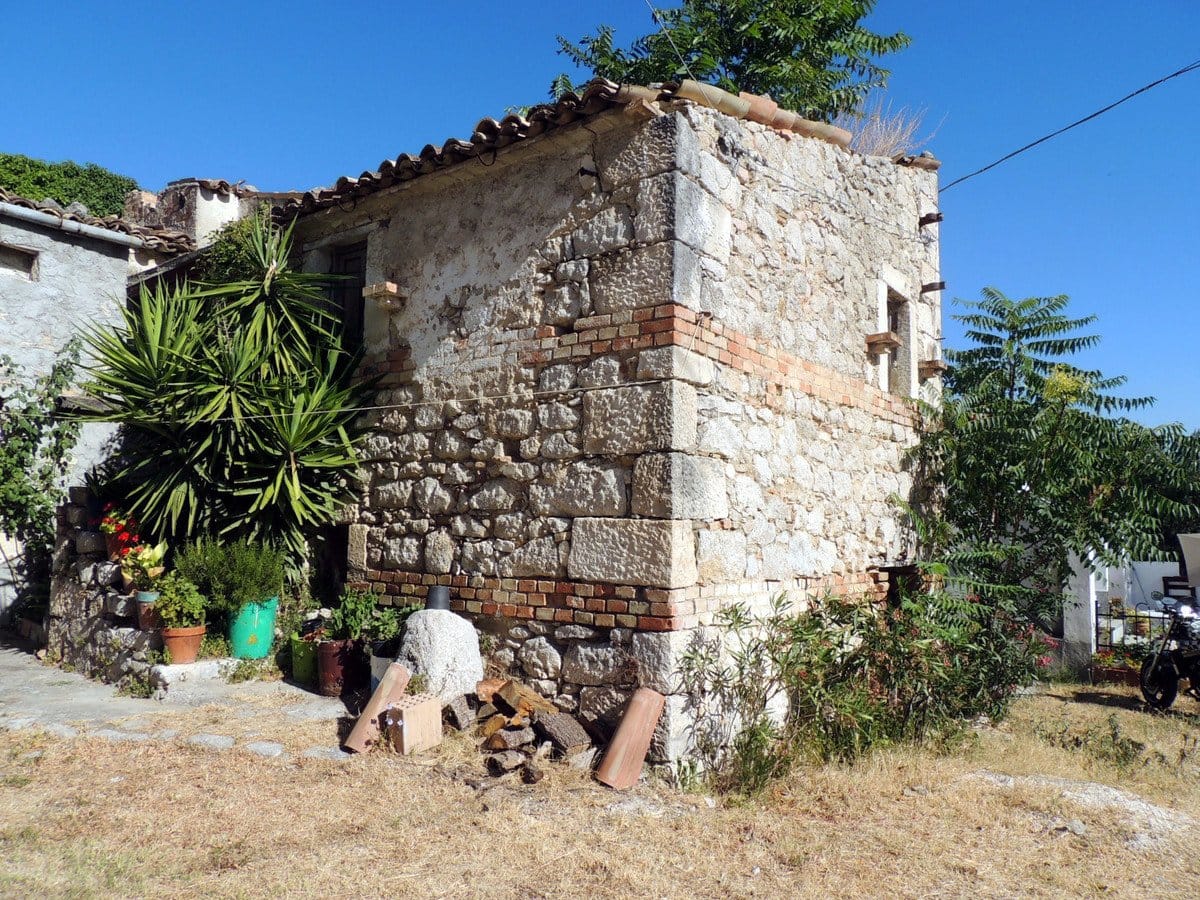
San Valentino in Abruzzo Citeriore, Pescara · €9,900 · 85 m²
This is a ruin, sold with land, built of Majella stone (the limestone of the mountain massif the town sits under) and listed at 85 square meters, about 915 square feet. The listing puts it a few minutes from the historic center, with mountain views in front of you and the town's supermarket, bank, post office, pizzerias and ice cream shop behind you, and it's close to what the English translation calls "the paved communal toad." We don't know how much land comes with it, so that would need to be checked with the agent. The agent says Pescara, its airport and the Adriatic are all about 30 minutes away, the ski lifts 20, and Rome two hours.
Via Gate-away, reference 0518 AB SCA.
Lodio, Castel di Casio, Bologna · €41,000 · 70 m²
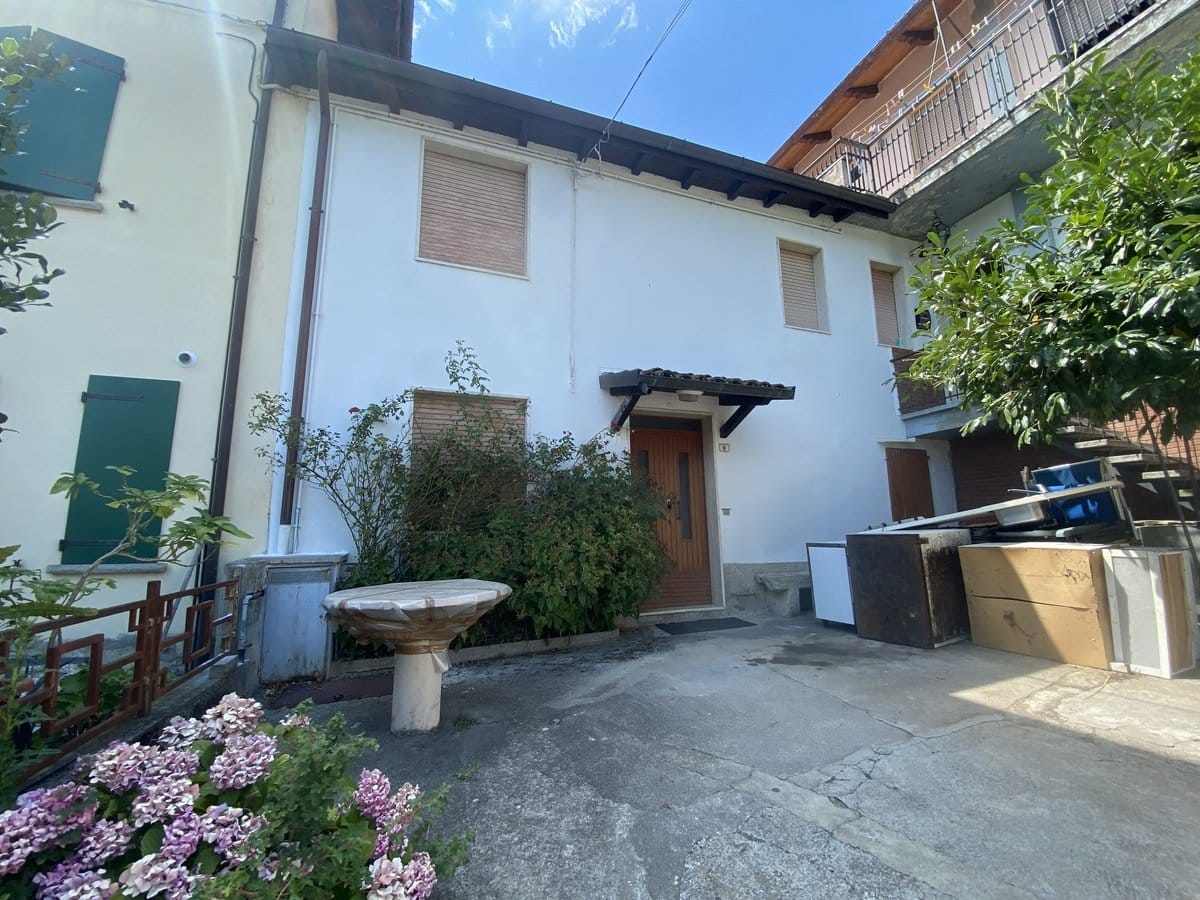
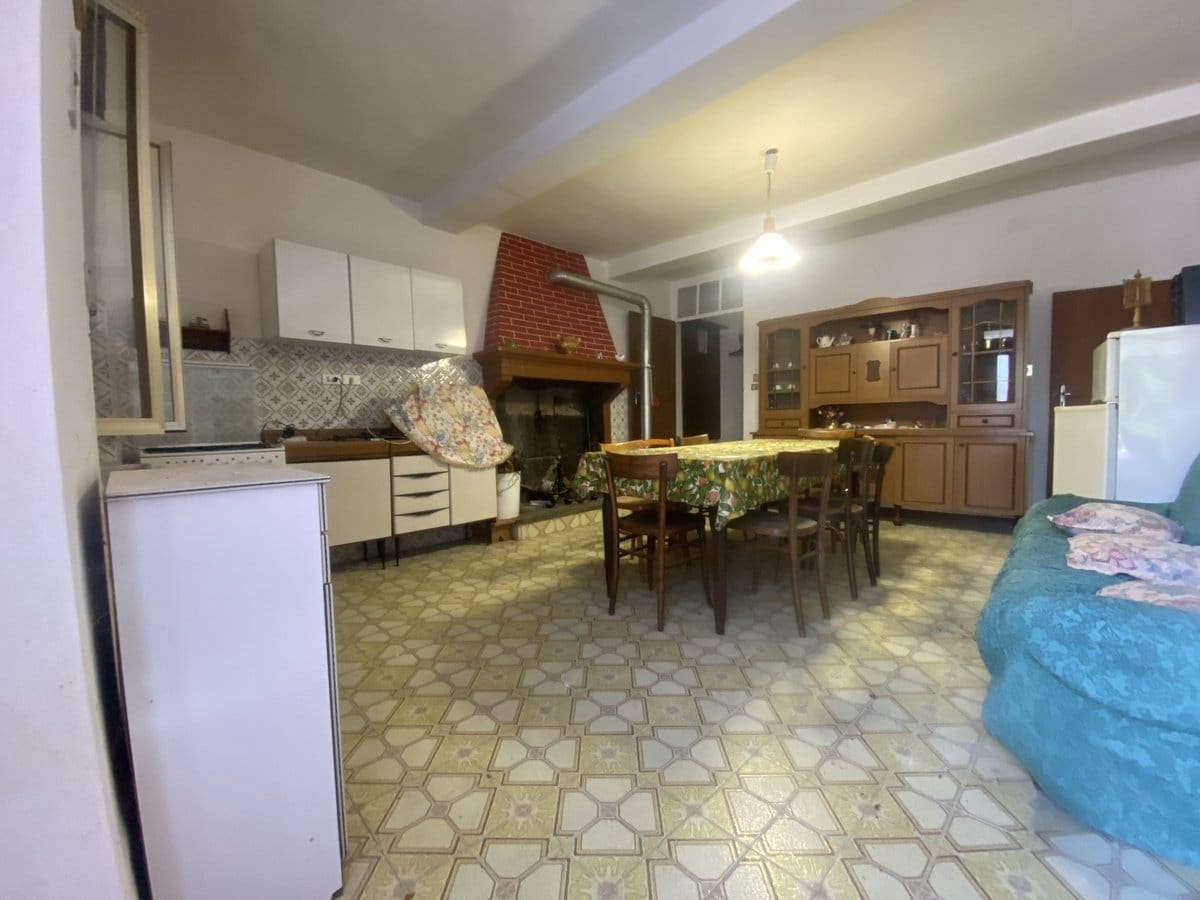
Up in the Apennines southwest of Bologna, in the hamlet of Lodio, this is a terratetto, a house you own from the ground to the roof, on two floors with 70 square meters inside (about 755 square feet). Downstairs there's a living room with an open kitchen, a wood-burning fireplace and a stove, a cellar, a utility room and a bathroom, and upstairs there are two bedrooms, one of them a double, and a second bathroom. It comes with a private entrance and courtyard, aluminum window frames, about 8,000 square meters of land (about two acres) and an 800 square meter garden (about 8,600 square feet) that isn't next to the house but is, the agent says, easy to reach. The listing calls it partially restored and says the roof has been checked and is in good condition.
The listing puts Lodio about 15 minutes from Lake Suviana and from Riola, which has the nearest train station. Suviana is a reservoir, and work on its dam started in 1928 to feed a hydroelectric plant that powered the railway between Bologna and Florence. In Riola, Cardinal Giacomo Lercaro of Bologna commissioned a parish church from the Finnish architect Alvar Aalto in 1965, and it's his only building in Italy.
Gabetti Sasso Marconi, Bologna, reference V1423JE.
Bulgaria
Vinarovo, near Stara Zagora · €38,500 · 86 m²
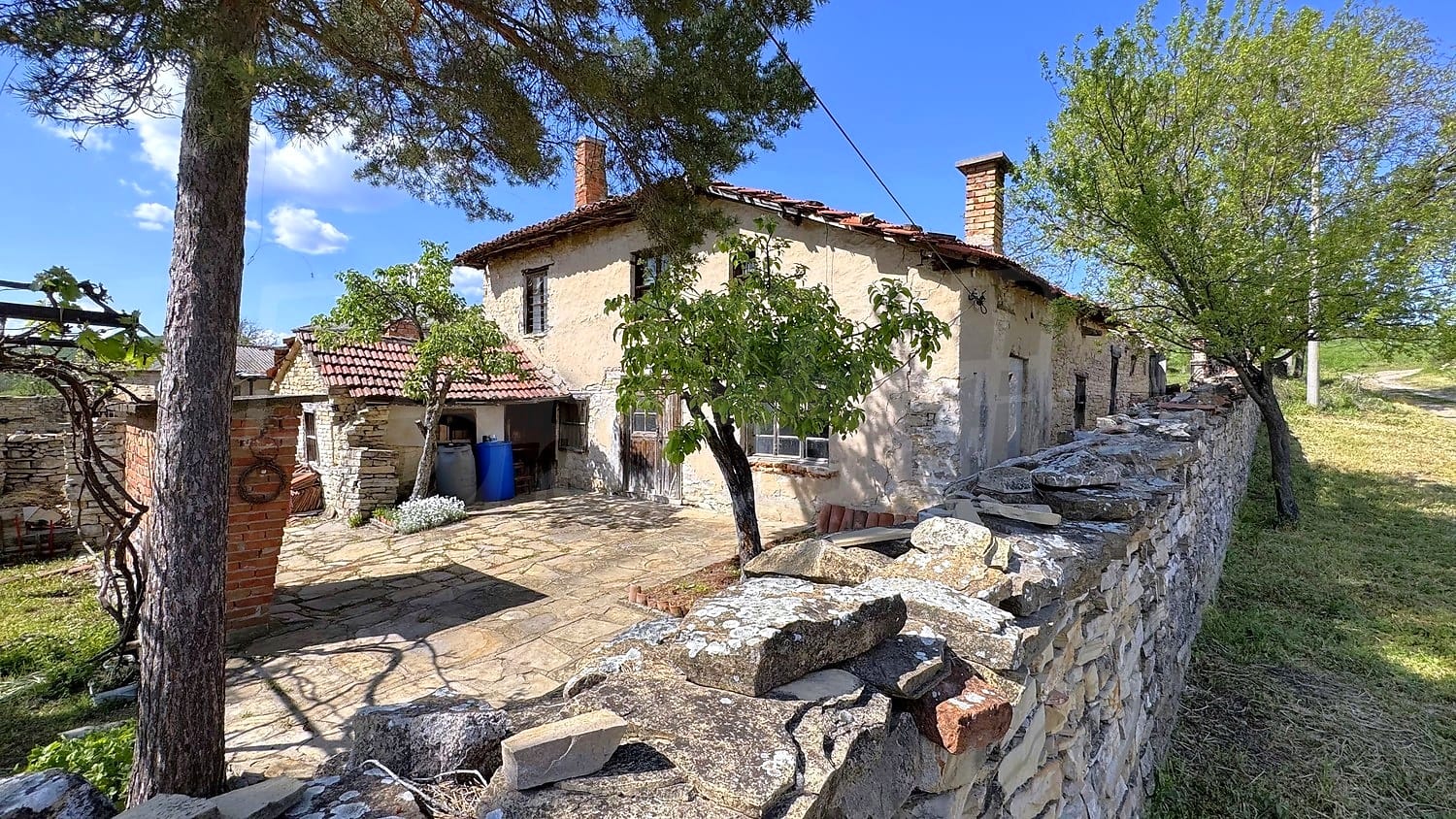
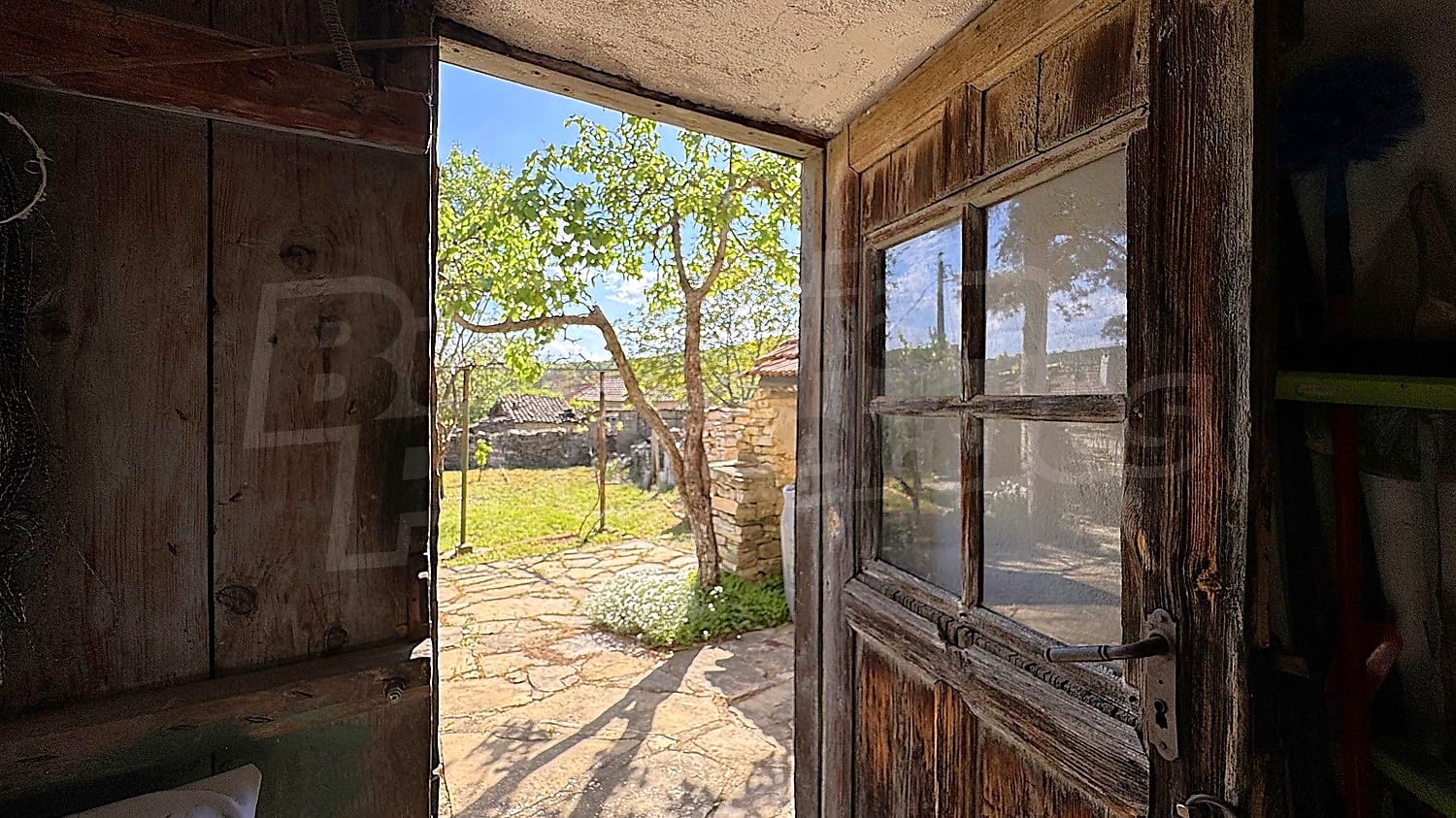
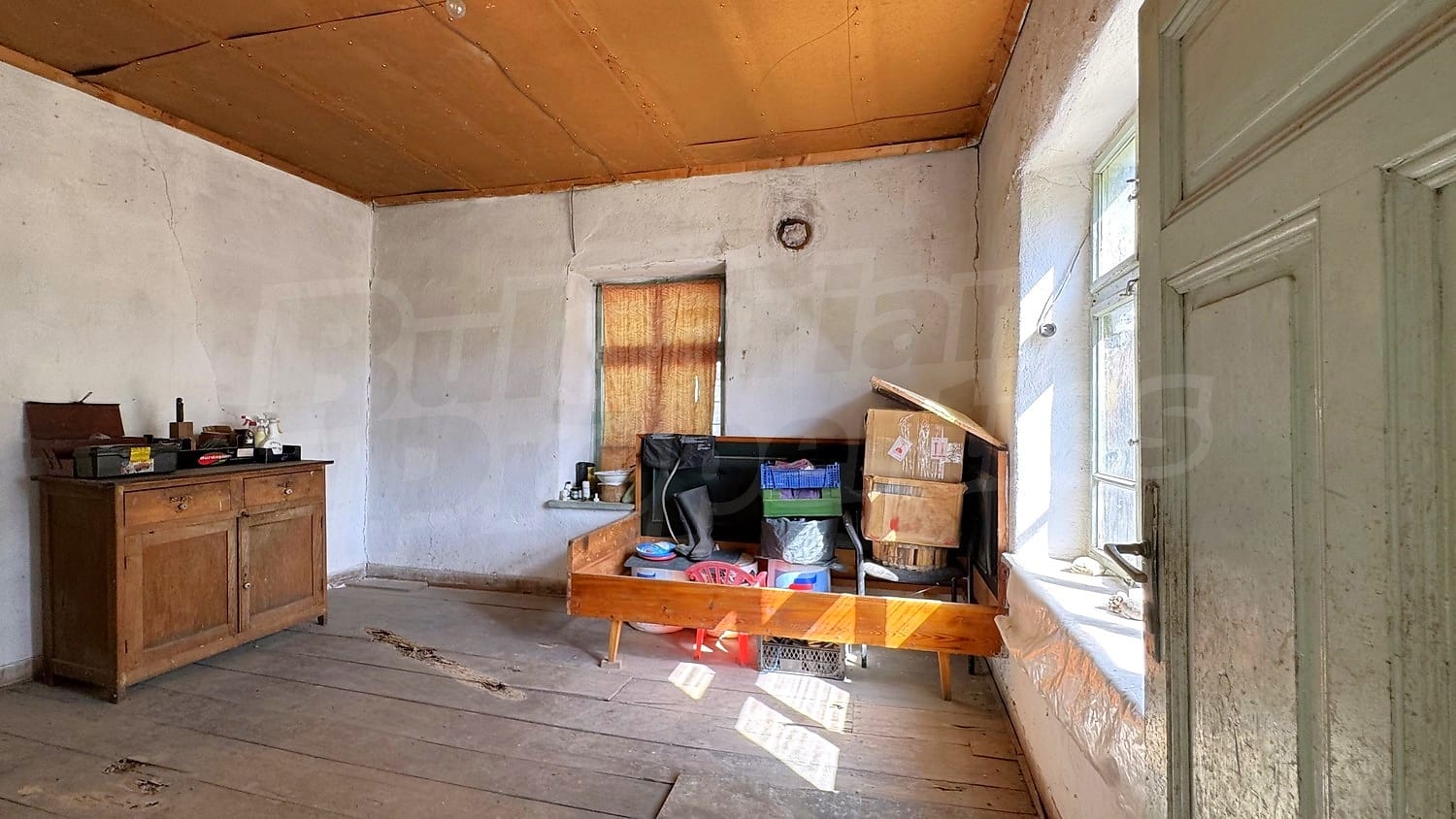
At the edge of the village of Vinarovo, about 24 kilometers (15 miles) from Stara Zagora, this stone house has 86 square meters on two floors (about 925 square feet) and a sloping plot of 1,140 square meters (about 12,300 square feet) with a stone wall around it, fruit trees, a walnut, and a view of the southern slopes of the Sarnena Sredna Gora mountains. There's an entrance hall and two rooms, a room with its own door that the agent suggests as a summer kitchen, and upstairs a corridor, a room, a walk-in closet and a storeroom. The listing says two floors but describes rooms on three, and we don't know which is right, so that would need to be checked with the agent. It's on electricity and drinking water, heated with electric heaters and wood, and listed as needing major repairs. The price has come down from €39,900.
Vinar is Bulgarian for winemaker, and Vinarovo has a winery, along with a grocery store, a town hall, a community center, a church and regular public transport, according to the listing. The village is in the municipality of Chirpan, where the poet Peyo Yavorov was born.
A reminder from Issue 10: a non-EU citizen can't own land in Bulgaria in their own name, so the usual route for an American is a Bulgarian single-member company to hold the garden.
Bulgarian Properties, Sergey Pelovski, Sofia office, reference SZ 87326.
Ireland
Curraun, Mohill, Leitrim · €110,000 · 0.59 acres
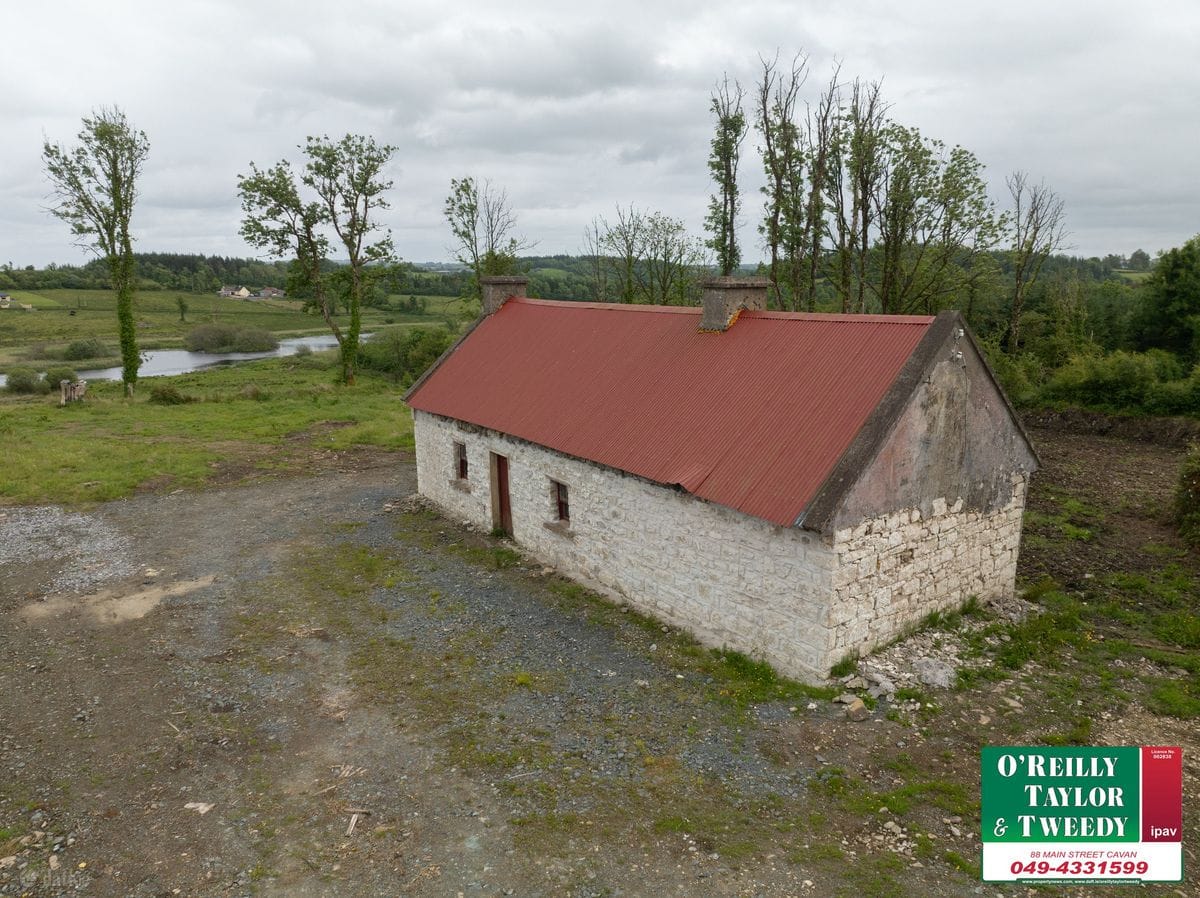
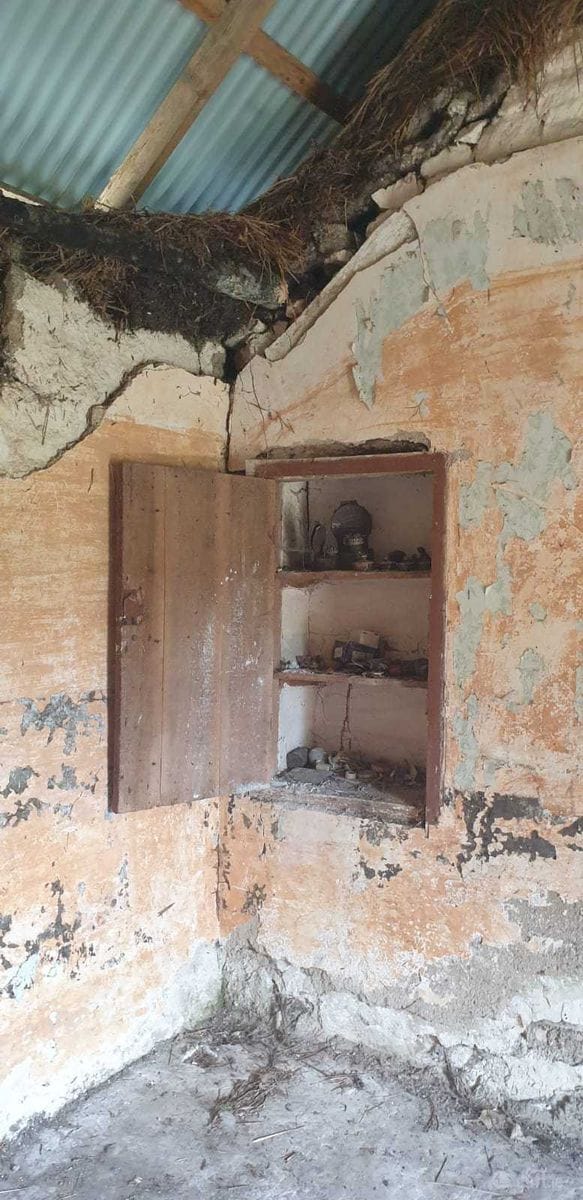
This is a traditional three-room cottage on 0.24 hectares (0.59 acres) looking out on Curraun Lough, and the agent says it keeps many of its original features. It's BER exempt (BER is Ireland's energy rating), the listing gives no floor area, and it's 4.4 kilometers (under three miles) from Mohill. The agent says it should qualify for the vacant and derelict property grants and for an energy efficiency grant, and tells you to check with the county council. The Vacant Property Refurbishment Grant, which Issue 16 explains, was extended last December to run until 2030. The cottage has been listed since July 2025, and we don't know whether it's still available, so that would need to be checked with the agent.
Turlough O'Carolan, a renowned blind harpist, married Mary Maguire in 1720 and settled near Mohill. There is a statue of him in the town. Boozy fact: in 1925, Mohill had 755 people and 29 premises licensed to sell alcohol.
Eamonn O'Reilly, 086 2788094.
Ballyglass West, Loughglynn, Roscommon · €115,000 · 74 m²
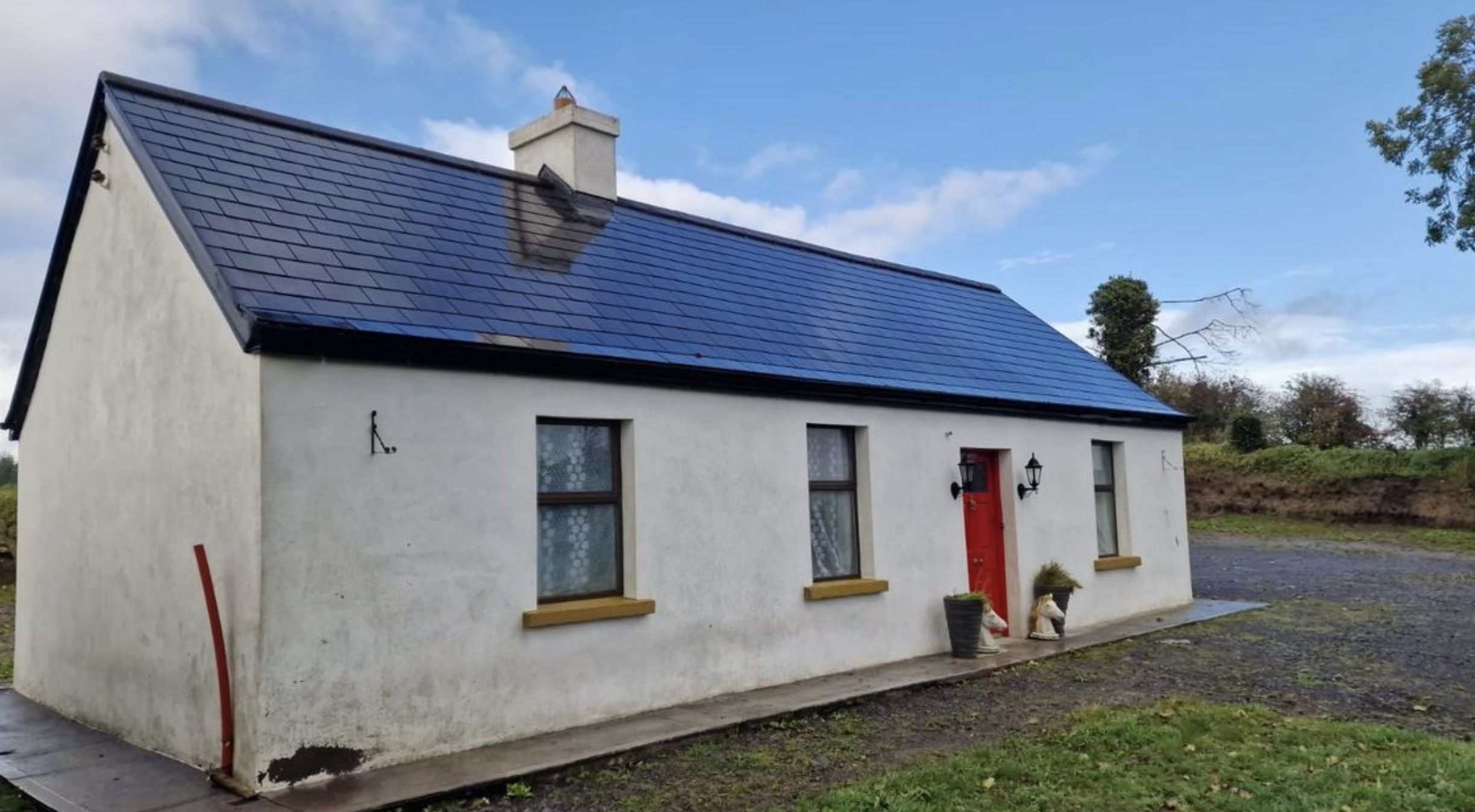
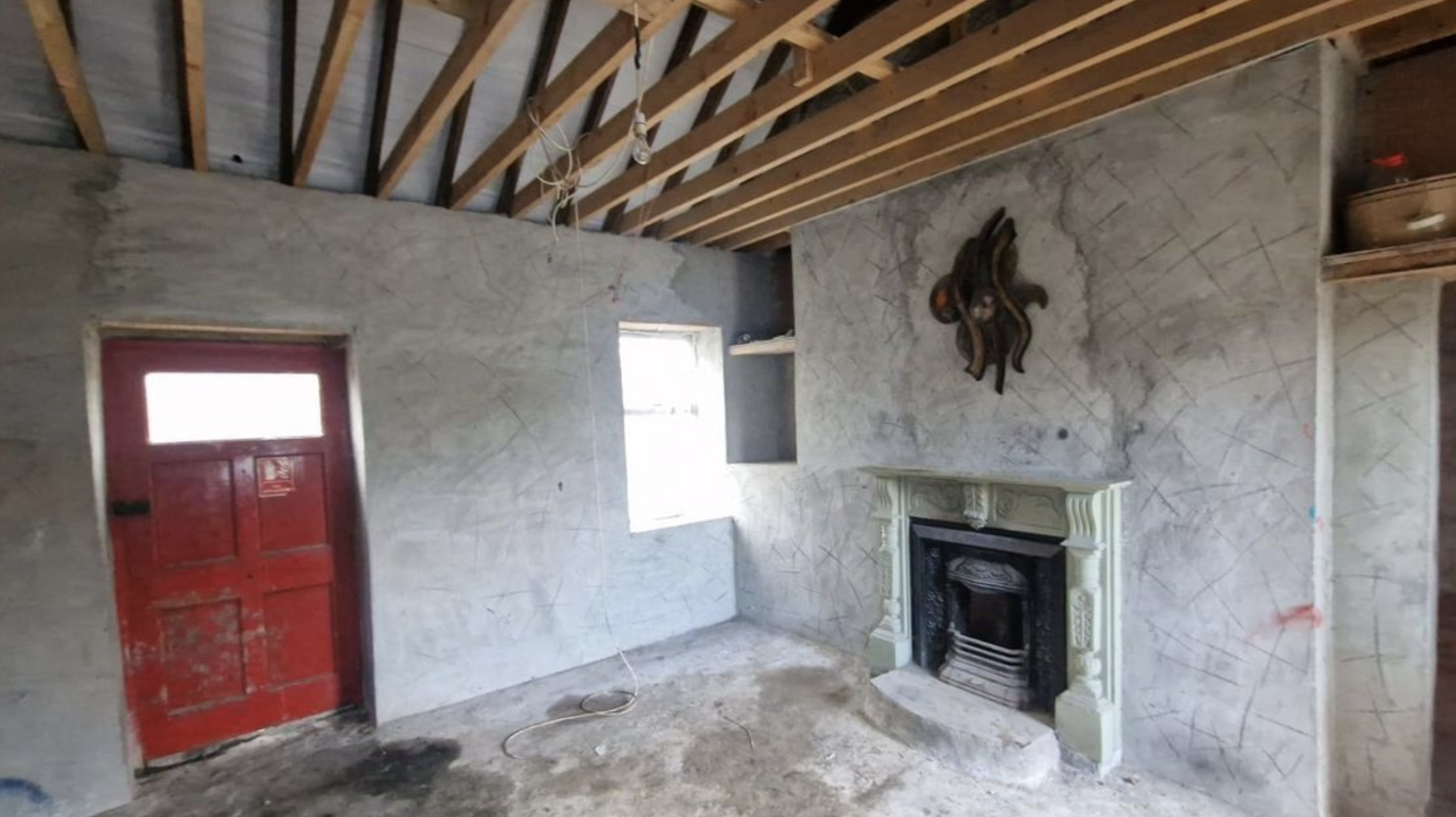
About two miles from Loughglynn village, this detached bungalow has 74 square meters (about 795 square feet), two bedrooms and one bathroom, though the description calls it a "2/3 bedroom," so ask about the third room. The work done so far is a new slate roof with fascia and soffit, interior walls plastered and, in the agent's words, "ready for insulated slab," mains water, a septic tank, high boundary fencing and a gravel driveway. It sits on a raised site with room to extend, fiber broadband runs past it, and the agent says it qualifies for the Vacant Property Refurbishment Grant of up to €70,000. The grant pays out after the work is done and signed off, and in Roscommon some applicants have taken out bridging loans to cover the wait. Castlerea and its train station are 15 minutes away, and Knock airport 25.
The village takes its name from Lough Glinn, a few hundred meters north of it. Loughglynn House was the seat of the Viscounts Dillon until the end of the nineteenth century, and in 1903 the Franciscan Missionaries of Mary took it over, ran a school there teaching home economics, and started a dairy that trained and employed a lot of local people. Loughglynn butter and cheese, according to the history kept by Mayo-Ireland, "became famous all over the world," until the dairy closed in the 1960s.
Nigel Dineen / Martin Finn Auctioneers, 086 2130723.
The Fine Print
A ruin in Italy usually sits in the land registry (catasto) under category F/2, unità collabente, meaning a building too far gone to produce an income. The San Valentino listing doesn't say which category its ruin is in, so ask the agent for the visura catastale, the registry extract, before anything else.
An F/2 building has no rendita catastale, the notional income Italian property taxes are worked out from. In 2019 Italy's highest court ruled that a correctly registered F/2 building isn't taxed as a building under IMU, the annual property tax, though each comune sets some of its own rules.
F/2 doesn't mean you can rebuild. Under Italian building law, rebuilding a collapsed building counts as renovation only if its earlier size and shape "can be established," which in practice means documents showing the old footprint, volume and legal status. A geometra (a licensed surveyor-technician) is who you'd hire to check.
On May 25th of this year, Italy's tax agency, the Agenzia delle Entrate, reversed its own 2019 position and said the first-home discount (prima casa), which brings the registration tax down from 9 percent to 2, can apply to the purchase of an F/2 ruin, as long as the ruin is made into a home within three years. The usual conditions still apply, including taking residency in the comune within 18 months, and if the house isn't finished in time you owe the full tax plus penalties and interest.
Lifestyle & Culture Notes
Crotone's wish list, and ours...
In Crotone, a city on Calabria's Ionian coast, a residents' committee sent the city seven proposals to "counter depopulation and revitalize the city's historic core," according to inItaly:
- Three to five years off property and waste taxes for anyone who moves into the old town, restores an empty building or opens a business there.
- Inspections to stop overcrowded rentals, and better-run public housing.
- Incentives for shops, restaurants and craftspeople.
- A yearly calendar of fairs, themed markets and craft shows.
- Better cleaning, lighting and safety, better links to the Castle of Charles V and the seafront, and a municipal cat sanctuary.
- Money from the special economic zone and national and regional programs.
- A permanent working group of officials, residents, shopkeepers and police.
It strikes us as a worthy exercise for anyone to perform for the place they live and love, or love to hate, or just want to love a little more. With our city’s November elections coming up, here’s what we wish was on the ballot:
- A shade tree over every bus bench, a Metro ride that feels safe at any hour, and better public transportation all around.
- Commutes shorter than a podcast episode, and safer roads for everyone.
- Empty buildings turned into homes, accessible for those who need them.
- A city budget spent so carefully that nobody who isn’t wealthy ever gets asked for another tax.
- Leases that let the quirky little coffee shops and mom and pop stores stay even after property values rise.
- Empty lots turned into gardens and small parks. Well maintained green space in every neighborhood, so nobody has to get in the car to get to nature.
- A municipal cat sanctuary, because we think Crotone might be onto something.
Recipes from the Map
Pallotte cacio e ova via Reporter Gourmet, from Villa Maiella, in Guardiagrele, at the foot of the Majella. These are Abruzzo's meatless meatballs, pecorino and cow's milk cheese bound with eggs and stale bread soaked in milk, fried slowly until they puff, then simmered for five minutes in a tomato and basil sauce loosened with vegetable broth.
Kissela banitsa via Chasing the Donkey, who call it Bulgaria's most popular traditional food. This version layers a soft yeast dough with butter and crumbled white cheese, cuts it into squares and bakes it for 40 minutes, and you eat it warm or cold with yogurt or ayran.
What we're reading
Afghan Migration To and Through Italy: No place to call home via the Afghanistan Analysts Network, by Fabrizio Foschini, from October 17th. Until 2015, asylum seekers in Trieste were housed in small apartments with language and job training, and Foschini describes how reception there has since been cut back to the basics.
There is a very Italian way of talking about home via Il Foglio, from October 17th. It argues that Italy has "a very Italian way of discussing housing," which is to fight about prices and blame landlords, funds, platforms or tourists, and that the answer is to build, including making it easier to turn old offices and shops into homes. It points to Auckland, where denser zoning from 2016 brought more than 20,000 extra homes by later estimates. The piece runs in the paper's Foglio AI section with no byline, and the English is machine-translated.
'Reclaimers' Broke Into Empty Houses And Got To Stay, But Others Haven't Since via NPR's The Indicator from Planet Money, by Cardiff Garcia and Robin Urevich, from March 2021, with Sasha Atkins's story and the Reclaimers' push to put the El Sereno houses into a community land trust.
Underutilized downtown LA office to be converted into housing units via NBC Los Angeles, from April 28th. Mayor Karen Bass has extended the city's 1999 rule for turning old buildings into housing to all of Los Angeles, which her office estimates could open up more than 43,000 homes, and the downtown World Trade Center is becoming 512 affordable apartments.
Southern California has jobs for incoming Afghans but not much affordable housing via KPCC, by Josie Huang, from August 2021. One refugee services worker got seven hours' notice that an Afghan family was landing at LAX, and people around the city offered spare rooms and backyard units.
Concerns raised over lengthy delays in payment of vacant property grants via the Roscommon Herald, by Richard Canny, from October 16th. The council has 500 grant applications in front of what its director of services called "a very small team," and because contractors get paid up front, some applicants take out bridging loans that Councillor Michael Holland called "like a second mortgage."
Live from our group chat
Wally: Did you see Crotone wants a municipal cat sanctuary?
Malia: I’d vote for anyone who proposed that measure.
Wally: Well, nobody’s running on that in LA this year, that's for sure.
Malia: I’m writing it in on my ballot.
That's issue twenty-three. Thanks for reading.
Until next week, Wally & Malia
Remnant is a weekly newsletter about distressed and beautiful houses around the world. We are not real estate agents. We just got a little obsessed and started digging. What will you do with what we find?