
Remnant – Issue No. 18


Greenock's £400 Relocation Grant in 2026, plus Six Houses in Scotland, Ireland, Italy, Croatia and Japan from £8,000
There's a top floor, one-bedroom flat with double glazed windows and a share of the communal back garden going to auction in Greenock, Scotland on Thursday, with a guide price of £8,000. The building is in the middle of a town of 78,550 people, forty minutes from Glasgow, and it's incentivized, albeit mildly, as the Inverclyde council is offering the buyer £400 toward the cost of moving in.
On August 21st the BBC ran a piece about how Greenock is actively welcoming immigrants, including a growing number of Nigerian and other African newcomers. The area has lost more people than anywhere else in the country – 22,000 fewer residents than in 1981, down to 78,550 in the National Records of Scotland figures that came out this July, with another 16 percent projected to go over the next twenty years. The council's number one priority is finding people, and its current plan for finding them is via migration from other lands.
The money set aside for the whole repopulation effort is pretty small potatoes, only £22,000. Three grants – £400 to relocate to Inverclyde, £300 to stay in the area while you study somewhere else, and £300 (coming soon) toward the costs of getting into work for people from minority ethnic communities. First come, first served, running to July 2028 or until it's gone. One of the three has already closed because so many people applied. We don't blame them. Scotland is looking pretty good from where we sit, given the waves of heat waves we've been having recently in Los Angeles.
It appears that Greenock has plenty of available housing, given their ongoing emptying out trend. Some recent factors: IBM had more than 5,000 people at its campus outside town until the site closed completely in 2016. Another 1,500 jobs have also gone in the past four years as Amazon and EE and others left. In the article it says that the week the reporters were there, the local shipyard announced it was cutting about a quarter of its workforce. Christianah Omilana, who opened the Anik African Store on the High Street in May and sells yams, plantain, okra and catfish, said it in six words: "Immigrants will come when there is work."
Six houses this week, from £8,000 to €210,000, in Scotland, Ireland, Italy, and Japan. Plus the Greenock grants details, a bit about Scotland's role in the history of the sugar trade, John Malkovich going to bat for Croatia while refusing to relax, what we're reading (and watching), two recipes and our silly group chat.
Scotland, Greenock
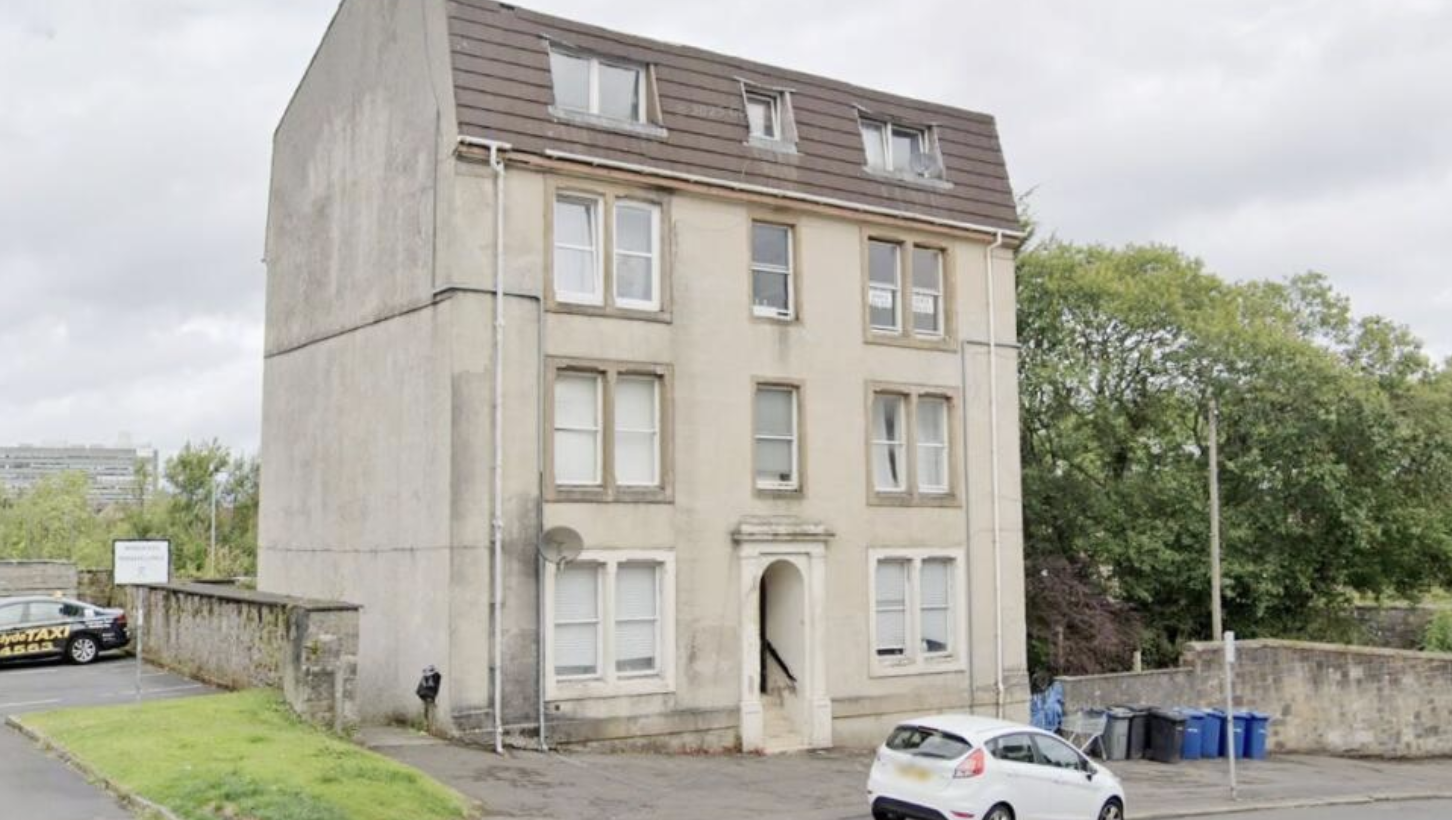
40 Sir Michael Street, 3FF · £8,000 guide · auction Thursday
Eight thousand pounds. It's a top-floor flat – 'flat' being what the British say for apartment – and you come in through a communal entrance to a reception hall with storage, then a lounge and kitchen together, a bathroom, and one bedroom with more storage in it. Double glazing, a share of a communal garden, council tax band A (the lowest band there is in Scotland), and an EPC rating of E, EPC being the energy certificate every property over there has to carry.
The agent gives no floor area and no tenure, listing both as "ask agent," and the write-up says the flat "requires renovation and modernisation."
It's a timed online auction on September 17th, 10am to 3pm, run by Future Property Auctions out of Glasgow.
The agent's line on the location is "transport links, shops, and amenities on your doorstep," which for Greenock means Glasgow is about forty minutes away.
Kelly Street · offers over £73,000
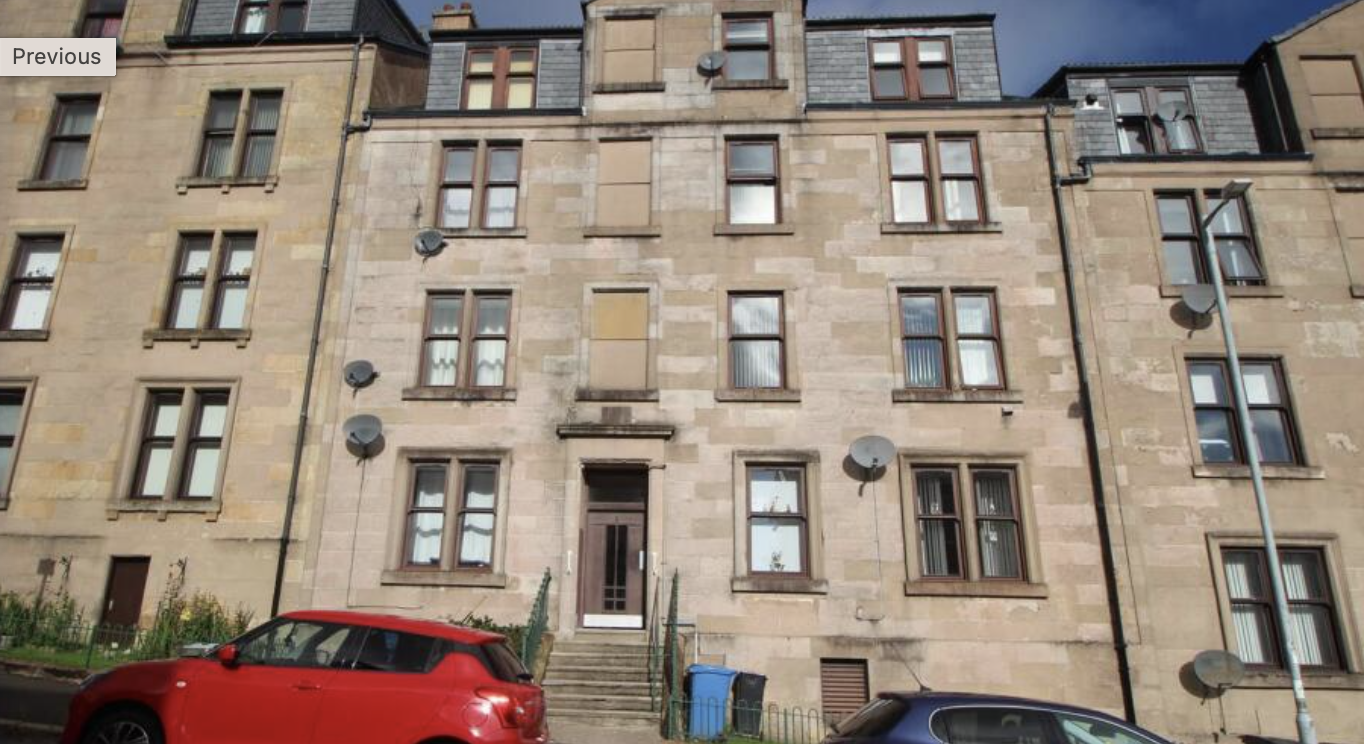
Same town, nine times the money, and you could be living in it next month.
Two bedrooms on the second floor in Greenock's West End, sold freehold, with gas central heating and a boiler that went in this summer, double glazing and a security entry system. The lounge is 14'8 by 13'4, the kitchen 5'10 by 12'0, both bedrooms are doubles. There's a private cellar, and a shared drying green out the back – a drying green being the patch of communal grass where the washing goes out, and yes, in Scotland, outside. Council tax band A again, EPC C, and again nobody has measured the place.
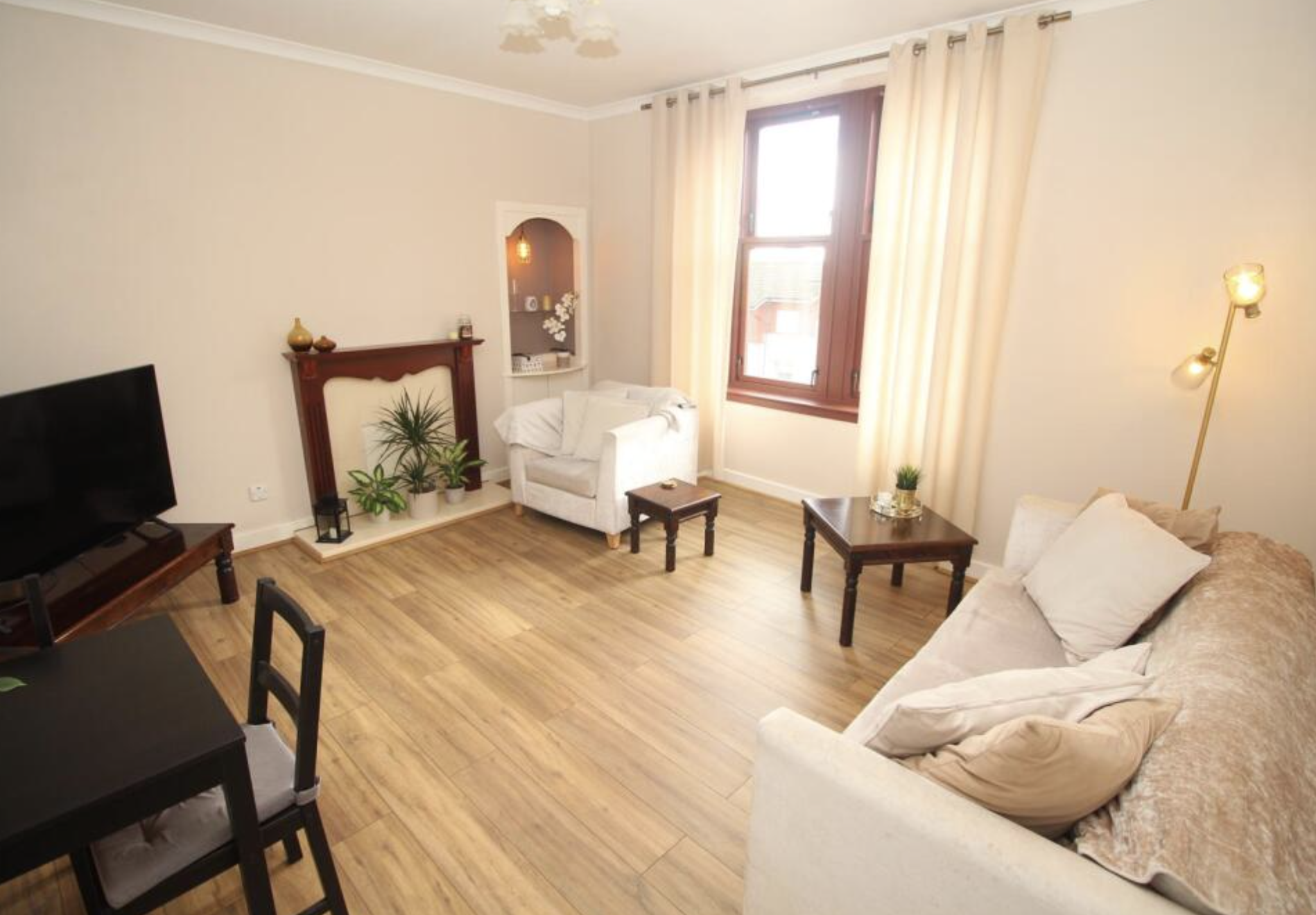
"Offers over" is the Scottish selling convention, so £73,000 is a floor and bids are expected above it (plus closing costs, of course). West Station is close enough to walk to, which puts you on the line into Glasgow.
Elsewhere
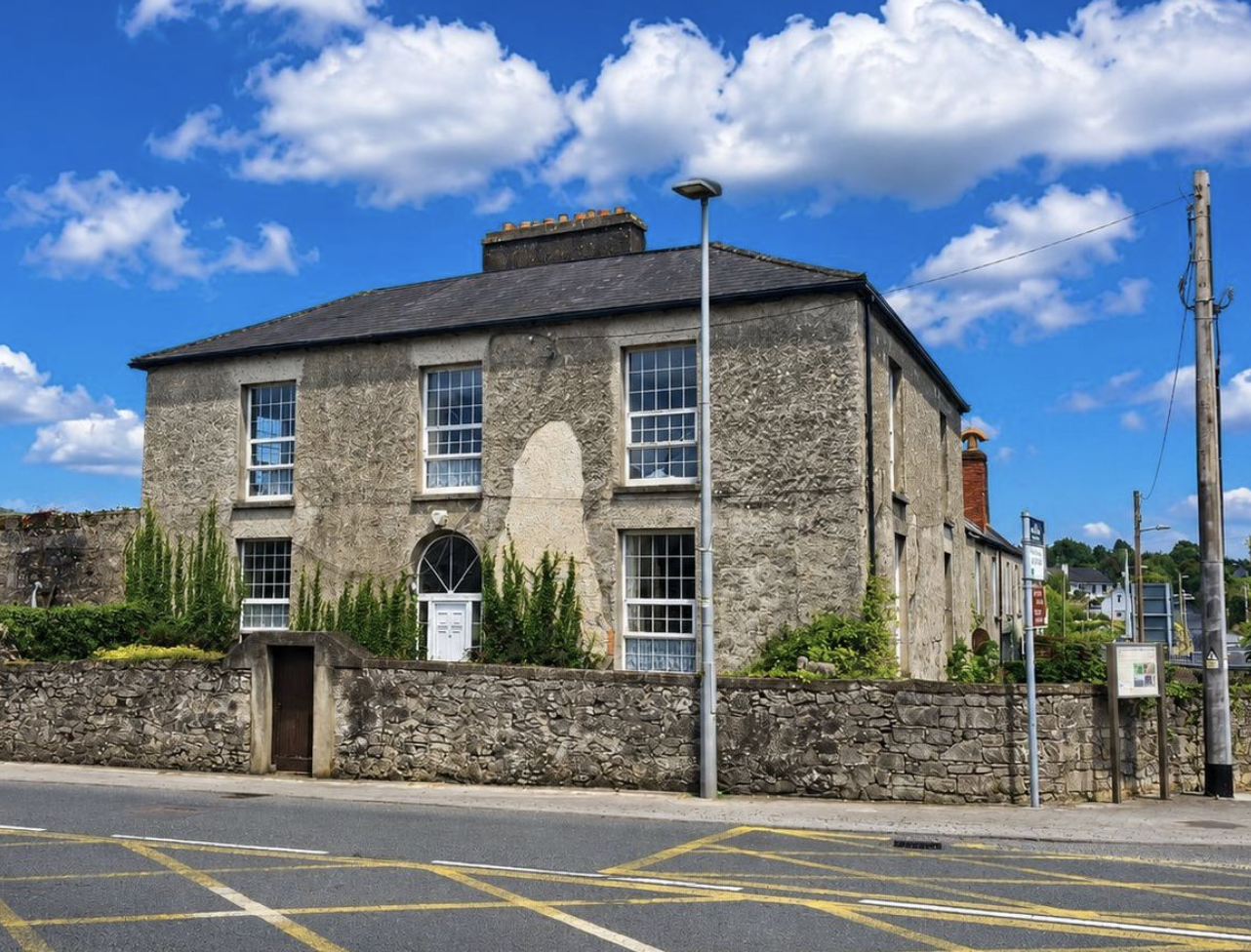
Ireland, Creamery House, Main Street, Buttevant, Co. Cork · €210,000 · 261 m²
A detached five-bedroom Georgian on the main street of a Cork town, 261 square metres, which is about 2,810 square feet, two bathrooms. Downstairs you get an entrance hall, a drawing room and a dining room with open fireplaces and timber floors, a kitchen with an AGA – the cast-iron range cooker that stays on all day and heats the room whether you want it to or not – a utility room, and a living room with another open fire. Four of the five bedrooms upstairs have open fireplaces too. That's seven fires in one house. Sheds to the rear and side, a garden at the side, vacant and chain free, which means the seller isn't waiting on a purchase of their own. DNG Ryan has it on Daft.
It's a protected structure, so any restoration goes through approval, and the agent says it may qualify for the Vacant Property Refurbishment Grant, which we ran in full in Issue 16, ceilings and clawbacks and all.
Buttevant sits on the N20 between Cork and Limerick. In 1752 two men called Cornelius O'Callaghan and Edmund Blake made a bet over dinner at Buttevant Castle and raced their horses about four miles cross country, from St John's church in Buttevant to the church at Doneraile –– hence the origin of the term "steeplechase."
Italy, Via Cardarelli, Conca Casale, Molise · €20,000 · 80 m²
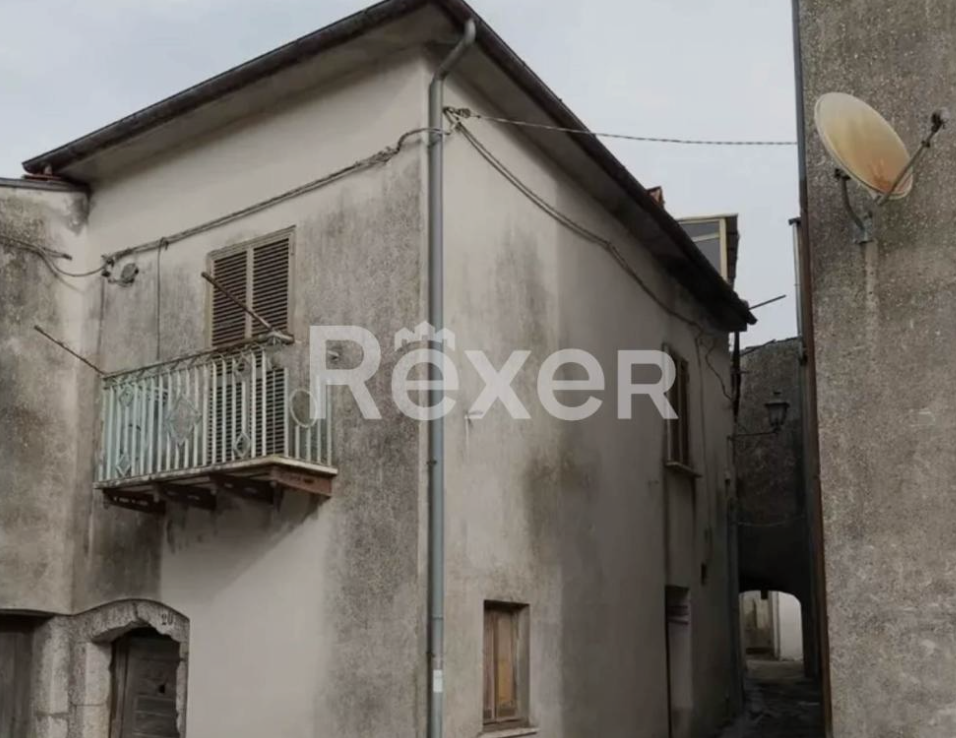
Eighty square metres, about 861 square feet, ground floor of a two-storey building facing the main square, directly opposite the church. Five rooms: an eat-in kitchen with a fireplace in it, a living room, two double bedrooms and two bathrooms, one with a tub. A veranda, a balcony, a cellar, and a utility room that's already plumbed. Aluminum double-frame windows, independent heating, and it comes furnished. Energy class G, which is the worst one going. Ready to live in, according to the agent. €250 a square metre.
In terms of how small this town actually is, Conca Casale had 188 residents at a 2017 count, spread over 14.5 square kilometres at 657 metres of elevation, so about thirteen people per square kilometre. It's twenty kilometres southwest of Isernia and it borders San Vittore del Lazio. It's isolated, to say the least...
Japan, Imari City, Saga · ¥2,500,000 · 231 m² on 559 m²
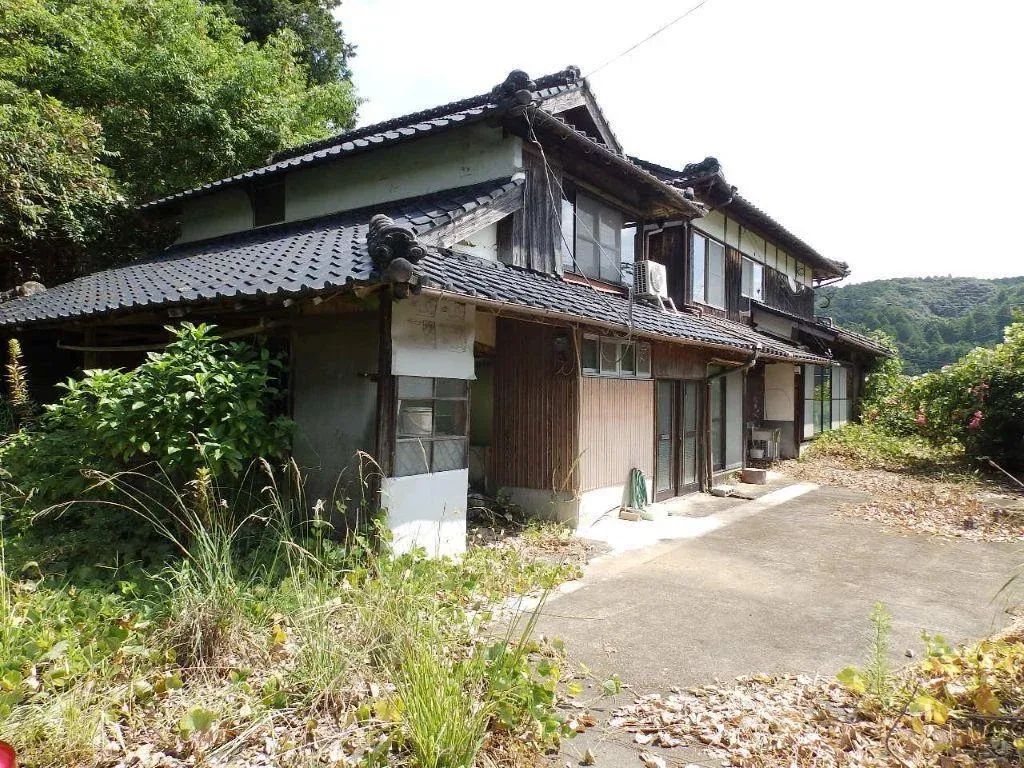
A wooden house built in 1939 on Kyushu, and it's big: 231 square metres of building, about 2,490 square feet, on 559 square metres of land. The listing calls it 8DK, meaning eight rooms plus a dining kitchen. Garden, parking, mains water, septic tank, gas cooktop, a toilet and a bath. It sits outside the urban planning area on land classed as agricultural, which matters if you have plans.
Akiya Hopper puts the all-in cost at ¥4,110,000 once taxes, fees and the broker's commission are counted. So that's ¥1,610,000 sitting on top of the price before anybody's picked up a hammer, and akiya listings rarely print it.
Distances, from the listing: 2.1 km to the station, 2.4 to a convenience store, 4.5 to a bank, 5.8 to a supermarket, 6.0 to a hospital, and about nine minutes to the middle of Imari.
Imari was a porcelain industry town. The kilns were up the road in Arita, but the ware shipped from Imari's port to the rest of Japan, to China and to Europe.
Croatia , Vrbovsko, Gorski kotar · $40,602 · 300 m² on 406 m²
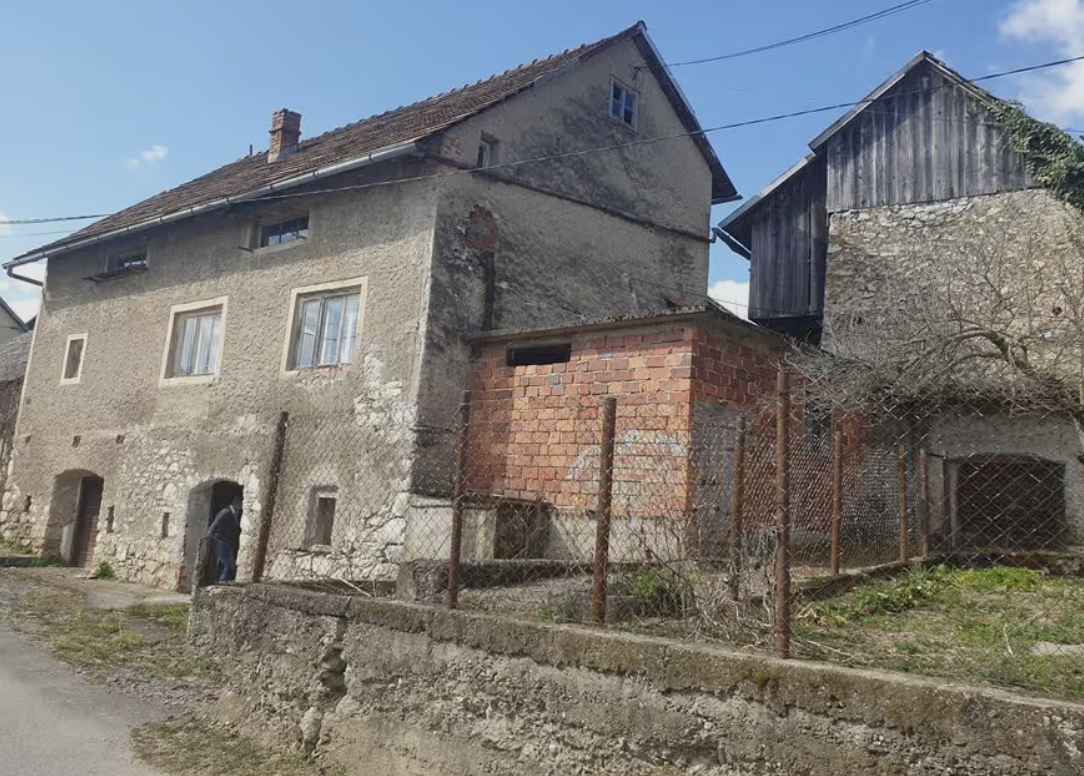
The one in this issue you could move into, in the country Malkovich is selling. Three hundred square metres of house, about 3,229 square feet, built in 1926, on a 406 square metre plot at the very end of a village, on the edge of a forest.
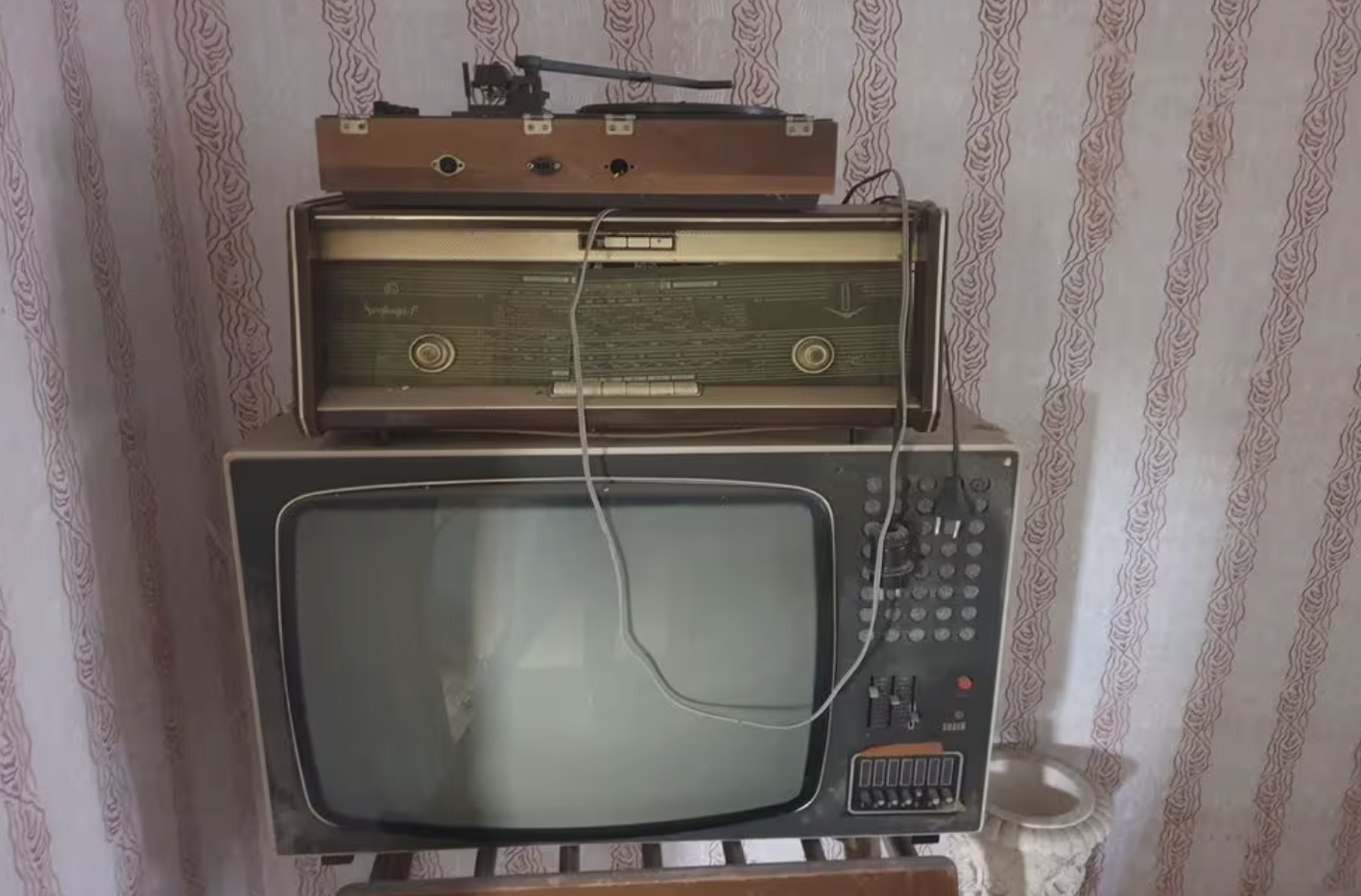
Six rooms over three floors. On the first floor there's a room, a kitchen and a living room with a bathroom off it, three bedrooms on the floor above, an attic over that, and two large basements underneath. Three bedrooms, one bathroom, two further toilets. The agent calls it a small autochthonous house, meaning built the local way out of local material, and says it's secluded but still close to the middle of the village. Energy rating: no data. Reference 300741002-65. But hey, it appears to come with a television, radio, and record player!
The Kupa runs a few kilometres away, and so does the Slovenian border. The river rises at 321 metres up in Risnjak National Park, where the spring and the ten hectares around it have been protected since 12 December 1963, and it comes out of the rock turquoise. One of Vrbovsko's own thirteen settlements is called Severin na Kupi, Severin on the Kupa.
Vrbovsko had 6,047 people in 2001, 5,076 in 2011, and 3,876 in 2021. That's down 36 percent in twenty years, and almost a third of the people left are 65 or older.
Check the numbers. Properstar lists this at $40,602, which is its own conversion of a euro price, so get the euro figure from the agent before you plan anything. The listing also calls it a detached house on three floors and then says "4th floor," which is the portal's data.
The Fine Print
Inverclyde's grants
The Inverclyde Relocation Grant, £400. For people moving into Inverclyde, and also for people already in temporary accommodation there who are moving into a permanent home. It goes toward the costs of moving and settling in, and it's open.
The Inverclyde Stay and Study Grant, £300. For Inverclyde residents covering the costs of education, training or an apprenticeship while carrying on living in the area. This one is closed. The council's page, updated August 25th, says applications aren't being accepted any more because of the level of demand, that anything received before closure gets assessed in the order it arrived, and that the grant may reopen if there's funding left over afterward.
The Inverclyde New Scots Support into Work Grant, £300. Announced, not open yet. For people from minority ethnic communities, toward the costs of preparing for work, training or employment.
The fund. £22,000 across all three, first come first served, running to July 2028 or until it's gone. The council has also hired a community repopulation officer. Council leader Stephen McCabe said reversing the trend "won't happen overnight but these new grants are the first baby steps in our repopulation strategy."
No income test. None of the three sets a salary floor. Most of the American programs doing the same thing do, which is in the New York Times piece below.
Asylum seekers in Greenock mostly aren't permitted to work while they wait on a decision from the Home Office, which is Britain's interior ministry. The Reverend Jonathan Fleming at Lyle Kirk, who has been supporting Iranian refugees there, told the BBC they want paid work, can't get it, and are "actually trapped" in receiving financial aid instead. YIKES. The council has taken more than 200 people through the Home Office dispersal scheme, and McCabe says the area has been given a disproportionate share of them.
Most of the town's African residents came on skilled worker visas – the route people call sponsorship – and work in health and care in Glasgow and Paisley, so they came to Greenock for the cheap housing and they commute out for the job. Mo Almalarashid arrived in 2018 as a Syrian refugee with no English at all, and now he's a gym instructor/ trainer in Greenock, Scotland. Wild.
Lifestyle & Culture Notes
Sugaropolis
In the nineteenth century Greenock's industry was refined sugar for a worldwide market. Its nickname was Sugaropolis. The sugarcane came from the Caribbean, and so (by way of sugar and tobacco) did a good deal of the town's money. There are so many thoughts and questions running through our minds here, in terms of this region's historical connection to African slave labor in the Caribbean, and current influx of African citizens revitalizing this post-industrial town...
Three constructions from the sugar refinery heyday are still standing.
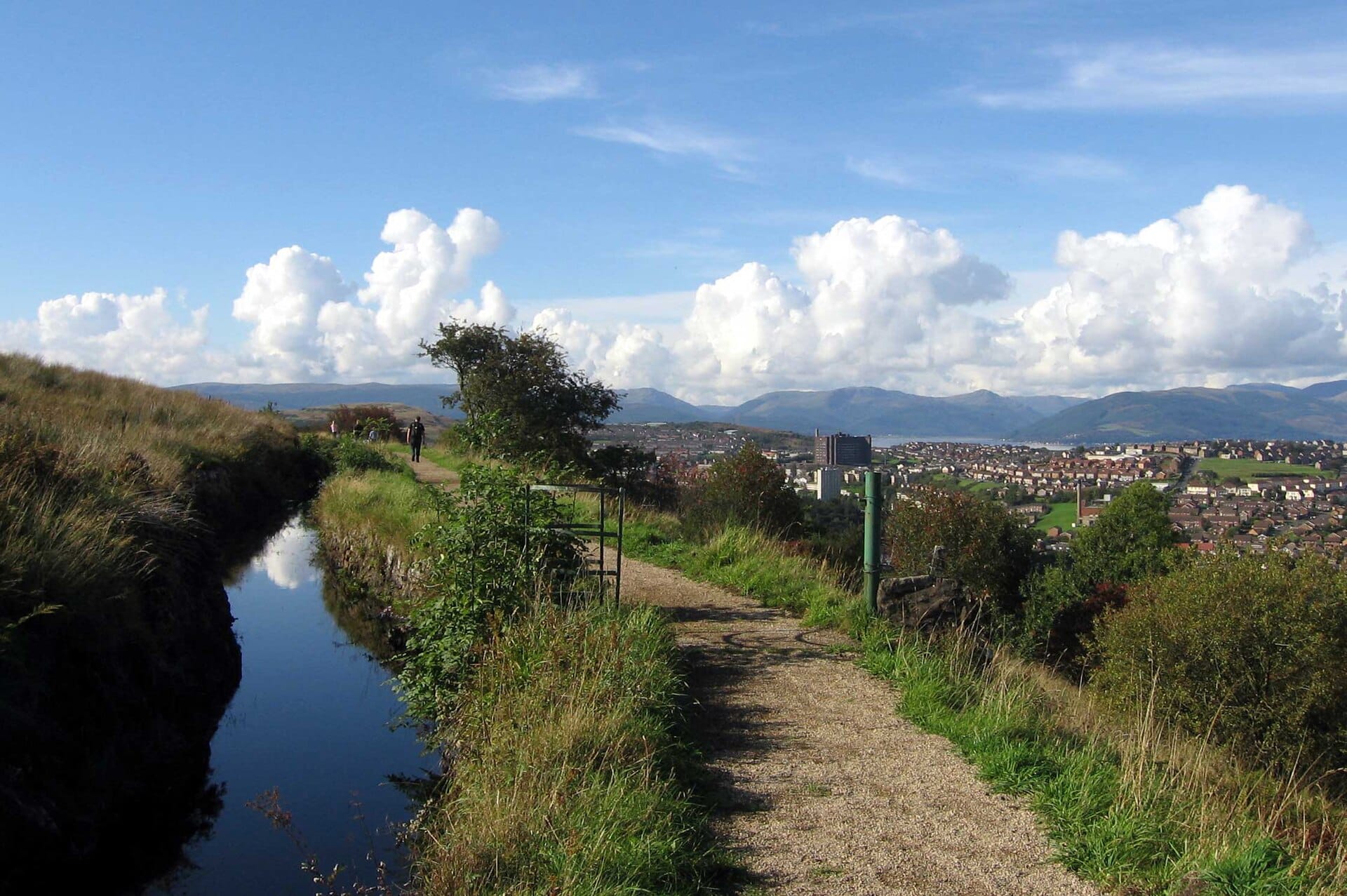
The first is the Greenock Cut, an open aqueduct built between 1825 and 1827 by an engineer called Robert Thom, running 8.9 kilometres, about five and a half miles, and doing two jobs at once: bringing drinking water into Greenock, and selling waterpower to manufacturers, with around nineteen falls along it rented out. It became obsolete in October 1971 and was designated as a national historical monument in 1972. You can walk the whole thing, starting from the visitor center at Cornalees Bridge.
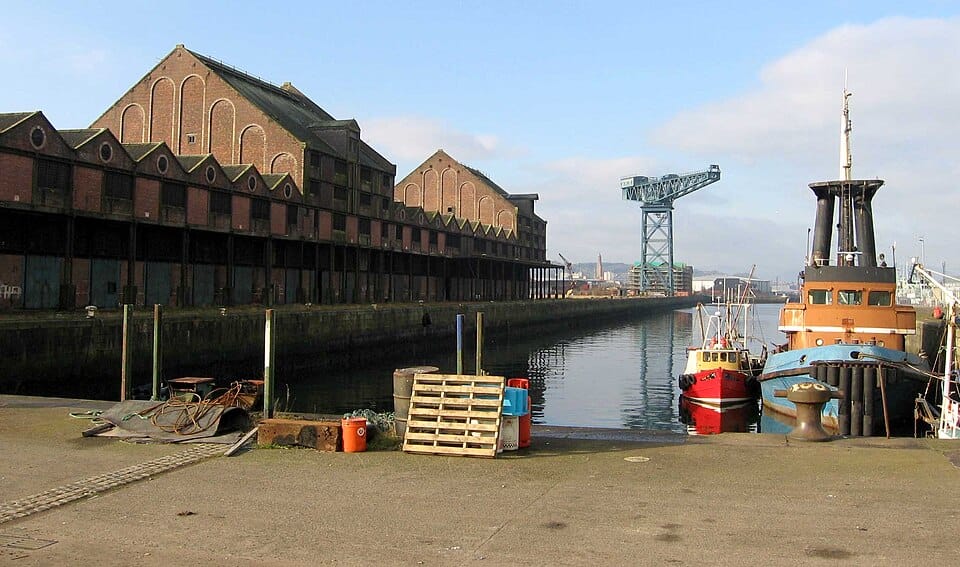
The second is the sugar warehouses at James Watt Dock, built between 1884 and 1886, category A listed since 1987, and according to The Scotsman the largest surviving cast iron and brick structures in Scotland. In June 2020 the local MSP Stuart McMillan – an MSP is a member of the Scottish Parliament – proposed turning them into a National Museum of Human Rights. His argument is that the country has been selective about which parts of its own history it tells, and in his words: "For too long we have cherry-picked parts of our history that don't demonstrate the full extent of our nation's involvement in the slave trade or the Empire."
A third one is in the process of being renovated. Derek Mitchell and a group of locals bought a former sugar refinery next to an Aldi parking lot and want to make it a hub teaching science, technology, engineering, arts and math to young people. They think it needs £5 million and they're looking for partners. What he told the BBC was, "If you build a sense of belonging, naturally and organically, people don't want to leave."
What we're reading (and watching)
- The town whose council wants migrants to move in, Michael Buchanan and Adam Eley, BBC News, 21 August 2026. Read it for Tiffany, who's 29, moved away for work, came back to raise her child, and is now working out how to leave again, and for the pensioners at the Lyle Gateway cafe, who are perfectly happy for migrants to move in –– they just want to know where they will find work.
- Want to Entice New Residents? Offer Cash, for a Start., Lydia DePillis, The New York Times, 12 September 2026. The American version of the Greenock question: does paying people to move actually do anything? Kelly Gourley, who runs economic development for Lincoln County, Kansas, started a relocation program in 2023 and got five takers the first year, all remote workers, some with kids. Three have since left. "Easy come, easy go." Where the Kansas money jams is the $55,000 salary floor you have to clear to qualify, which rural schoolteachers often don't, and the fact that there's nowhere to rent, so the town of Neodesha hasn't given away a single incentive. Randy Maiers, who runs a community foundation in St. Clair County, Michigan, has been tapering his grants off since 2016: "Dump your money into a place that people want to live in – that's where we're seeing the needle move." Then there's Malorie Elliott, 32, whose grandmother told her there was no opportunity in rural Kansas, who moved back onto the family land on a $5,000 grant, and bought the downtown gym the county had installed in a vacant grocery store, and now wants to open a restaurant and a clothing store on Lincoln's main street.
- Take a walk on the wilder side of Japan with Walk Japan, Everett Potter, Forbes, 30 August 2026. A week on foot through Tohoku following Basho's route north, sleeping in ryokans, eating mountain vegetables you've never heard of, soaking in onsen every night. What stayed with us is that a lot of the houses in the villages they walked through were akiya, and that the group passed a derelict, overgrown ski resort left over from the 1980s building boom. Also, the bear warning signs come with a block of wood and a wooden mallet hanging next to them, and you're meant to whack it a few times so the bears know you're there. We love this.
- Croatia – I Hear It's Beautiful, Croatian National Tourist Board, June 2026. Six minutes of John Malkovich being quietly furious that nothing is happening to him. The campaign is built around fjaka, pronounced fee-aka, which is the Dalmatian practice of sitting still and letting the day go past you, and the joke is that Malkovich, classic misanthropic facade intact for this spot, doesn't get it. "Tonči, I don't know what to tell you. We've been sitting here for hours. We haven't done anything today. What is happening?" Croatians have claimed him as their own, and the tourist board says the campaign took 17.3 million views across platforms in under two months, with the biggest audiences in the United States, Poland, Italy, Germany and Hungary, and more than 260 media mentions in 15 markets. If you want fjaka further explained, National Geographic went to Lastovo, Croatia's second-most remote island, where Diana Magdić of the local tourist board defined it as "not thinking. It's just letting time pass, the sound of cicadas, the heat," and a boat operator named Ivica Lešić put it as "fresh fish. Wine. Heat. You can do nothing, just sit." Sounds good to us. As an aside, our real estate search turned up a fair number of stone ruins that appear beyond repair, mobile homes plopped in spots with pretty views, and run of the mill distressed houses that remind us a little of Japan's akiyas.
- Faraway, a 2023 Netflix rom-com set seaside in Croatia. The uber romantic version of fixing up a ruin while finding self and falling in love. The trailer opens with a voiceover from the film: “Here’s the thing about happiness, you often find it where you least expect…”
Recipes from the Map
Catfish Pepper Soup, or Point and Kill via All Nigerian Recipes — catfish, pepper soup spice, scotch bonnet, onion and scent leaves, and the broth goes thin and hot rather than thick. It's called point and kill because you pick your fish out of the tank alive. Anik on Greenock High Street sells the catfish.
Scottish Tablet via The Scots Magazine — sugar, butter and condensed milk, boiled hard and then beaten –– crublier than fudge softer than toffee.
Live from our group chat
What the rabbit hole looked like for us this week.
Malia: Scotland!?
Wally: makes a yuck face.
(We had a mini fight about it then the very next morning learned that friends, one of them Scottish, have decided to move back ASAP. "Glasgow is like a mini London with better people," read the text... )
Malia wins this one.
That's issue eighteen. Thanks for reading.
Until next week, Wally & Malia
Remnant is a weekly newsletter about distressed and beautiful houses around the world. We are not real estate agents. We just got a little obsessed and started digging. What will you do with what we find?