
Remnant – Issue No. 17


Buying Property on the Greek Border Islands in 2026: Law 1892/1990, the Defence Committee, and 764 Houses Under €90,000
On September 2, Turkiye's President, Recep Tayyip Erdoğan, told reporters that Greece should "turn back from the wrong path it has taken and stop militarizing the islands that have demilitarized status," and that Turkey would "do what is necessary" if it carried on. We get it. From the east coast of Samos, Turkey is 1,650 metres away. Those are the islands we were exploring back in Issue 6 – the areas that require Ministry of Defense approval for foreigners to purchase property, so we were inspired to take another peek at what's on the market.
On Chios this week there were 193 houses for sale under €90,000. On Lesvos, 390. On Samos, 181. That's 764 houses, most of them stone, most of them older than anyone reading this. The least expensive is €15,000 and comes with a fireplace, a courtyard and an outdoor bathroom.
Seven hundred and sixty-four houses for sale under €90,000, on three islands in a region with a total population of 194,943 at the last census, is a lot of supply.
What's Greece doing to fill them?
Turns out they are trying to get Greek citizens with specific skills to move to these more remote areas. The National Housing Policy Strategy the government approved in July and published in the gazette on 17 August includes releasing public land on the islands for housing, and a housing platform for public employees posted there, explicitly to put up doctors, teachers and police. The goal to prepare houses on those islands for public servants, which, interestingly, aligns them more with, for example the US, Canada, and Mexico's revitalization approach than Spain, Italy, and Japan's.
Five properties this week, €15,000 to €88,125. The newest was built in 1950 and the oldest in 1900. Every single one needs significant work. Also, what we're reading, recipes from the map, and our silly group chat.
The Islands
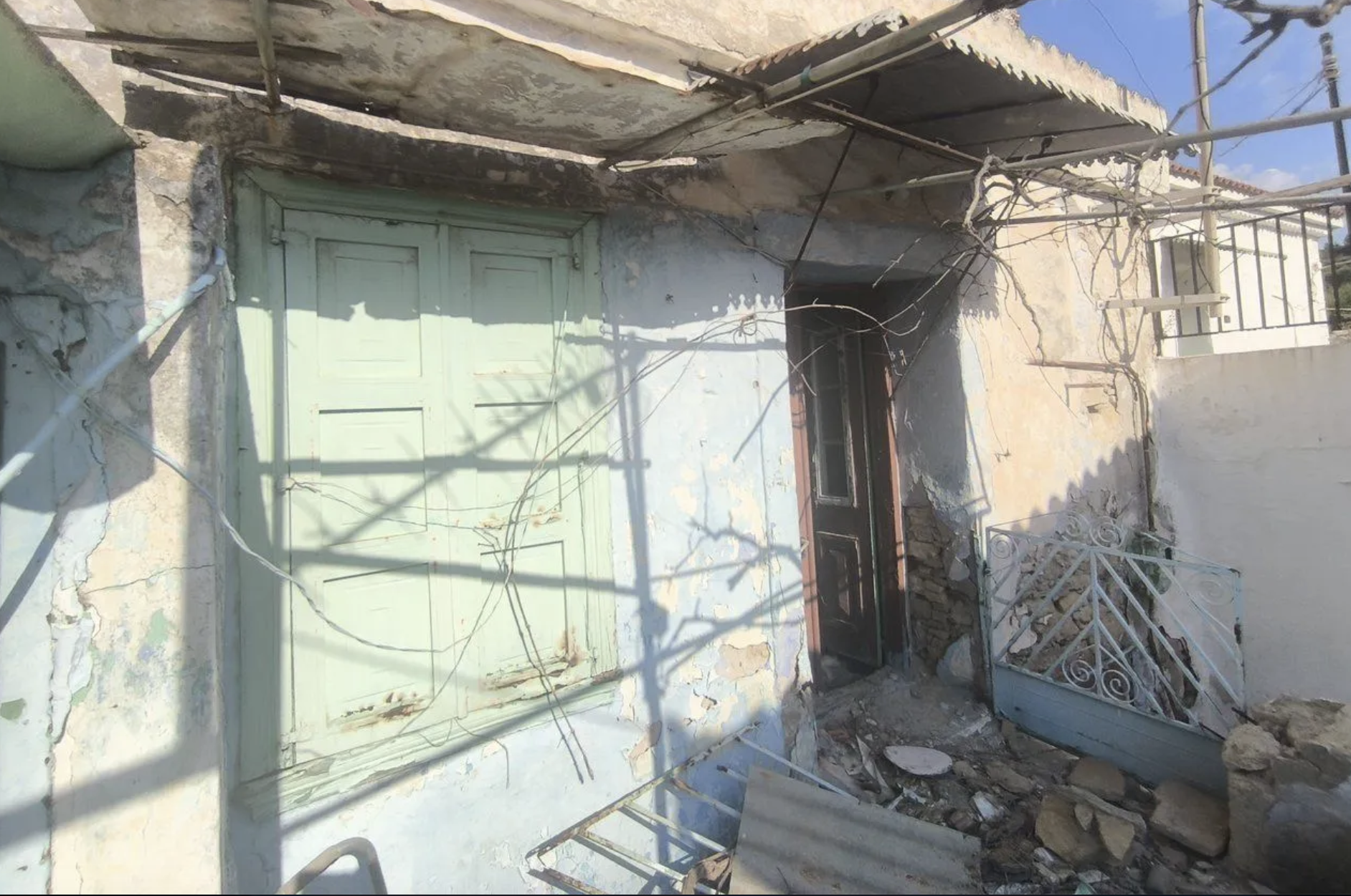
Koumeika, Samos · €15,000 · 61 m² on a 40 m² plot
Fifteen thousand euros. It's about 660 square feet, arranged as two rooms on the ground floor and a basement of exactly the same size underneath, so the plot is smaller than the building. There's a fireplace, a little courtyard, and a bathroom on the outside wall. Built 1950, wooden floors, no heating, paved road to the door. It sits inside the village of Koumeika on the south coast, walkable to the shops and not far from the beaches.
That's €220 a square metre. The most expensive house below is €625, so this issue's whole range is under three times.
The agent says it "requires complete renovation."
Two things to check before you fall for it: the listing says 68 square metres at the top and 61.16 further down, and it says aluminium window frames in one place and wooden in another.
Koumeika is on Samos, and Samos is the mile-from-Turkey island. It is also where, in the middle of the sixth century BC, an engineer called Eupalinos of Megara drove a tunnel 1,036 metres through a mountain to bring water into the city, working from both ends at once. His crews managed 12 to 15 centimetres of rock a day and it took them at least eight years. When the two tunnels met they were out by a few decimetres. It's the first tunnel in history known to have been dug from both ends using geometry, and UNESCO listed it in 1992.
The case for: fifteen thousand euros, a fireplace, a courtyard, and a village.
The case against: the bathroom is outdoors, there's no heating, the plot won't let you grow, and you need defence committee approval. It requires complete renovation.
Also this week
Kalamoti, Mastichochoria, Chios · €30,000 · 70 m² on a 35 m² plot
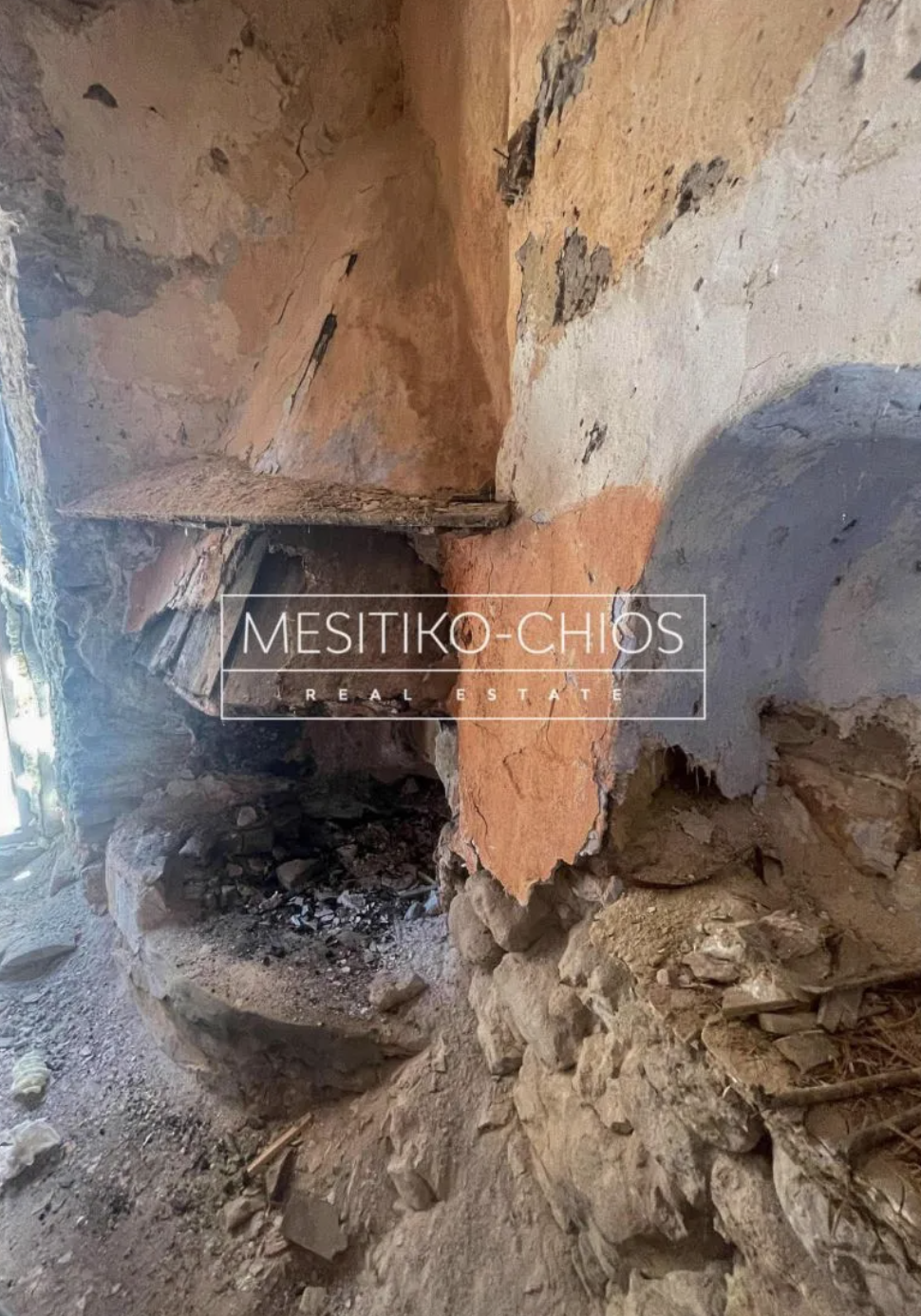
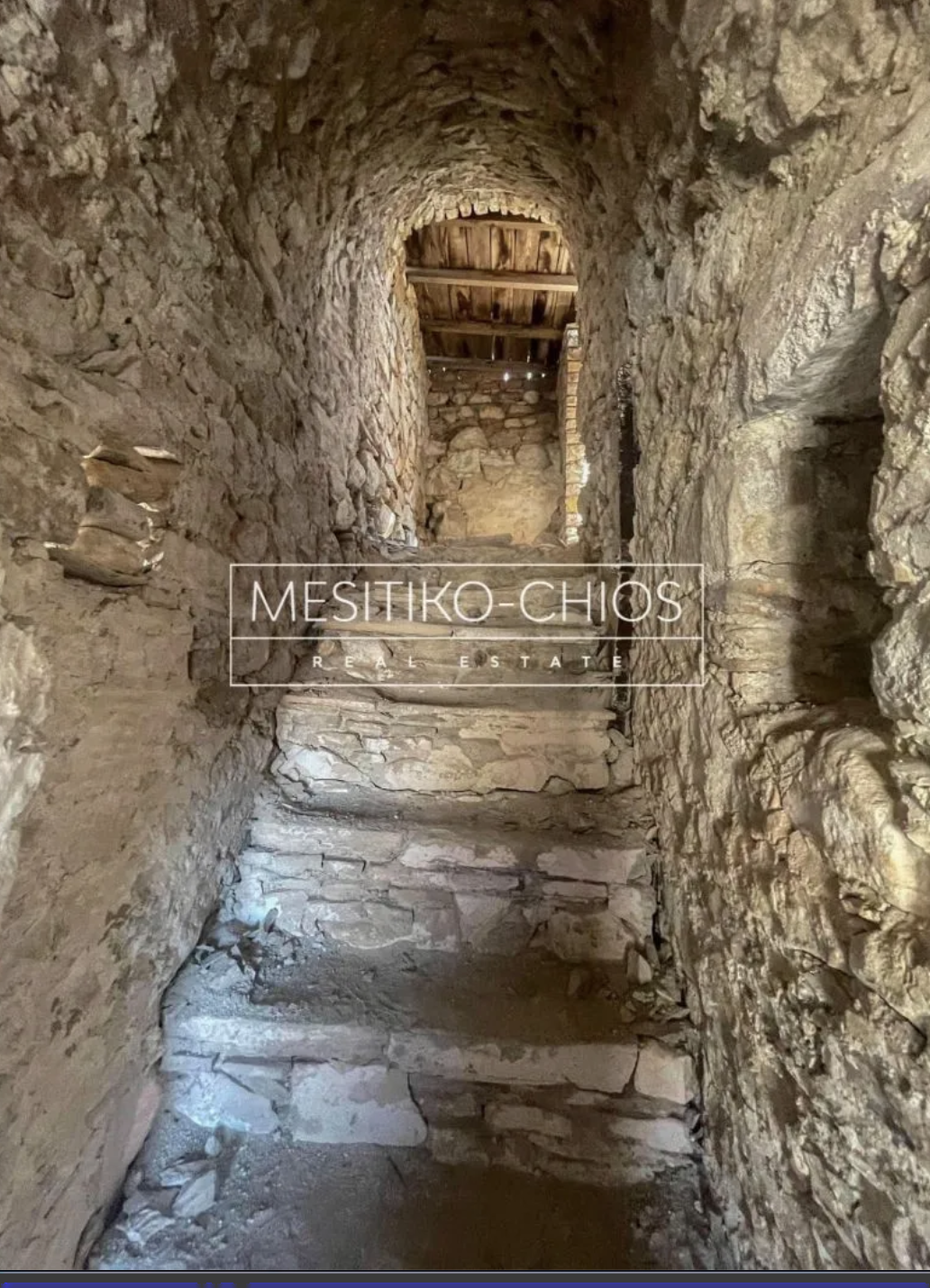
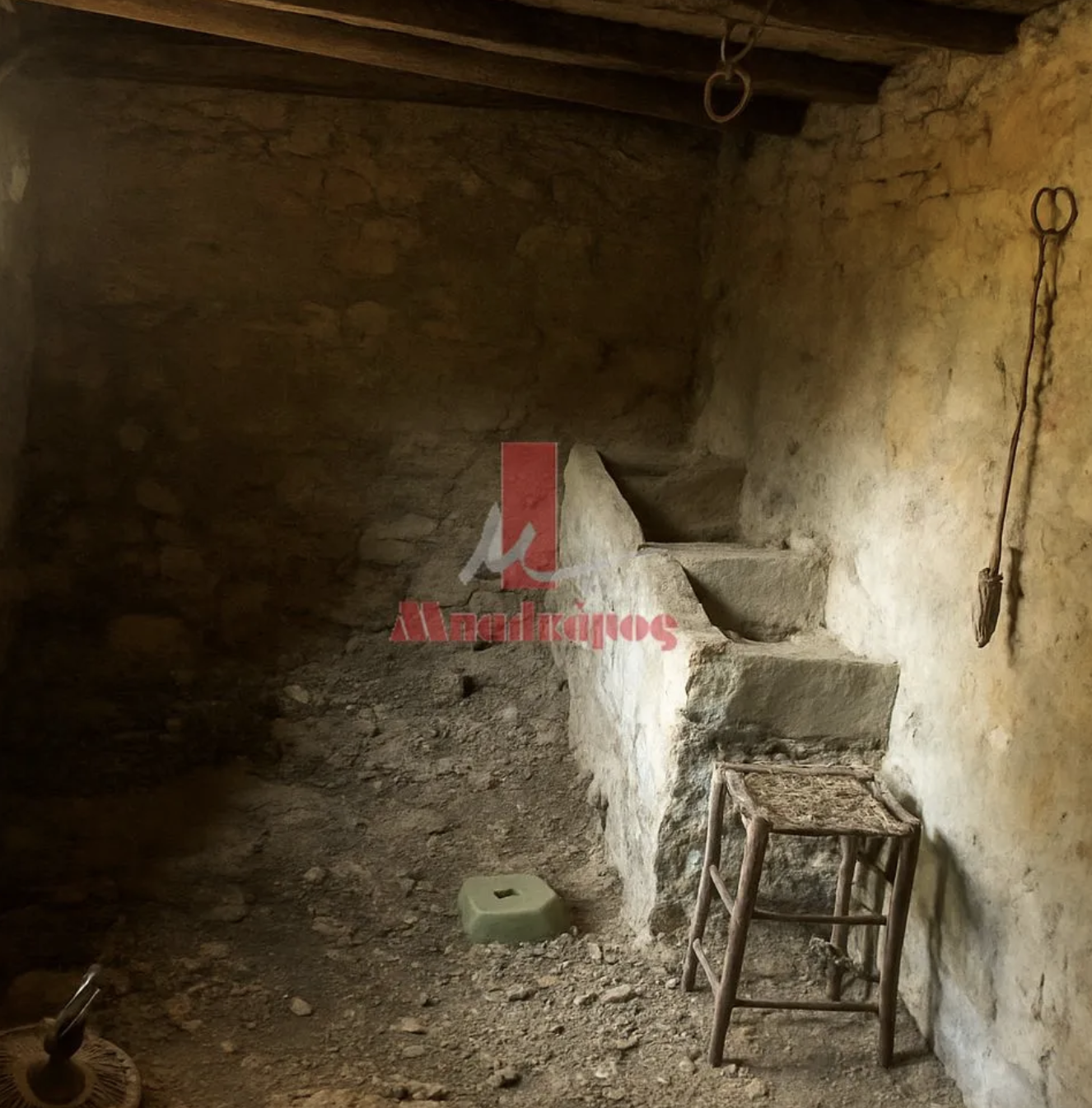
Seventy square metres over two floors of 35 each, in Kalamoti, one of the medieval mastic villages in the south of Chios. The ground floor has stone walls, vaulted ceilings and an old hearth still in it. A stone staircase runs up the inside of the house to the first floor, and above that there's a roof terrace you can stand on and look out over the village.
A hearth, in a vaulted stone room, for thirty thousand euros.
Wooden frames, single glazing, stone floors, no heating, built 1940. It's 4 km from the sea, 22 from Chios town, 20 from the airport. €428 a square metre. The agent says it needs "reasonable renovation." We think it looks like a SERIOUS renovation. But beautiful stone bones...
The plot is 35 square metres, exactly the footprint of the ground floor, so there's nowhere to build. The Vrontados house at the bottom of this section is also on Chios and sits on 798.
Note: Mastic is tree resin. It seeps out of Pistacia lentiscus var. Chia, a scrubby relative of the pistachio, and sets into brittle translucent drops that people have been chewing for thousands of years. The English word masticate comes from mastichein, the Greek for chew, by way of Latin. This tree named the act of chewing. One mixologist described the flavour to CNN as "earthy, bitter, grassy, wooden." The EU recognizes it as a traditional herbal medicine for digestive trouble, and Chios turns it into a liqueur. It grows here and nowhere else. During the Ottoman massacre of 1822, the people of the mastic villages were spared, because the island's prosperity depended on them.
The listing gives the energy class as G in one place and H in another.
The case for: vaulted stone, a hearth and a roof terrace, in a village built in the Middle Ages.
The case against: everything about it is original in the way that costs money.
Kampochoria, Chios · €40,000, down from €45,000 · 88 m² on a 98 m² plot
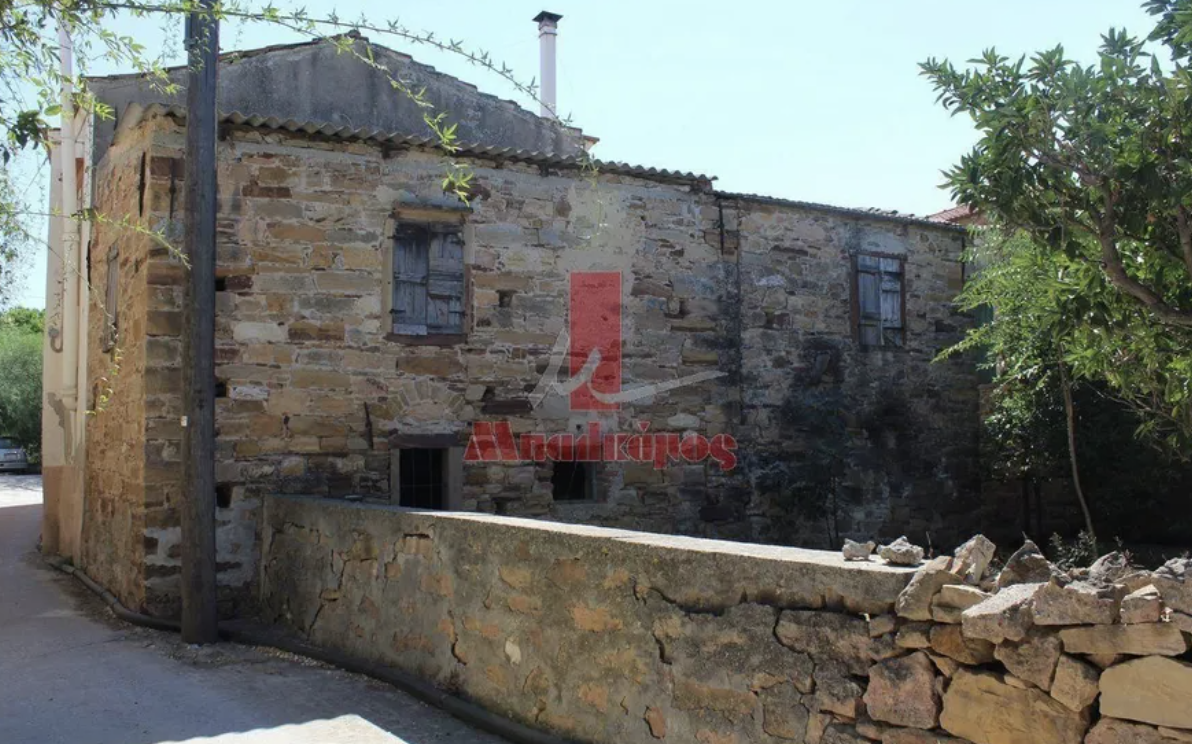
Stone, built in 1900, standing in the orchards of Kampos among the orange and mastic trees. Eighty-eight square metres over two levels, a private garden, stone floors, double glazing, no heating. Eight minutes from the airport, fifteen from the port. €454 a square metre, already reduced once, and the agent says the price is negotiable.
The agent's own line: "Needs repair. All its masonry is in very good condition."
About Kampos. The Genoese took Chios in 1346 and laid this place out. They planted the orchards and set the pattern for the houses, which came with a tower, a cistern, a courtyard and a monumental gate, and owning one became the basis for admission to the Genoese nobility. By 1528 the leading Byzantine families here held citizenship of Genoa. The island passed to the Ottomans in 1566 and the estates kept their privileges under a system called moulki. What's left is roughly 200 walled fields and roughly 200 mansions, with pebble courtyards, wells, cisterns and the manganos, the water wheels that irrigated the citrus.
Our €40,000 stone fixer-upper is smack in the middle of that area.
It's been sitting there since June 2025, and the listing is anything but clear.
The case for: a hundred and twenty-six years old, stone, in the citrus estates, and the seller claims the walls are sound.
The case against: fifteen months unsold, and the agency is in an Athens suburb, not on the island.
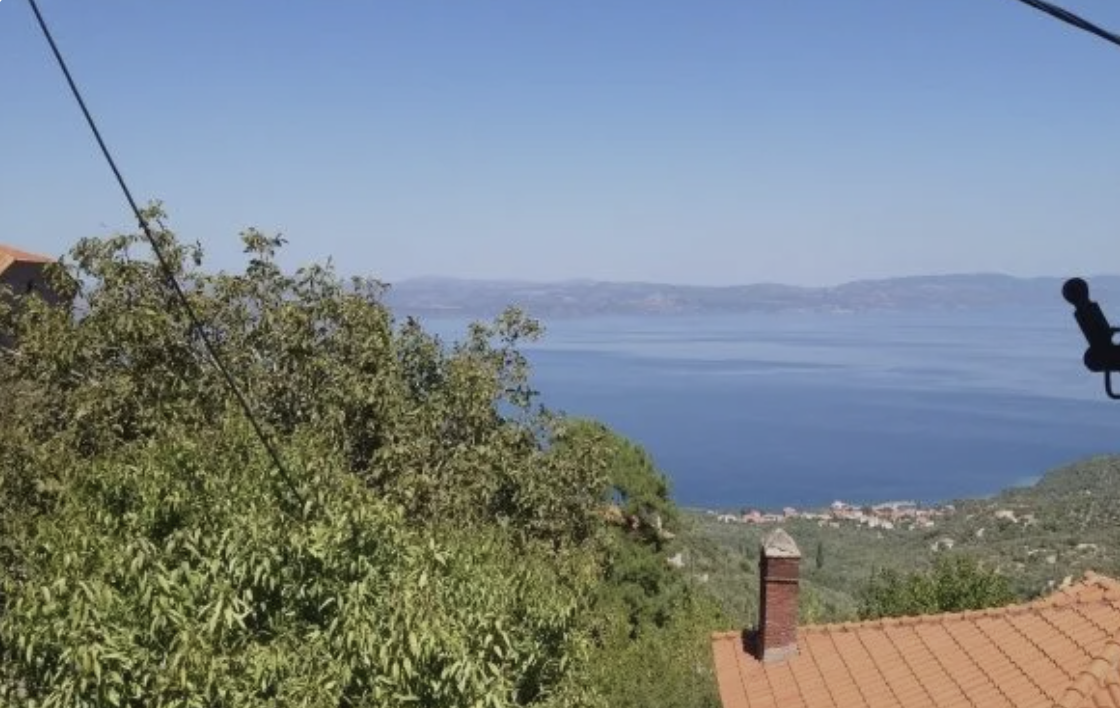
Sykamia, Mithymna, Lesvos · €75,000 · 161 m² on a 662 m² plot
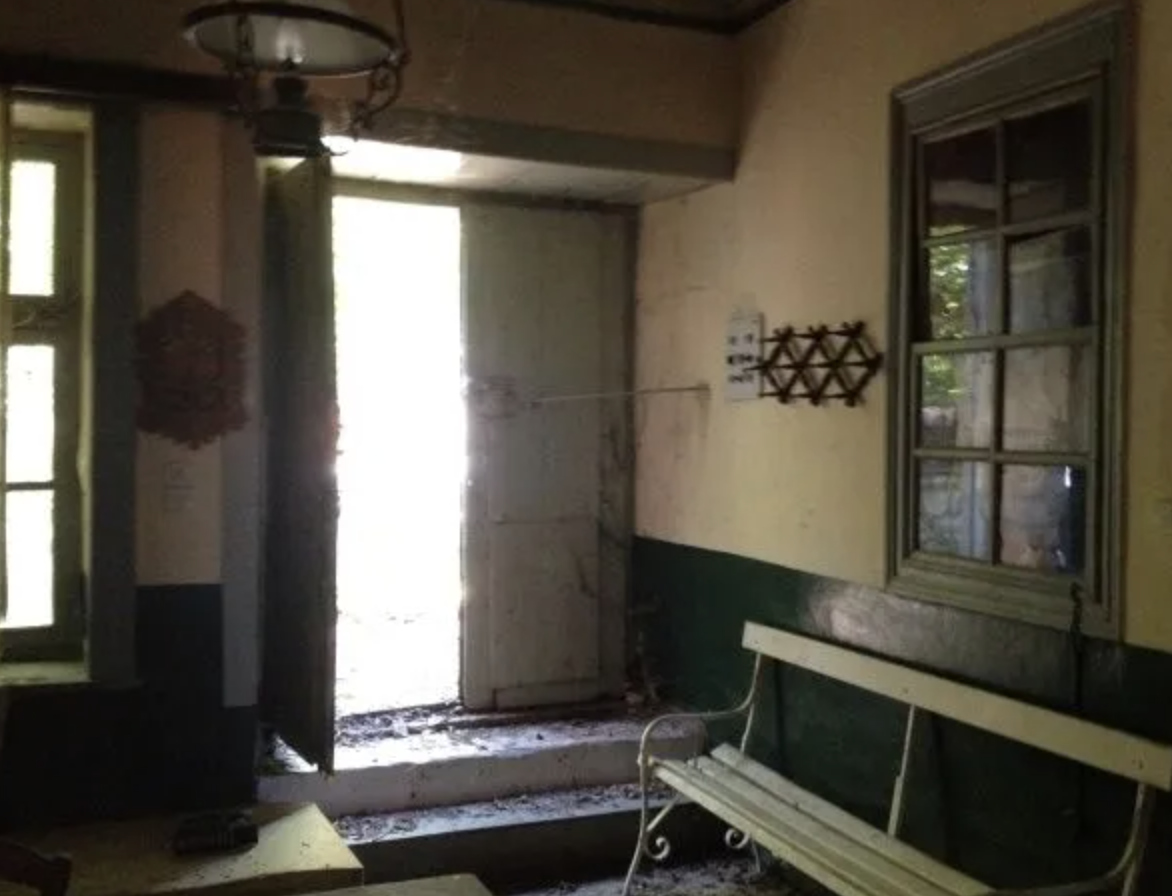
A hundred and sixty-one square metres over two storeys, about 1,730 square feet, on 662 square metres of plot. Living room, dining room, kitchen, three bedrooms, a bathroom, sea views and a big garden. Built 1950. €465 a square metre.
There's building capacity left over: the plot "allows for additional building capacity, meaning a second house can be built on the plot." That is 662 square metres against Kalamoti's 35.
It needs complete renovation, which the same agent calls "the perfect 'blank canvas' for a dream holiday home or a high-yield Airbnb rental."
Distances, from the listing: 2.8 km to the nearest beach, 3.3 to Skala Sykamineas, 16 to Molyvos, 46 to Mytilene and the port, 53 to the airport.
The summary says two bedrooms. The description says three.
About the island. Lesvos is bigger than people expect, 1,633 square kilometres with about 400 kilometres of coastline, the third largest island in Greece, and at the narrowest point of the Mytilini Strait it is 5.5 kilometres from Turkey. Sykamia is on the north coast, and at the far western end, in the country between Eressos, Antissa and Sigri, there is a petrified forest. Volcanic eruptions between 17 and 20 million years ago buried a subtropical forest in lava and ash, and what came out includes 150 fossilised logs and one tree 19.5 metres long, still attached to its roots, branches and leaves. In October 2022 the International Union of Geological Sciences named it one of a hundred geological heritage sites in the world.
Sappho was from this island, and Eressos, which is one of the three villages around the forest, is where the Suda says she was born, though most other sources and some of her own poetry point to Mytilene.
The case for: a second building plot inside the price, sea views, and a garden.
The case against: complete renovation, and it's somewhat remote.
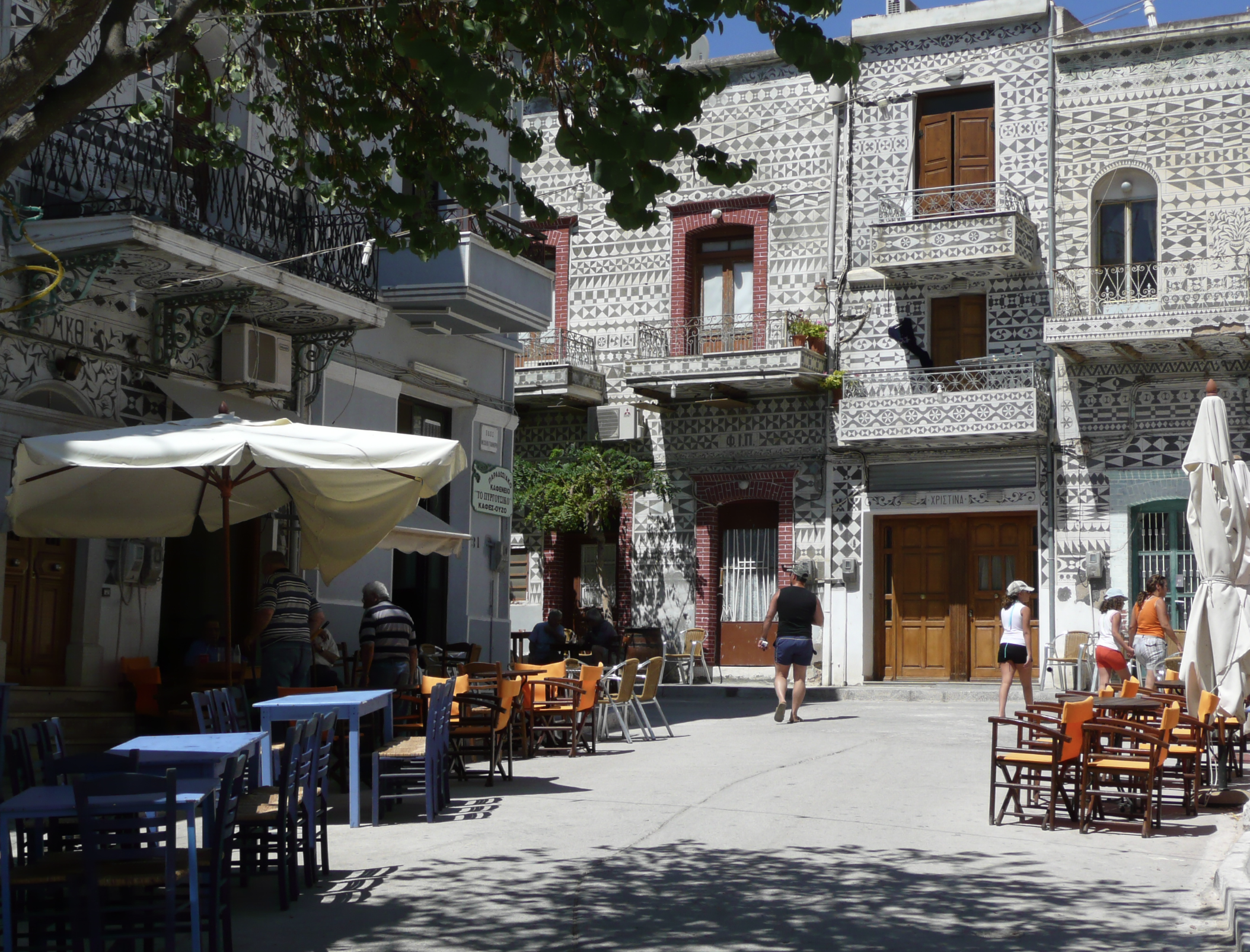
Vrontados, Omiroupoli, Chios · €88,125 · 141 m² on a 798 m² plot
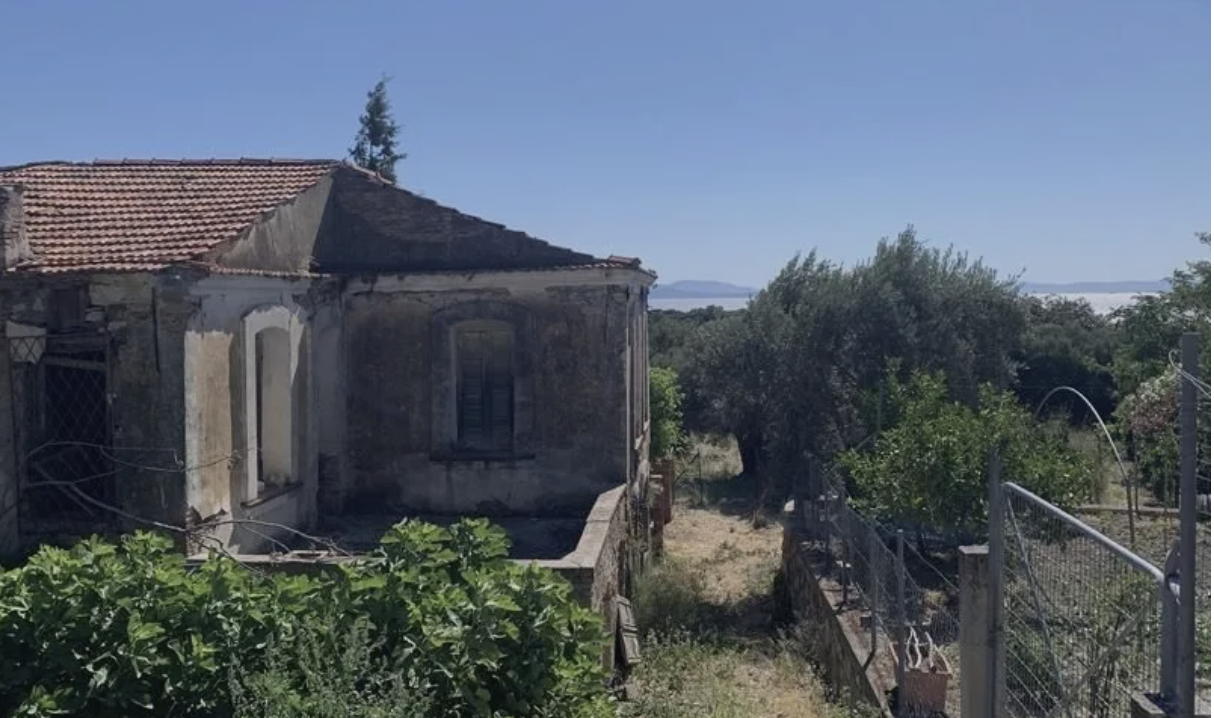
The most expensive house here and the most land, twenty-three times the plot of the Kalamoti house half an hour away on the same island.
A hundred and forty-one square metres, built 1945, unfurnished, needing renovation. Three bedrooms, two bathrooms and two kitchens across the two floors.
A thirty square metre balcony, a private garden, a private terrace. Wooden frames, single glazing, wood floors, no heating. Sea view, 540 metres from the water. €625 a square metre, the top of the range. The listing files it under "investment property."
About Vrontados. Once a year the town holds a rocket war. Two parish churches, Saint Mark's and Panagia Ereithiani, sit on hilltops about 400 metres apart, and on Orthodox Easter each congregation fires tens of thousands of homemade rockets at the other's belfry. Direct hits are counted the next day to decide the winner, and both parishes always claim it. The churches and the buildings around them are boarded up beforehand with metal sheets and mesh. Local legend says it started under Ottoman rule with actual cannons, which were banned in 1889.
The case for: 798 square metres of land, a sea view, a balcony the size of a studio apartment, and a second kitchen.
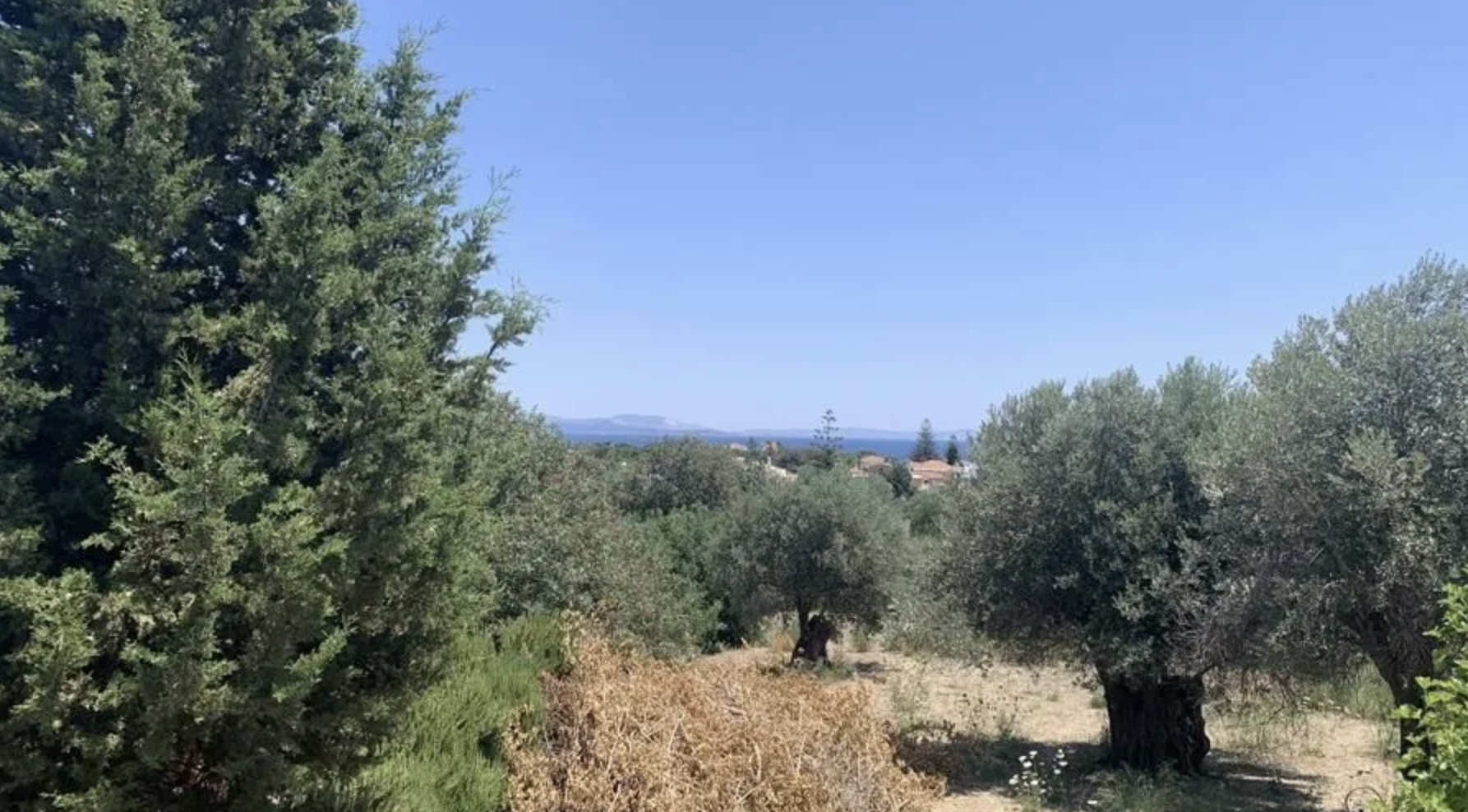
The case against: the most expensive listing here, you're still buying a renovation. Those olive trees, tho.
The Fine Print
The rule
Law 1892/1990. Article 24 lists restricted areas, article 25 describes the ban, article 26 states the process for getting approval as a foreign buyer.
Who it binds. Since amendments from 2011 onward, nationals of third countries outside the EU and EFTA.
Who decides. A committee at each Decentralised Administration, chaired by its General Secretary, with representatives from the ministries of National Defence, Economy and Citizen Protection. Majority, plus the mandatory consent of the Defence representative. Budget five to six months for either approval or rejection.
If you try to skip it... The sale is null and void.
The argument behind the law
Turkey's case rests on the 1923 Treaty of Lausanne and the 1947 Paris Peace Treaty, under which the Dodecanese passed from Italy to Greece. Ankara says the eastern Aegean islands and the Dodecanese were put under a demilitarised regime, and that new bases, air defence systems and drone facilities break it. Greece says self-defense isn't negotiable and that Turkey isn't a party to the 1947 treaty in the way it claims.
In late August the Turkish defence ministry objected to reported drone activity on Rhodes, and called Greece moving Patriot batteries from Karpathos to Crete a positive step. Mitsotakis says the defence plans aren't changing. Erdoğan's remarks restated an old red line rather than announcing anything new.
Check the numbers
Three of our six contradict themselves and a fourth needs unpacking. Koumeika says 68 square metres up top and 61.16 lower down, and can't decide about the windows. Sykamia says two bedrooms in the panel and three in the text. Kalamoti gives two different energy classes. Vounaraki's 48 square metres turns out to be 28 of house plus a 20 square metre shed.
Lifestyle & Culture Notes
On Borders and Neighbors
The Erdoğan article got us thinking about neighbors (our own) and border beef in general, and we did find that many places are particular about who can hold property in certain vulnerable regions.
For example, much of Mexico's coastal areas are restricted.
Canada's current laws are interesting as well. In December 2023 the Ontario Superior Court of Justice, in Bjorkquist, struck down the 2009 first-generation limit on citizenship by descent as a breach of section 15 of the Charter. The government declined to appeal, and Bill C-3 came into force on 15 December 2025. Americans are now the largest single group claiming Canadian citizenship this way. In the same stretch, non-Canadians still can't buy a house there until January 1, 2027.
Chile and the US have also had notable anti-particular-foreigner laws.
Chile signed its (still active) version on 10 November 1977, barring nationals of neighboring countries, and only them, from owning property at the frontier, with the President the only entity with power to grant an exception. Chile is relevant today with its efforts to attract tech companies – offering visas and financial incentives.
And of course, there were the infamous USA state-level "Alien Land Laws" of the late 19th and early 2oth centuries, which specifically targeted Asian immigrants, primarily Japanese and Chinese, by prohibiting property ownership for "aliens ineligible for citizenship.Those racially motivated laws are no longer active, but 26 states have modern "foreign adversary laws", which restrict or prohibit certain foreign individuals and corporations from buying and owning property.
Another article we came upon this week on the subject of borders but from a different angle, was about sending written materials from the West Bank to Scotland for safekeeping. Palestinian writer Raja Shehadeh (75) has kept a diary, writing in it every day for more than sixty years, starting just before the occupation began in 1967. The whole archive, now housed at the University of Edinburgh, was first digitized, and then the hard copies were mailed out of the country in batches over two years with the help of a bookstore in Jerusalem. So his papers successfully emigrated, but Shehadeh has no plans to leave his home in Ramallah.
What we're reading
- Secretly moving Raja Shehadeh's diaries from Israeli-occupied West Bank to Scotland, Daniel Estrin, NPR, 2 September 2026. The story from the top of this issue. The archivists were from Scotland and England and worked with a Palestinian bookseller in Jerusalem, and the diaries are at Edinburgh now, open to anyone.
- Erdoğan tells Greece to stop arming 'demilitarized' islands, Athens Bureau, Greek City Times, 2 September 2026. Where our week started. Read it for the treaty argument, which is a hundred years old and still unresolved.
- Alien land laws, Densho Encyclopedia. The standard reference on the now defunct American laws.
Recipes from the Map
Grilled Mastelo with Fig Jam via A Taste of Chios— sheep milk cheese, grilled golden and served with fig jam
Samos Mojito via Samos Food— cocktail made with sweet wine off the terraces above Marathokampos.
Live from our group chat
What the rabbit hole looked like for us this week.
Malia: I think I want to go live in the forest. LA is too noisy and I'm tired of the internet.
Wally: There's that camp in the Vastria pine forest on Lesvos.
Malia: That's a controversial, unfinished deportation camp. It was built to hold 5,00o people, and is currently empty.
Wally: It would be very quiet, and there's probably no internet.
That's issue seventeen. Thanks for reading.
Until next week, Wally & Malia
Remnant is a weekly newsletter about distressed and beautiful houses around the world. We are not real estate agents. We just got a little obsessed and started digging. What will you do with what we find?