
Remnant –– Issue No. 15


One Japanese village is recruiting young people from the Peruvian Amazon, a comune in the Abruzzo mountains, plus three houses in Gunma.
The "most graying" village in Japan is seeking to repopulate its dwindling numbers with young people from the Amazon. In Nanmoku, up in the mountains of southwestern Gunma, 65.2 percent of residents are 65 or older and at the time of the article, had a population of only 1,337 people. For the reference of other 'graying' persons like ourselves who might remember the 1998 winter Olympics at Nagano, it sits on the western edge of Gunma Prefecture and shares a direct mountainous boundary with Nagano Prefecture.
Last November, Nanmoku signed a sister-city agreement with Belén, in northern Peru – a city of about 80,000 on the upper Amazon, known for its river fish as well as for having a young population. The alliance was initiated by Masao Aizawa, a 35 year-old Peruvian of Japanese descent who works as a car salesman in Isesaki, Japan. He made a donation to the village in 2022 in support of a program to promote multicultural coexistence (there is a fair amount of stigma around foreigners in Japan). Through that, he found out about the village's problems with population decline, and made introductions between Belén and Nanmoku's town officials. Belén's mayor is bringing several young people over for about ten days this fall.
Meanwhile, in Sicily...
Two days before the Kyodo piece published, Vincenzo Lapunzina, former president of the Association of Sicilian Mountain Free Zones wrote an op-ed that appeared on August 17th in Il Sole 24 Ore, in which he calls into question the strategy of trying to repopulate villages with foreigners. He thinks places experiencing population crises have a responsibility for creating economic circumstances in which their young people can choose to stay. "Before asking ourselves how to persuade someone to move to a small town, we should ask ourselves why those born there should be forced to leave," he writes.
After reading Lapunzina's piece we dug a little and learned that the Abruzzo mountains municipality of Pratola Peligna is six years into a program offering houses for one euro – plus terms and conditions, of course, and Abruzzo pays €2,500 on top of that to those who establish a residence in the region. It was interesting to see that the comune publishes a register of everyone who has applied for its one-euro houses. Notably, on a single address, thirty-three of parties applied and withdrew until a buyer finally signed in July.
"The highlands do not ask to be kept alive artificially. They ask to be given the means to survive on their own," writes Lapunzina. Is a cheap house a cautionary tale boding an atmosphere of isolation and scarcity? Or is it an ad for a place rich with culture and rife with potential?? And if the thing that keeps a young person somewhere is a job, what are the rest of us doing when we buy the house, bringing foreign income into play in these places? Are we making it harder for them to eventually return, or easier?
Three houses in Gunma this week, one register from Abruzzo, two recipes, the reading list, and our silly group chat.
Japan
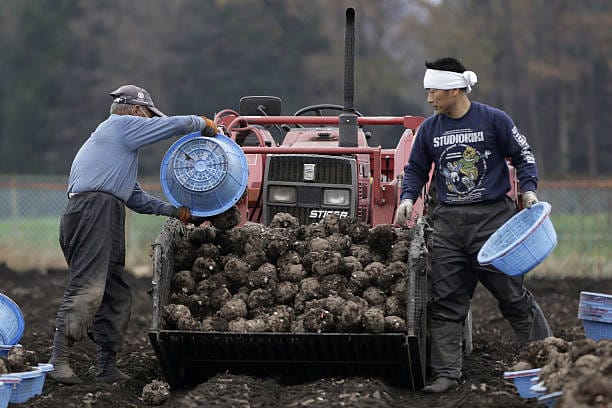
In 1950 there were 10,892 people living up in Nanmoku, which once thrived on the industries of silk, konjac and forestry. All three houses listed below are within about an hour of the village.
They're listed through Akiya Hopper, which notes that some of its listing information has been extracted or summarized using AI and may be incomplete.
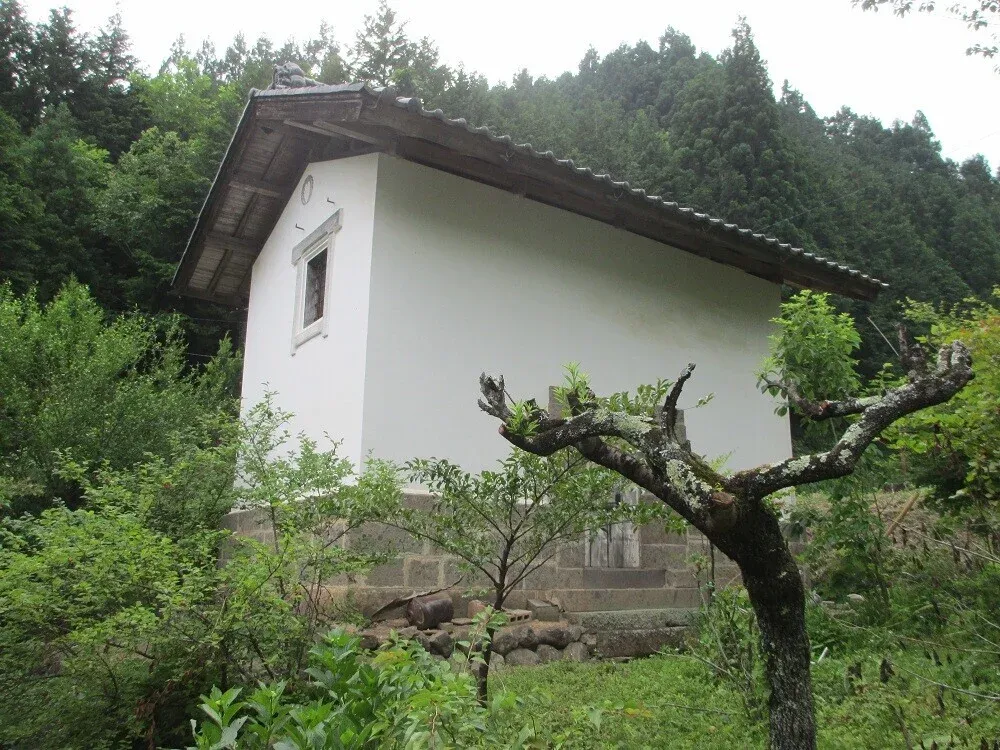
Featured: six rooms and a garden, near Nanmoku
Shimonita, Kanra District · ¥5,000,000 (~$31,000) · 364.45 m² on 1,410.95 m²
Shimonita is the next town down the mountain from Nanmoku, in the same district, under the same peak. Mount Arafune stands 1,423 meters over both of them. Shimonita had 7,058 residents in 2020, down 26.2 percent from 2010, across 188 square kilometers that are about 84 percent forest. It's konjac country, and it grows the Shimonita negi, a sweet onion the town is also known for.
What's konjac? We were also wondering. It's a root vegetable similar to cassava, packed with a water-absorbing dietary fiber called glucomannan, making it popular for low-calorie foods like shirataki noodles, vegan gelatin alternatives, and eco-friendly facial cleansing sponges. Latin name: Amorphophallus konjac; alternative names: elephant yam, devil's tongue, voodoo lily, or konnyaku.
The house is 364.45 square meters, which is quite spacious. Wooden, 6DK, six rooms plus a dining-kitchen, on 1,410.95 square meters of residential land. City water, propane, a bath, a garden, a gas cooktop, parking on site. Shimonita Station is sixteen minutes away and Haneda is about two hours fifteen. All in, with commission, taxes and the judicial scrivener, Akiya Hopper puts it at ¥6,710,000 give or take ¥1,070,000, so call it ~$42,000.
The year it was built is listed as unknown, so put that on the to be discovered list, and the sewerage is listed as "manual collection," which means what it sounds like. The Fine Print below has the numbers.
More from Gunma
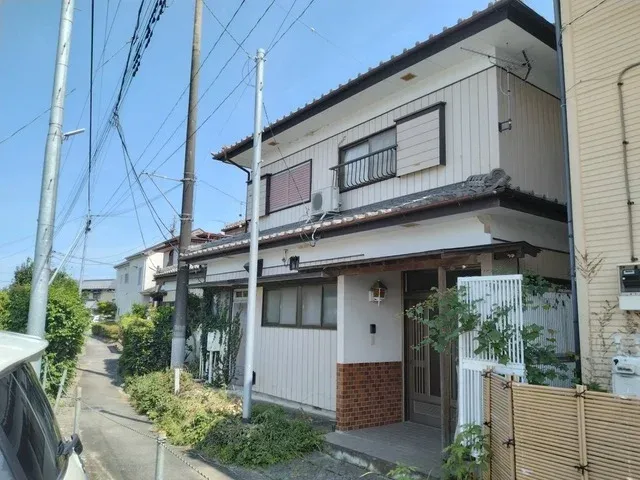
Tomioka, Nanokaichi · ¥1,800,000 (~$11,300) · 115 m² on 167.9 m², built October 1967
Everything works in this one. Public water, public sewerage, city gas, a gas cooktop, a bath, a toilet, Japanese-style rooms, a space for the washing machine. Freehold land, Class 1 residential, seven minutes from Nishi-Tomioka Station and three from Tomioka. All-in about ¥3,250,000, or roughly $20,400. There's no parking.
Tomioka is where the silk from Nonmoku's silkworms was processed. The mill opened in 1872, built by the Meiji government with French help, and it was Japan's oldest modern silk reeling factory. It reeled until 26 February 1987, when synthetics, the decline of the kimono and cheaper imports finished it, and it's been a UNESCO World Heritage Site since 2014.
The mill ran on the labor of young women recruited from around the country, trained at Tomioka and then sent out to the private mills that opened after it. We love the short story by Karen Russell based on the recruiting end of that business – link in the reading list.
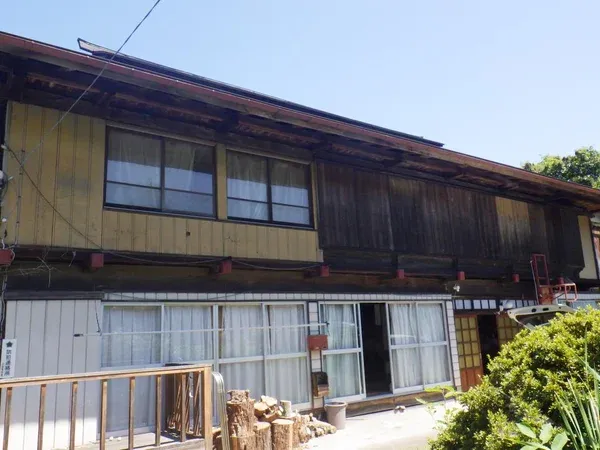
Higashiagatsuma, Agatsuma District · ¥3,000,000 (~$18,900) · 237 m² on 919 m², built January 1875
Meiji 8. The listing does not include details re layout, utilities, or parking. Wooden, 237 square meters, five minutes from Gunma-Haramachi Station, all-in, likely would run you about ¥4,560,000.
The land is classified as "field", which puts it under the Agricultural Land Act. That's in the Fine Print too.
Higashiagatsuma is up in the northwest of the prefecture, 13,349 people across 254 square kilometers. Konjac again, plus myoga, plus onsen and ski resorts. The Agatsuma Gorge is a National Place of Scenic Beauty, and the ruins of Iwabitsu Castle, which belonged to the Sanada, sit on a mountain above the town. January averages around -1 C, which is 30.2 F.
Next: more mountains! but in Sicily, a climate that runs more on the hot and dry end of the spectrum. However, their January average temps are actually similar, running around 2 C in January.
Italy
The municipal register
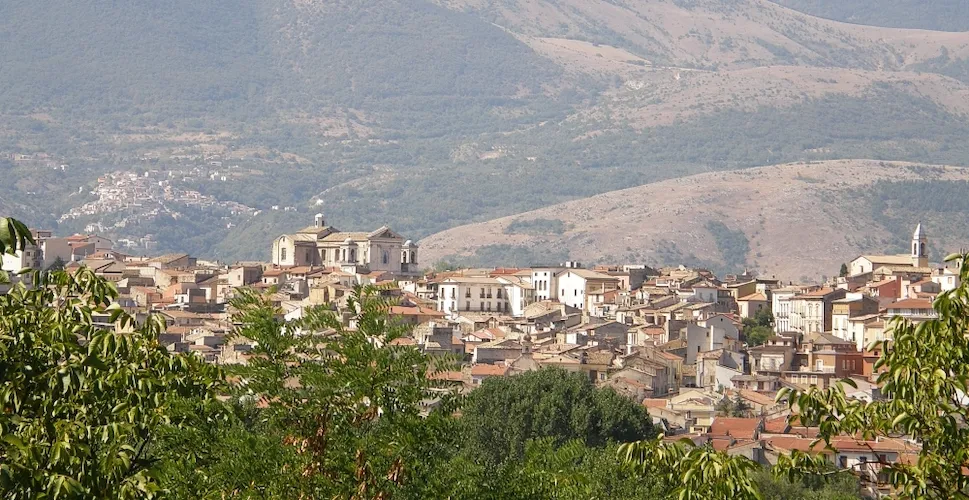
Pratola Peligna, L'Aquila, Abruzzo · €1 · 7,250 residents at 342 meters
The comune keeps a spreadsheet called the Elenco Manifestazioni Acquisizione, the register of expressions of interest, and the copy we've been reading is dated 16 July 2026. Every house in the one-euro scheme gets a row. Under each row is every application the comune has logged against that house, by protocol number and date, with a note at the end. The note usually reads "RINUNCIA". Withdrawal.
Immobile 006 is a house on Vico della Pietà, numbers 32 to 34. Between 5 July 2021 and 7 May 2026 the register logs thirty-three entries against it marked rinuncia. Two on the same day in July 2022. Three in one week that September. Then on 6 July 2026, protocol 19890, the note changes to ACQUISITO.
Thirty-five properties have gone into the scheme since 2021 and thirty are now marked acquired. The five that aren't are not sitting there unloved. They're held up pending verification of who actually owns them, which seems like its own kind of Italianesque short story starter.
Immobile 004 on Via Corderia is being sold as two-thirds of a property, and the photograph in the comune's file shows red and white poles and a chain across the front door.
Immobile 035, on Via Cairoli, was acquired last October. Its floor plan in the file is a hand-drawn sheet from 1990, on a Ministero delle Finanze form, with a 250-lire stamp printed in the corner.
Our favorite row in the document: numbers 030, 031 and 032, three houses in a row on Via Chiassuolo della Fontana at 33, 35 and 37. All three acquired on 4 December 2024, under the same protocol number. Someone took the whole side of the street.
The one euro asking price is still really not the number to give your accountant. Idealista's write-up on 17 August 17th puts the realistic renovation floor at €20,000 to €25,000, notary fees over €1,000 on top, plus property taxes and an architect or a geometra. Where local rules call for it you post a surety bond, released when the work is signed off.
We can't square the deadlines for you. Idealista says six months after the deed to submit plans and four years to finish; the other English write-up says twelve months from the municipal concession.
The Fine Print
"Manual collection"
Kumitori. Waste falls into a sealed pit under or beside the house, and a licensed vacuum truck comes and empties it, typically every two or three months. A kumitori house can't have a flush toilet or a washlet (a bidet), and you can't add one without replacing the system underneath.
Replacing it goes one of two ways. A johkasou septic tank, which treats the wastewater on site, runs roughly ¥800,000 to ¥1,800,000 installed before any subsidy, then wants three or four inspections a year, a professional cleaning, and ¥30,000 to ¥60,000 a year all in. It lasts twenty to thirty years. Connecting to municipal sewage instead runs ¥500,000 to ¥1,500,000 depending on how far you sit from the main line, which in a valley town can be a long way.
For reference, the house itself costs ¥5,000,000.
The permit under the field
The Higashiagatsuma land is classified as "field", which puts it under the Agricultural Land Act. Article 3 covers acquiring farmland in order to farm it. Article 5 covers converting it to residential use. Either way the permission comes from the municipal Agricultural Affairs Committee, and Japanese buyers need it too.
The minimum-area requirement was abolished nationally on 1 April 2023, so size is no longer a bar. Three requirements survived: you have to make efficient use of all the farmland you'd hold, you have to be constantly engaged in farming rather, and your farming has to be in harmony with the surrounding agricultural community. We love that last part. If the neighbors don't like you, you're out!
Lifestyle & Culture Notes
Two Mountain Towns, a Parody
Mayor of Nanmoku:
Come to Nanmoku and I will show you a mountain town with 1,337 people, most of them old enough to remember when 8 times that many people lived here. We are 573 meters above sea level, high enough to have beautiful views and cold winters. Most of our bus drivers are due to retire, but at least they know where everybody lives. We have silkworms in our history, konjac in our cuisine, timber in our bones, and vacant houses waiting to be filled. Right now, we're betting on the Peruvians.
Former president of the Association of Sicilian Mountain Free Zones:
In Pratola Peligna, we also have mountain views, old houses, and a conviction that a building can be simultaneously abandoned, beautiful, structurally questionable (aka ruins), and worth saving at all costs. We are 342 meters above sea level and home to about 7,250 people. In our historic center, 630 properties need reconstruction. We should compare notes.
Mayor of Nanmoku:
Sure, just don't try to poach our sister city...
Former president of the Association of Sicilian Mountain Free Zones:
We have more density than you, more noise. Also plenty of elders. Stone houses sit beside churches, balconies, narrow lanes, kitchens that once fed generations. People come for the houses, but they discover the life around them: food, festivals, family, the piazza, the rituals of lingering. Thirty-three people applied for one house on Vico della Pietà. Thirty-three! This is what happens when you tell the world you can buy a house in Italy for one euro. Suddenly everyone becomes a romantic. Nobody says, "I would like to spend my vacation replacing a roof." They say, "I have always dreamed of living in Italy."
Mayor of Nanmoku:
But perhaps that dream is not so different from ours. We are not selling romance, however, but a day to day reality. A house. A working bus line. A neighbor who knows your name, like in Cheers (just as soon as you learn Japanese, that is). We are trying to imagine what comes after the old economy, after the silkworms and timber, after the population peak of the 1950s. When it comes down to it, we don't actually want to go back to the old days. Silk was good for Nanmoku, but it was not exactly a spa vacation for the women who produced it. Young women from poor farming families could spend long days in the mills, under strict supervision, making the silk that helped modernize Japan. Beautiful silk, difficult lives.
Former president of the Association of Sicilian Mountain Free Zones:
Indeed. What looks like decline can look like possibility from an ancient stone – or in your case, wooden – doorway. An empty house is also a house with a history. Maybe a few spooks. This is worth something. A population of 7,250 is also 7,250 chances to be invited to dinner, reprimanded by the nonna next door, handed an heirloom recipe, or informed of the correct time to drink espresso (which is anytime). This is how culture survives, not as a museum piece, but as something people argue about while eating.
Mayor of Nanmoku:
You Italians seem to have a lot of opinions about food.
Former president of the Association of Sicilian Mountain Free Zones:
We do.
Mayor of Nanmoku:
We have opinions about food, too.
Former president of the Association of Sicilian Mountain Free Zones:
And I suppose you are equally passionate?
Mayor of Nanmoku:
Absolutely. We just have fewer people to argue with.
Recipes from the Map
Konnyaku no shiraae via Japan's agriculture ministry — konjac dressed in mashed tofu, from the regional-cuisine list for Gunma.
Arrosticini via Memorie di Angelina — Abruzzo's mutton skewers, twenty to thirty grams each, cooked over a charcoal trough called a fornacella.
What we're reading
- Japan's most graying village looks to Peru sister city for lifeline, Kiyomi Kobayashi, Kyodo News, 19 August 2026. The whole issue started here. Read it for Hasegawa's arithmetic and for the sentence about the bus drivers.
- "We must give young people back the right to choose to stay in the face of depopulation", Vincenzo Lapunzina, Il Sole 24 Ore, 17 August 2026. He wants a tailored tax regime for the mountains instead of relocation bonuses. "A region thrives when people can work there, run a business, start a family and plan for the future. It dies when its young people are forced to leave."
- "Reeling for the Empire", Karen Russell, from Vampires in the Lemon Grove, 2013. Twenty Japanese girls are recruited to reel silk for the empire, five yen paid to each family, and at a place called Nowhere Mill they're given a tea that turns them into something that spins thread out of its own body. Russell sets it in the Meiji silk economy, at the recruitment end of it. Wada Ei, a samurai's daughter who went to Tomioka in 1873, left a diary of her experiences that was published by her son after she died.
- Fibra e futuro dei borghi, In Italy. Villages in the I Borghi più belli d'Italia association account for around €5 billion of GDP and 91,000 jobs, and fiber coverage across them has improved markedly since 2021. The study then lists what fiber doesn't deliver: schools, healthcare, transport, housing, work, recreational activities.
- Selling "dead weight real estate" for 1 yen, News On Japan, 19 August 2026. A company called Rewrite takes on Japanese properties nobody wants and lists them at symbolic prices, sometimes a single yen. Its president, Yuji Tanaka, has closed deals in 42 of Japan's 47 prefectures. A one-yen sale is essentially the same work as a hundred-million-yen one, which makes much of it, in his words, effectively volunteer work.
Live from our group chat
What the rabbit hole looked like for us this week.
Wally: How about we apply for a one euro house in Pratola Peligna just for fun?
Malia: Judging by the number of people who did that and then withdrew their applications, I think we can deduce that... it would not be fun.
Wally: I have always dreamed of living in Italy.
Malia: Same.
That is issue fifteen. Thanks for reading.
Until next week, Wally & Malia
Remnant is a weekly newsletter about distressed and beautiful houses around the world. We are not real estate agents. We just got a little obsessed and started digging. What will you do with what we find?