
Remnant – Issue No. 11


A €70,000 house with no heating near the door to the underworld, an €85,000 stone house with no electricity on Calypso's island, a €70,000 ruin on Ithaca, and more...
The Odyssey opens on a relatable note for anyone who has ever moved to a faraway land. The first line asks the Muse to sing about a man and tells us one thing about him: he is polytropos, from poly, many, and tropos, turn. It means a man of many turns. The word also means turned, as in shoved off course, by weather and paperwork and the language gap between you and the local electrician.
No single English word carries both senses, so Emily Wilson translated one Greek verb twice:
Tell me about a complicated man. Muse, tell me how he wandered and was lost
He wandered. He was also lost. Kept from home by the gods. Eventually, he returned. Here in the safe place of this newsletter, we often ask ourselves: If we did wander, would we feel lost? Or like we found what we weren't even sure what we were looking for?
Odysseus makes about a dozen stops between the war and his return. Five of them are real places with properties for sale right now.
This week: the Cyclops on an eponymous Sicilian street, a ruin under Circe's mountain in Lazio, the entrance to the underworld in Epirus, a stone house with no electricity on Calypso's island, a ruin on Ithaca below the hill where Penelope and Odysseus may have lived, the Fine Print on buying in Italy, Greece and Croatia, a 1688 medical diagnosis, two recipes, the reading list, and our silly group chat.
The Cyclops
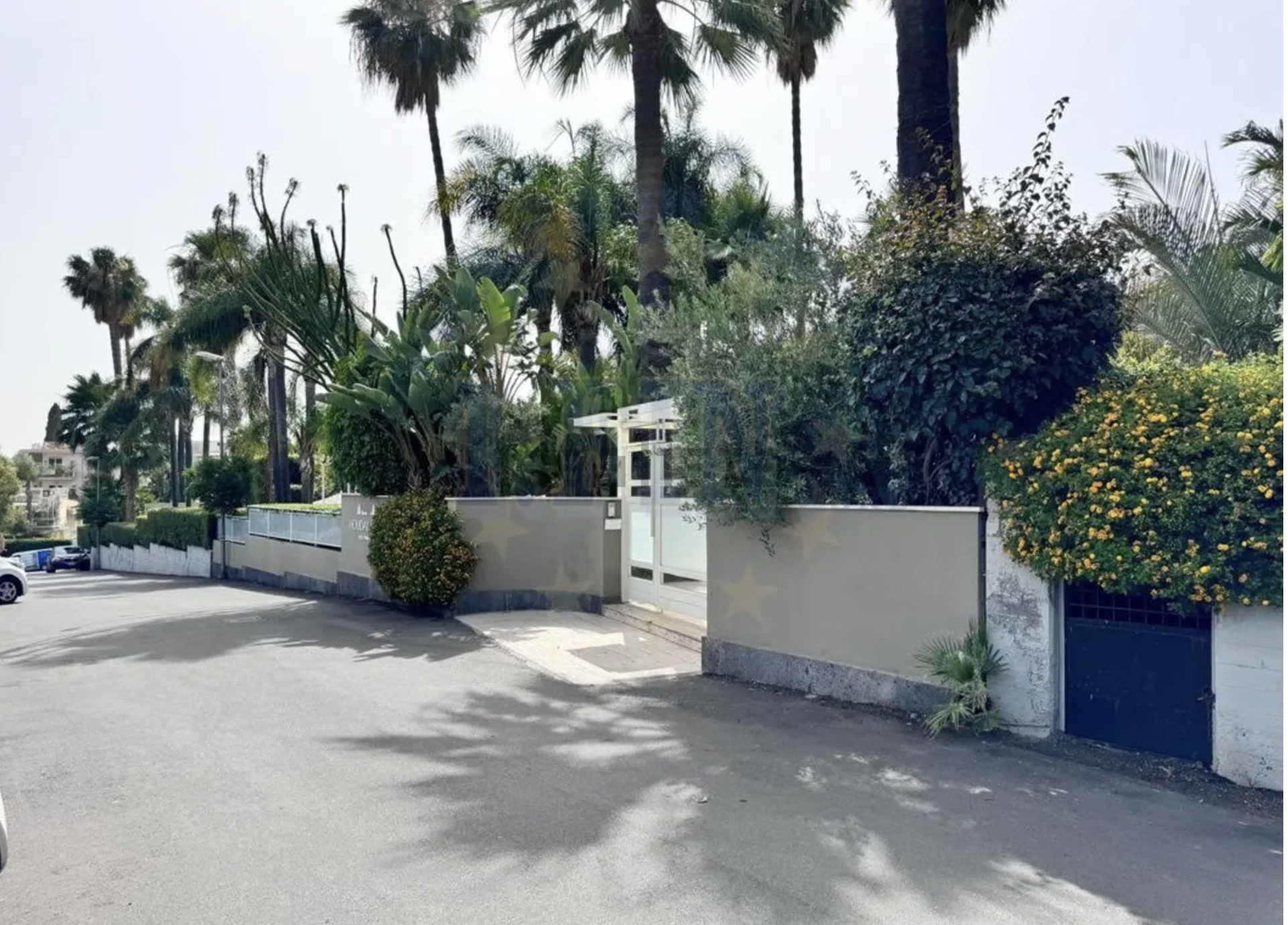
Via Polifemo, Aci Trezza, Aci Castello, Catania — €120,000, 73 m² flat with terrace
The coast running twelve kilometers north of Catania, from Acireale down to Aci Castello, is called the Riviera dei Ciclopi. Off the fishing village of Aci Trezza there are basalt stacks standing out of the water, thrown up by old Etna eruptions and now inside a protected marine area. They're called the Faraglioni dei Ciclopi, and the local account of how they got there is that Polyphemus threw them at Odysseus's ship after Odysseus blinded him.
The flat sits on Via Polifemo, three doors along, with a sea view of the rocks. It's 43 square meters of interior plus a 30 square meter panoramic terrace on the same level, in a small residence next to the Holiday Club. The listing gives the total as 73 square meters.
The agent describes that terrace as "entirely enclosed and not yet regularized." Somebody roofed and walled an open terrace without the permits, and the paperwork to legalize it comes with the house. In Italy the process is a sanatoria or a condono depending on the route, it costs money and time, and a mortgage lender will care about it before you do.
Aci Castello has 289 listings on idealista at the moment, 102 of them under €140,000, starting at €25,000. The town average is €1,338 per square meter. The same village without the paperwork problem: a renovated 40 square meter ground-floor flat with a sea view on Via G. M. Frontini, €36,000, or €900 per square meter.
→ See the Via Polifemo listing
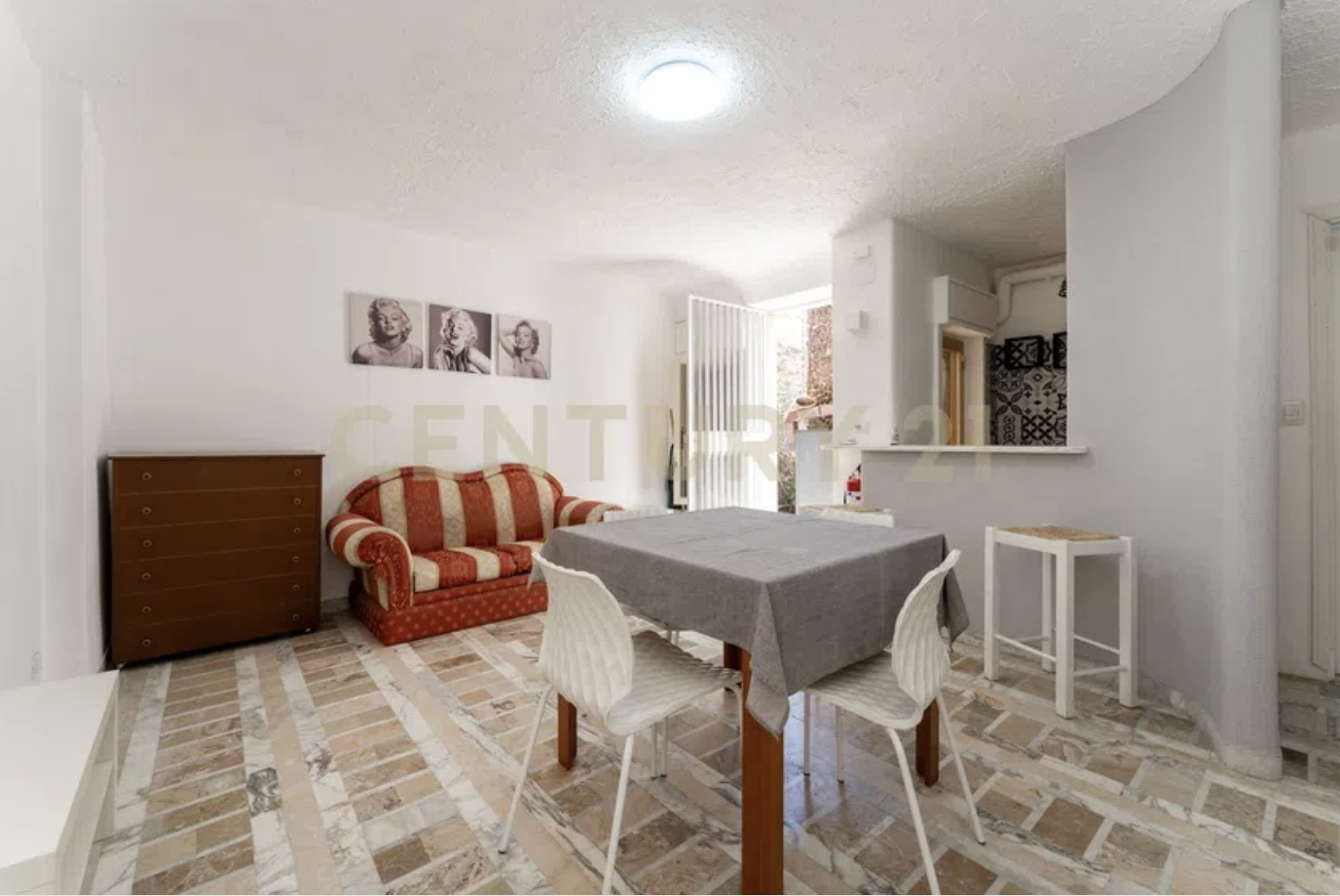
→ See the €36,000 flat on Via G. M. Frontini
Circe
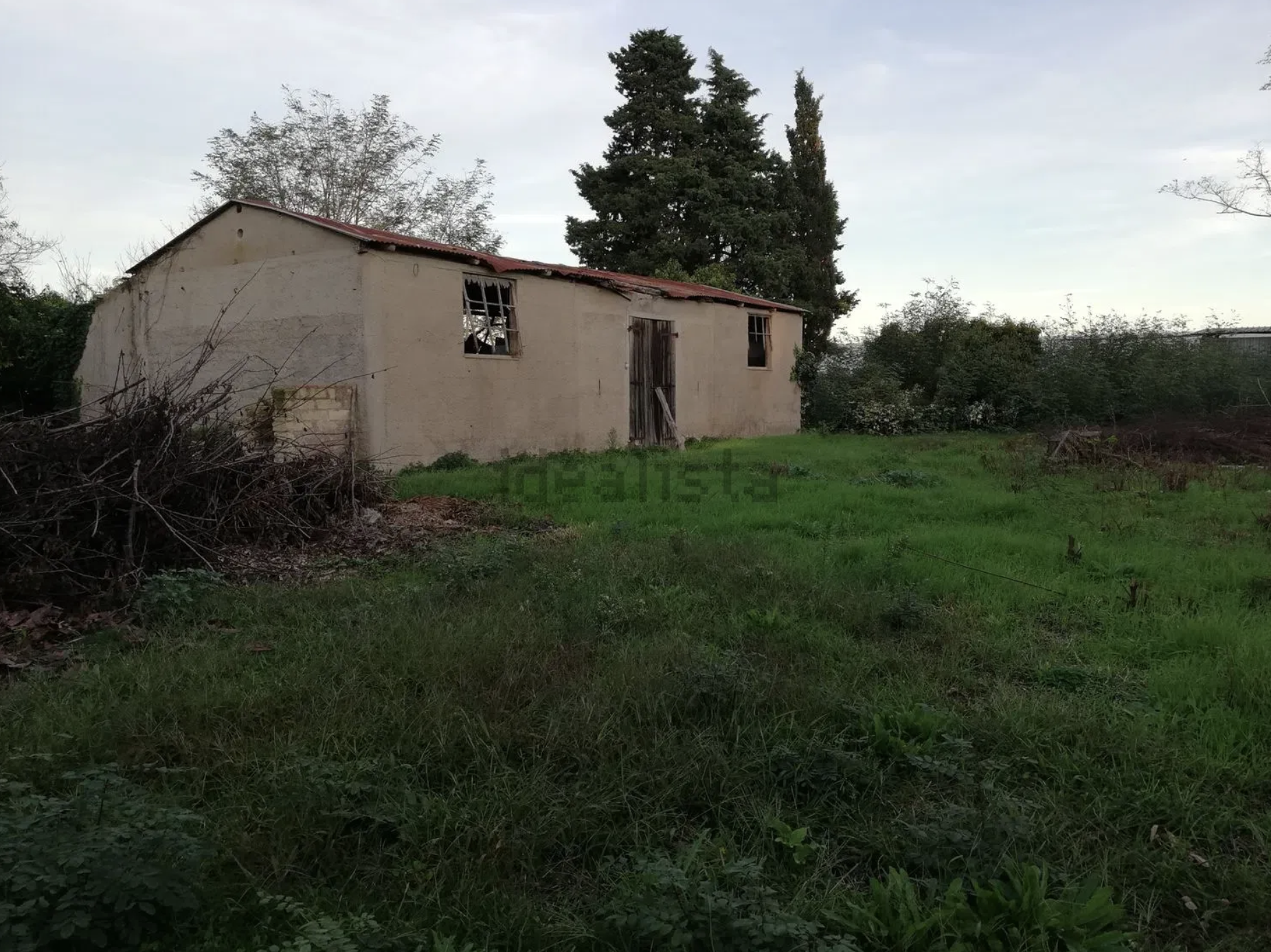
Via del Pigneto, San Felice Circeo, Latina, Lazio — €99,000, 176 m² ruin
Monte Circeo rises off the Tyrrhenian coast about halfway between Rome and Naples. In antiquity the Pontine Marshes cut it off from the mainland, so from the sea it read as an island, and Greek and Roman tradition identified it as Aeaea, where Circe kept house. The Romans founded a town on it and named the town Circeii. Modern San Felice Circeo sits on the same ground, and most scholarship still accepts the identification.
The property is registered in cadastral category C/2, which covers storage and outbuildings rather than dwellings, and the listing calls it a building or ruin with a canopy and a surrounding courtyard. It runs to 176 square meters of cadastral space at €99,000, or €562 per square meter, against a town average of €2,038. The C/2 registration explains most of that gap. Converting an outbuilding to residential use in Italy requires a change-of-use application, and Monte Circeo sits inside the Parco Nazionale del Circeo, so the planning position comes first.
A large share of the stock under €180,000 in San Felice Circeo is aste giudiziarie, judicial auctions, with sale dates already set for July and September. Buying at auction in Italy runs on different rules from buying from an owner, with its own deposits and timelines. More on that in the Fine Print.
Hades
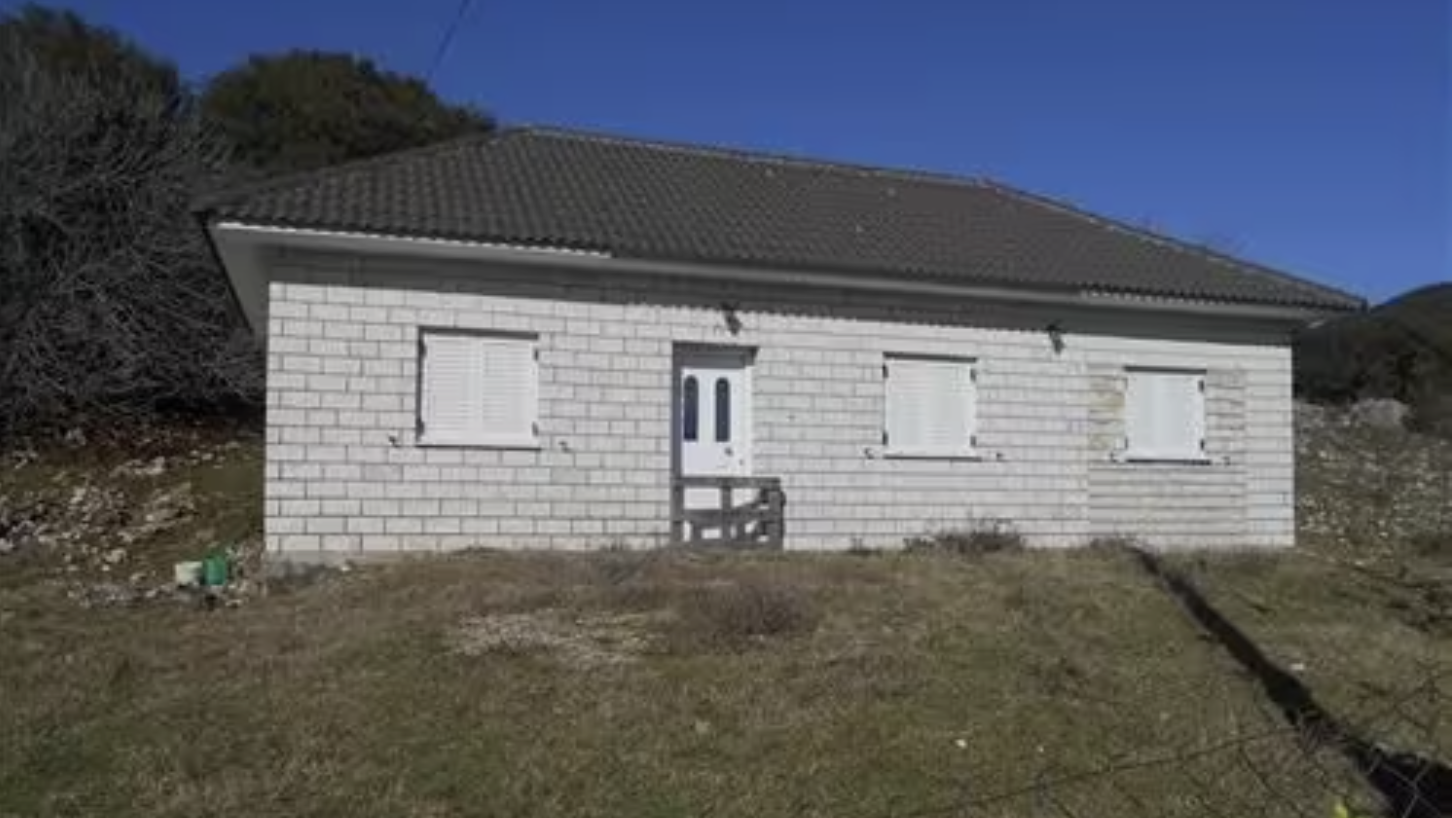
Agios Dimitrios, Serviana, Ioannina, Epirus — €70,000, 74.92 m² stone house
Epirus holds two doors to the other world. At Mesopotamos, where the Acheron, the Pyriphlegethon and the Cocytus meet, the Nekromanteion of Acheron stands on a low hill above the village. Those are the three rivers Homer names as watering the kingdom of the dead, and they are on the map, with a car park and an admission desk. Sotirios Dakaris identified the site in 1958. The standing remains are Hellenistic, late fourth to third century BCE, and they include the underground chamber where people came to consult the dead.
The other door is Dodona, the oldest oracle in Greece, where priests read the will of Zeus in the sound of a sacred oak, also referenced in The Odyssey.
This house sits fifty kilometers up the road from the Acheron and about half an hour from Dodona, in Agios Dimitrios, near the village of Serviana, at 653 meters. It's a furnished stone house of 74.92 square meters, built in 2004, with one bedroom, one bathroom, a separate WC, a kitchen and a living room, tile floors and aluminum frames. Very good condition, unobstructed view, sixteen kilometers from the nearest town. The price is €70,000.
The plot comes in two sizes depending on where you look. The written description says 2,600 square meters. The portal's own data fields say 75, which is the same number as the house. One of those is wrong, and it's the first question to ask the agency, because the difference between a stone cottage on a quarter-acre and a stone cottage on a stamp is the whole purchase.
Then there is the heating. Under that heading the listing says, in full: "Not available."
Ioannina in January averages a high of 6.6°C and a low of −0.8°C, with snow falling between December and February and January getting most of it. This house stands 653 meters up, higher than the city, in the mountains that Greeks think of when they think of a cold winter. It was built in 2004 and it has no heating system at all.
Calypso
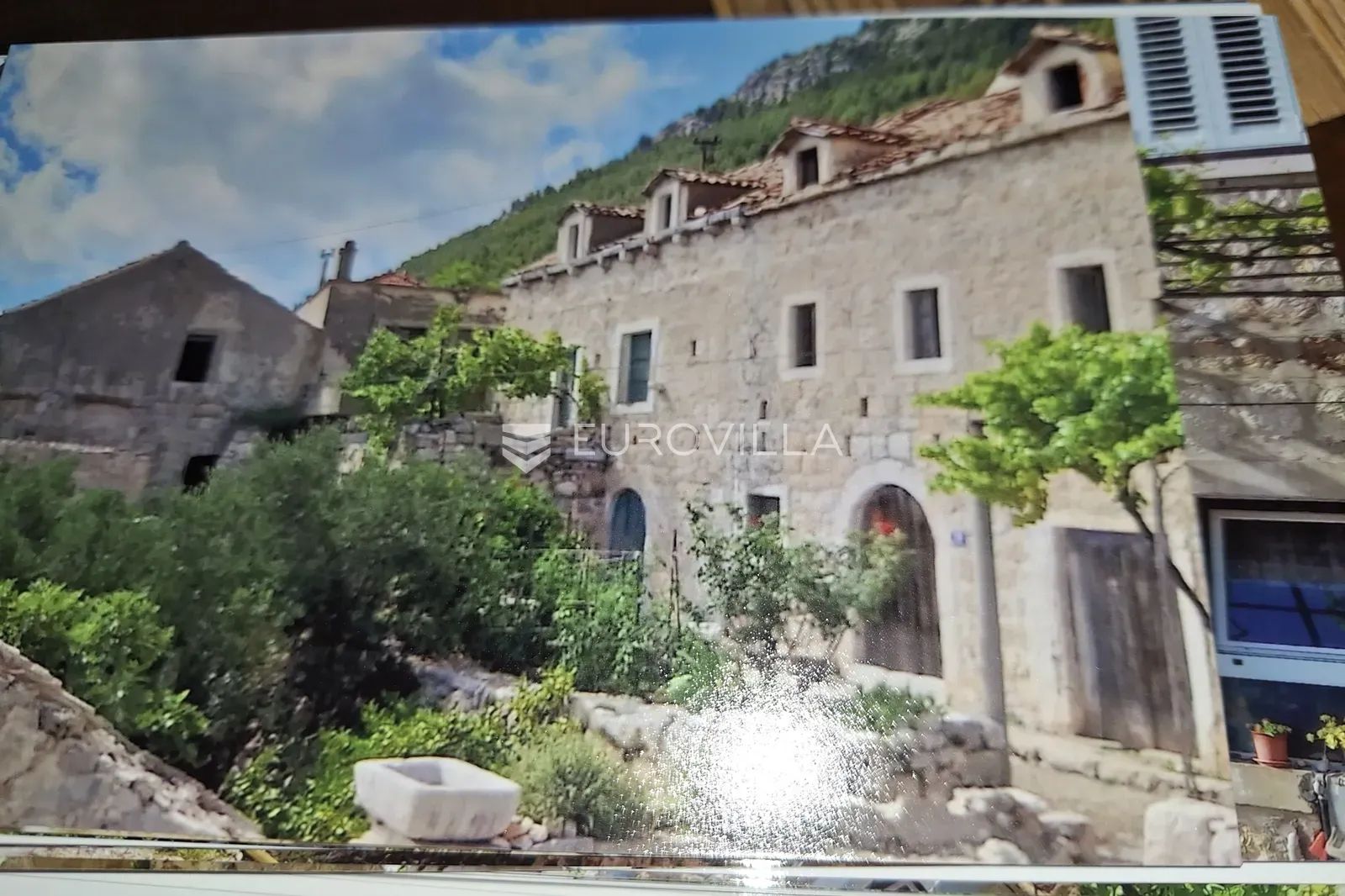
Sršenovići, Babino Polje, Mljet, Croatia — €85,000, 129 m² stone house
Two islands claim to be Ogygia. Gozo has the cave above Ramla Bay, currently shut to visitors because the rock is moving. Mljet, in southern Dalmatia, has the Odysseus Cave on its south coast, egg-shaped with two entrances, one of which you can only reach by swimming or by small boat. The Dubrovnik historian Aristid Vučetić argued for Mljet on the grounds that it is the only island down there with a cave matching Homer's description. He also proposed that the name of the village next to it remembers her: Babino Polje translates as the old lady's field, and his suggestion was that Calypso grew old on the island and the locals kept calling the land after her. That last part is local history rather than settled philology, so take it as offered.
The house sits in Sršenovići, on high ground in the village, one unit of a terraced stone row with its own entrance. Three floors of 43 square meters each, Dalmatian stone facade, north-south orientation, a view of the open sea. A garden in two parts totals 58 square meters, the terrace runs to 29, and a separate 30 square meter komin, the traditional Dalmatian hearth building, stands alongside. Parking is 150 meters away. It needs a thorough renovation.
A water tank in front of the house supplies the drinking water. The building has no electricity supply, though the agent notes that neighboring houses have had it installed, "so installation should not be a problem." The house in Issue 1 listed its water as optional. This one has a tank and no power.
Mljet is a national park, reached by ferry from Dubrovnik, and the park designation shapes what you can do to the stone. That agency lists two properties on the entire island.
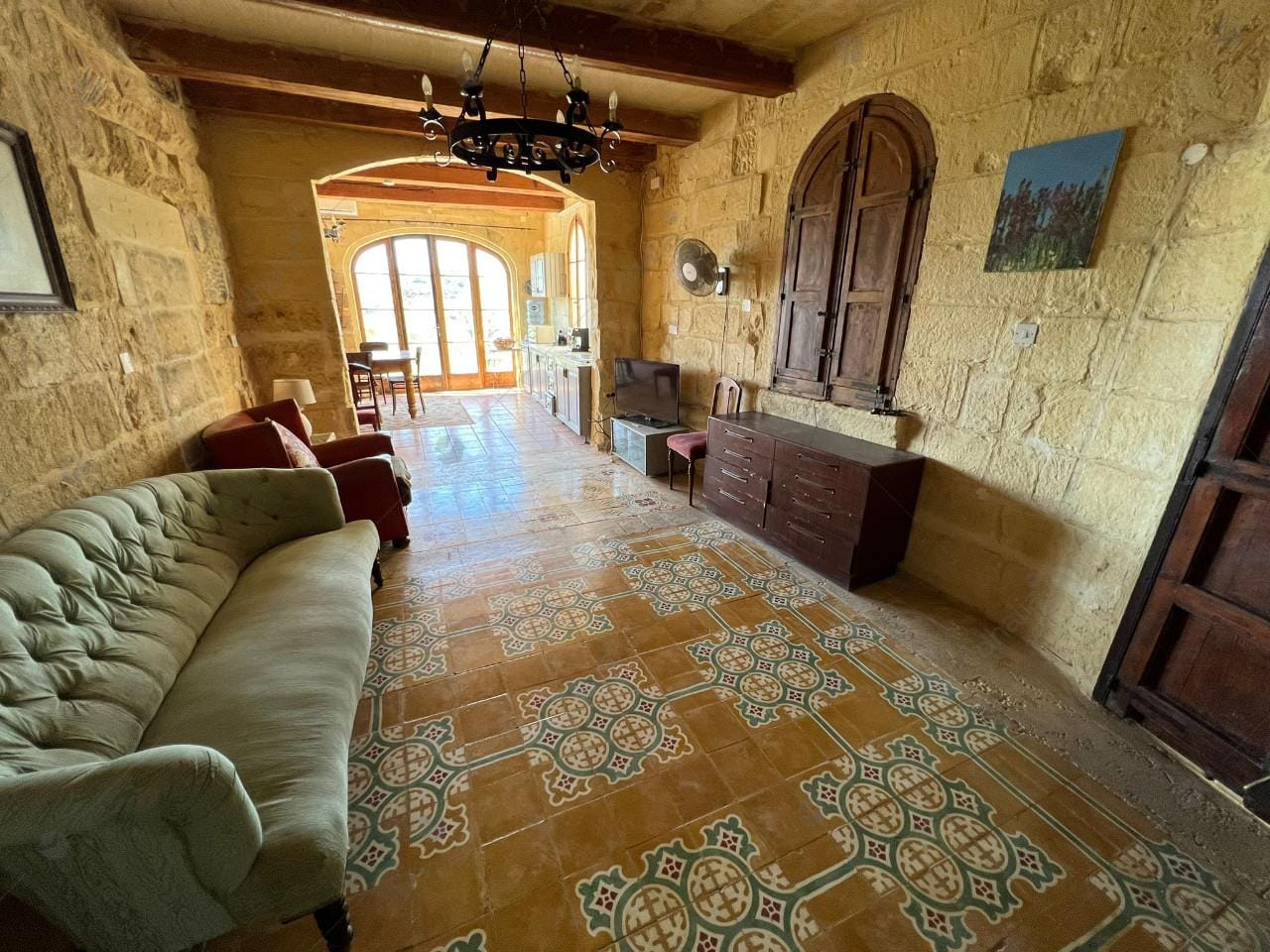
On Gozo, meanwhile, a farmhouse on the cliff edge outside Xagħra, four levels, five terraces, seven bedrooms and a pool, is on the market at €1,095,000. Scholarship hasn't settled which island Calypso lived on. The property market prices the two candidates about thirteen times apart.
Ithaca
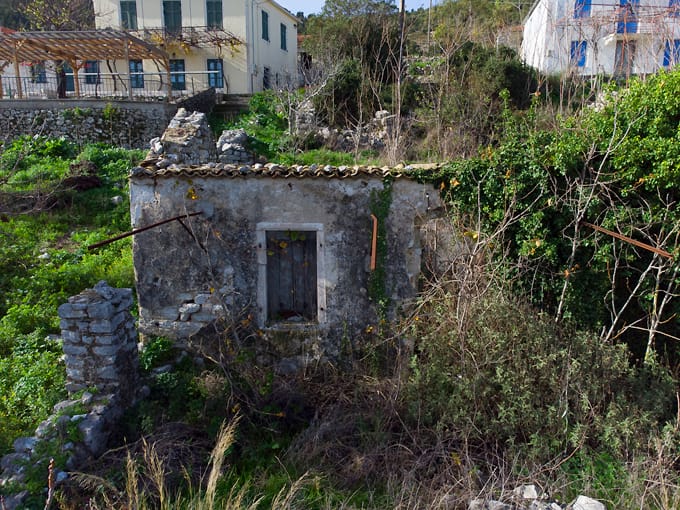
Exoghi, Ithaki, Ionian Islands — €70,000, 82.50 m² ruin
Exoghi is a traditional village in the north of Ithaca, above the basin that holds Stavros and Platrithias. The ruin is 82.50 square meters with village, mountain and sea views, and it's listed at €70,000.
On the eastern slopes of the same village, around a rocky outcrop with natural springs, is an archaeological site that has been called the School of Homer since the early nineteenth century. Thanasis Papadopoulos and Litsa Kontorli-Papadopoulou excavated it between 1994 and 2012, and work has continued since 2018. They found a large building complex arranged as an acropolis, occupied from the Middle Helladic period around 1900 to 1600 BCE through to the Hellenistic era, which puts it in use during the Mycenaean centuries that tradition assigns to Odysseus. From its position it overlooks three harbours: Afales to the north, Polis to the southwest, Frikes to the east. Papadopoulos identified the acropolis as the palace of Odysseus. Other archaeologists have not accepted the identification, and the question is open.
The finished houses on the same island run differently. A restored stone cottage at Lefki is €360,000. A two-storey house at Kioni with views over the bay is €395,000. A traditional stone house near Vathy harbour, livable now, is €700,000.
The same agency lists other ruins: a stone ruin and land at Ag. Sarantas with views to Afales Bay at €75,000, a ruin at Anoghi at €70,000, and a historic windmill at Frikes at €120,000 which requires excavation before you could build.
The address itself has been argued over. In 2005 Cambridge University Press published Odysseus Unbound, in which the authors (Bittlestone, Diggle, and Underhill) argued that Homer's Ithaca was not this island but Paliki, a peninsula of neighboring Kefalonia, separated by a channel that earthquakes later filled in. Mary Beard gave the argument a very fair chance. Peter Green called it almost certainly correct. The geologist, John Underhill, then spent about two decades surveying for that channel, and the project now publishes the finding that Paliki was not an island in the Late Bronze Age. A marine channel did run there, and it closed between 400,000 and 290,000 years ago.
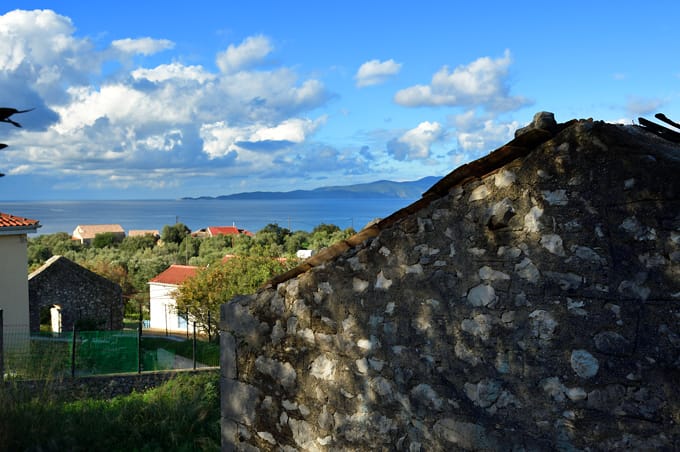
→ Browse the agency's ruins page
The Fine Print
A new rule taking cheap houses off the internet
The agency selling the Ithaca ruin has a notice on its own website, in capitals, which reads: "YOU MAY NOTICE THERE ARE PROPERTIES MISSING. DUE TO NEW EU LAWS INFORCE NOW, PROPERTIES WITHOUT ENERGY RATINGS CANNOT BE ADVERTISED. THE HEFTY FINES ARE RESTRICTIVE AND PROHIBITIVE. PLEASE CONTACT US FOR WHAT IS AVAILABLE FOR SALE WHILE OUR SELLERS ACHIEVE THEIR ENERGY RATINGS."
An Energy Performance Certificate is now required for every sale and every new rental of a building in Greece, whatever the size, and a notary cannot complete a transfer without one. Since 1 January 2021, every Greek listing for sale or rent has had to state the property's energy class, and that applies to agents, to the portals like Spitogatos and XE, and to private sellers equally.
The recast Energy Performance of Buildings Directive, (EU) 2024/1275, came into force on 28 May 2024 with a transposition deadline of 29 May 2026. On 15 July 2026 the European Commission sent letters of formal notice to all twenty-seven member states for failing to fully transpose it.
The effect on this newsletter's subject matter is direct. A ruin with no roof and no power is the hardest building to rate and the least likely to have an owner willing to pay an engineer to come and rate it. Those houses do not stop existing. They stop being advertised, and move to the category the Ithaca agency describes as available if you telephone and ask. The Epirus house in this issue carries a certificate rated G, the bottom of the scale, and it is listed publicly. The houses below G are the ones you now have to ask for by name.
Greece: purchase costs
Transfer tax is 3% of the property's objective value, the figure set by the Ministry of Finance rather than the price you agree. A municipal surcharge of 3% is applied to the tax itself, which brings the effective rate to about 3.09%. The buyer pays it, and it has to be settled before the notarial deed is executed.
Notary fees generally run 1 to 2% of the price depending on how complicated the transaction is. Registering the new ownership at the land registry or cadastre adds about 0.5%. Foreign buyers pay the same property taxes as Greek citizens.
Ithaca has had a land registry since 18 June 2019. Local owners were given three months to register their properties and foreign owners six, with fines after that.
Croatia: official consent precedes ownership
Croatia joined the EU in 2013, so EU and EEA citizens buy on the same terms as Croatians. Americans are in a different queue.
Croatia recognizes reciprocity with the United States, which means US citizens may buy residential property directly. The extra step is consent from the Croatian Ministry of Justice. You find the property, sign a preliminary contract, then apply for that consent and wait. Published estimates of the wait vary widely. Two to six months is the figure quoted most often, one guide gives a range of 30 to 180 days, and others report a year or more. Plan for the long end.
Where a country has no reciprocity agreement, the route is to buy through a Croatian registered company instead. Readers of Issue 10 will recognize the structure.
Mljet is a national park. The designation governs what may be altered on a building and on the land around it, and it should be the first thing checked on a stone house that needs a thorough renovation.
Italy: clarifying listings terms
Cadastral category C/2. The Circeo ruin is registered C/2, which is the classification for storage rooms and outbuildings rather than dwellings. A building in that category is not a house in the eyes of the cadastre, whatever it looks like. Turning it into one requires a change-of-use application, and the property sits inside the Parco Nazionale del Circeo, which adds a planning authority to the list of people who have to agree.
Judicial auctions. A large share of the cheapest stock in San Felice Circeo, and a noticeable share in Aci Castello, is aste giudiziarie, sold by court order rather than by an owner. The listings carry a minimum bid alongside the court appraiser's valuation, they name a sale date, and several of them advertise that you can bid online without attending. It is a different transaction from a normal purchase, with its own deposit rules and timetable, and the property is generally sold as it stands.
Unpermitted works. The Aci Trezza terrace described as "not yet regularized" is the common version of a common Italian problem. Enclosing a terrace without permission creates a discrepancy between the building and its filed plans, and clearing that discrepancy is a sanatoria or a condono depending on the route. A surveyor can price it. A lender will want it resolved before completion.
Lifestyle & Culture Notes
Nostalgia: a disease *you* may be at risk of, first described in 1688
In 1688 a Swiss medical student named Johannes Hofer coined the word nostalgia in his dissertation at Basel. He built it from algos, pain, and nostos, the Homeric word for homecoming. Together: longing for home. Hofer meant it as a diagnosis. His patients were Swiss mercenaries, young men from a poor mountain country who had gone abroad to earn money, and he thought the condition could kill them. He prescribed laxatives, narcotics and bloodletting, and if those failed, sending the patient home.
These days, we tend to think of it as a longing for or idealization of the past
CASE NOTES. Patient presents having read a property listing.
History. The patient reports a first exposure approximately four months ago, unaccompanied, at night. Since then the patient has taken to calculating the flight time to Catania whenever they find themselves stuck in traffic.
Presenting symptoms. Obsessive thinking of a home the patient has never lived in. Elevated pulse at the phrase "sea view of the Faraglioni." The patient has begun using the word sanatoria in conversation...
Examination. On being told that the Epirus house has no heating system and stands at 653 meters, where January averages a low of minus 0.8 degrees, the patient replied, "We would put in a wood stove." On being told that the Croatian Ministry of Justice takes between two and six months to grant an American consent to own anything, the patient replied, "That is fine, we would need the time anyway." On being shown that the plot is listed as both 2,600 square meters and 75 square meters, the patient said the discrepancy was probably a typo and moved on. This last response is the one that concerns us.
Differential diagnosis. Distinguish from ordinary daydreaming, in which the patient does not know the transfer-tax rate. Distinguish also from a settled decision, in which the patient has actually consulted a lawyer in the region they are considering relocating to.
Prognosis. Pending...
Treatment. Laxatives, narcotics, and bloodletting are no longer indicated. We suggest instead that the patient visit their dream location during the time of the region's most intemperate weather
Recipes from the Map
Two from the route...
Pasta alla Norma via Great Italian Chefs — the dish of Catania, twenty minutes down the coast from the Cyclops. Fried aubergine, tomato, basil, and grated ricotta salata. It is named for Bellini's opera Norma, Bellini having been born in Catania.
Hortopita, the wild greens pie of Epirus, via The Greek Chemist in the Kitchen — Epirus is the pie region of Greece, home to mountain sheep source of delicious cheese, and a range of wild greens and herbs that grows nowhere else in the country. Hortopita is an everyday pie made of greens and pastry, standard fare in the villages around Ioannina.
What we're reading
- "On Complicated…", Emily Wilson. The translator's own account, and the source for the opening of this issue. She walks through what she rejected and why: "twisty" was fine for a corkscrew, "flexible" suggested yoga, "turned" sounded like spoiled milk. She also explains that polytropos works in both the active and the passive, that no English word does both.
- Does 'The Odyssey' Have A Woman Problem?, The Sam Sanders Show, KCRW, 17 July 2026. On Christopher Nolan's adaptation, which cast heavy hitters Zendaya, Anne Hathaway, Charlize Theron, Samantha Morton, and Lupita Nyong'o and still does not pass the Bechdel test. Nolan cited Wilson's translation throughout the promotion. Wilson herself was not confident the film would be feminist.
- Did Homer have a woman problem?, Philip Hensher, UnHerd. The contrary position, argued sharply. Hensher's evidence is Samuel Butler's The Authoress of the Odyssey of 1897, which held that the poem reads as the work of a woman: the poet is vague on boats, rudders, and how sheep feed their young, but understands exactly the implications of a hall full of dead suitors regarding the state of the floor.
- Everyone Just Wants to Go Back Home, Matthew J. Hunter, geese magazine. A reading of the Nolan film through the Bronze Age collapse, arguing that the film's Odysseus cannot stay home once he reaches it, and that home in the poem is a time rather than a place.
- Was Homer's Ithaca an Island? Our New Research Says It Was Not, the Odysseus Unbound project. Twenty years of fieldwork by the team that proposed the Paliki theory in the first place, publishing the finding that undercuts their own central mechanism. There was a marine channel between Paliki and Kefalonia. It closed between 400,000 and 290,000 years ago.
Live from our group chat
This is the part where we tell you what the rabbit hole looked like for us this week.
Wally: Do you think The Odyssey has a woman problem?
Malia: We are a feminist household, unlike the kingdom of Ithaca.
Wally: That is not an answer.
Malia: You know we're not in the business of answers around here. This project is purely speculative.
Wally: There's speculation that Homer was a woman.
Malia: Maybe we should invite her over for dinner.
That is issue eleven. Thanks for reading.
Until next week, Wally & Malia
Remnant is a weekly newsletter about distressed and beautiful houses around the world. We are not real estate agents. We just got a little obsessed and started digging. What will you do with what we find?