
Remnant–– Issue No. 2
All three of this week's Italian houses are in Umbria, the landlocked green heart of the country. Home to ancient Etruscan towns like Orvieto – known to the Etruscans as Velzna – built on outcroppings of volcanic stone (tufa) that contain ancient passages beneath that you can still explore.


Umbria stone houses from ~€37k and a County Mayo cottage eligible for Ireland's €70,000 vacant property refurbishment grant
Welcome back. We are still in Los Angeles. The weather is lovely, the palm trees are swaying in the breeze and it's Memorial Day weekend, so most folks are at the beach. Also this week there were fires in Simi Valley, a tank full of toxic chemicals at an aerospace plastics plant in the OC is imminently threatening to either blow up or spill, forcing evacuations of ~50k residents, and yesterday a ruptured underground pipeline in East LA dumped 2400 gallons of crude oil, some of it ending up in the LA River. And that's just in ecological news. The questions we humans have a habit of asking ourselves when terrible disasters like these (especially the seemingly preventable ones) befall our communities and our lands, are often something along the lines of : would it be better/ easier/ safer anywhere else? The answer is probably not really. Life is unpredictable and by nature, vulnerable. Then we ask; but in these troubling times am I living my best life? That's the real question. Acknowledging that the sky will insist upon falling down around our ears, as it has since the beginning of recorded history, the question becomes something more like Am I making the most of my time on this earth; am I living as well as I can – it's the only mantra that makes sense. If your circumstances have you googling properties in far flung places, we're here for you. As for us, I don't know, we love the heck out of this city. Also, those Italy houses look pretty wonderful. Is my fate to live in the mountains? To store wine and olive oil in my ancient cellar and navigate a plethora of steep stone stone steps everyday well into old age? There is something about the act of entertaining interesting choices that feels liberating, no matter the outcome.
The watchword for this Umbria, Italy + a dash of Mayo, Ireland issue is piano piano. That's Italian for slowly, slowly, and it was the single most compelling phrase we came across this week (via the video below). It applies to buying a house in Italy, where there is no central listing system and every property belongs to a different agent. It applies to renovation budgets, which tend to start small and grow. It applies to the whole fantasy. Be patient, expect delays and bureaucratic hagglings, and do not buy the one-euro house on a whim.
This week we are perusing Italy and Ireland. We have three stone houses in the green hills of Umbria, a derelict cottage in County Mayo that costs less than what Ireland's refurbishment grant is potentially offering to fix places like this, the practical details on Italy's no-MLS reality and , and a lifestyle section at the bottom with truffle pasta, brown bread and blackberry jam, a few things we read, something we watched, and a look at our group chat as usual.
Italy
All three of this week's Italian houses are in Umbria, the landlocked green heart of the country. Home to ancient Etruscan towns like Orvieto – known to the Etruscans as Velzna – built on outcroppings of volcanic stone (tufa) that contain ancient passages beneath that you can still explore. There is no coast here, and the region makes up for it with rolling hills, oak and chestnut woods, olive oil, wine, and truffles.
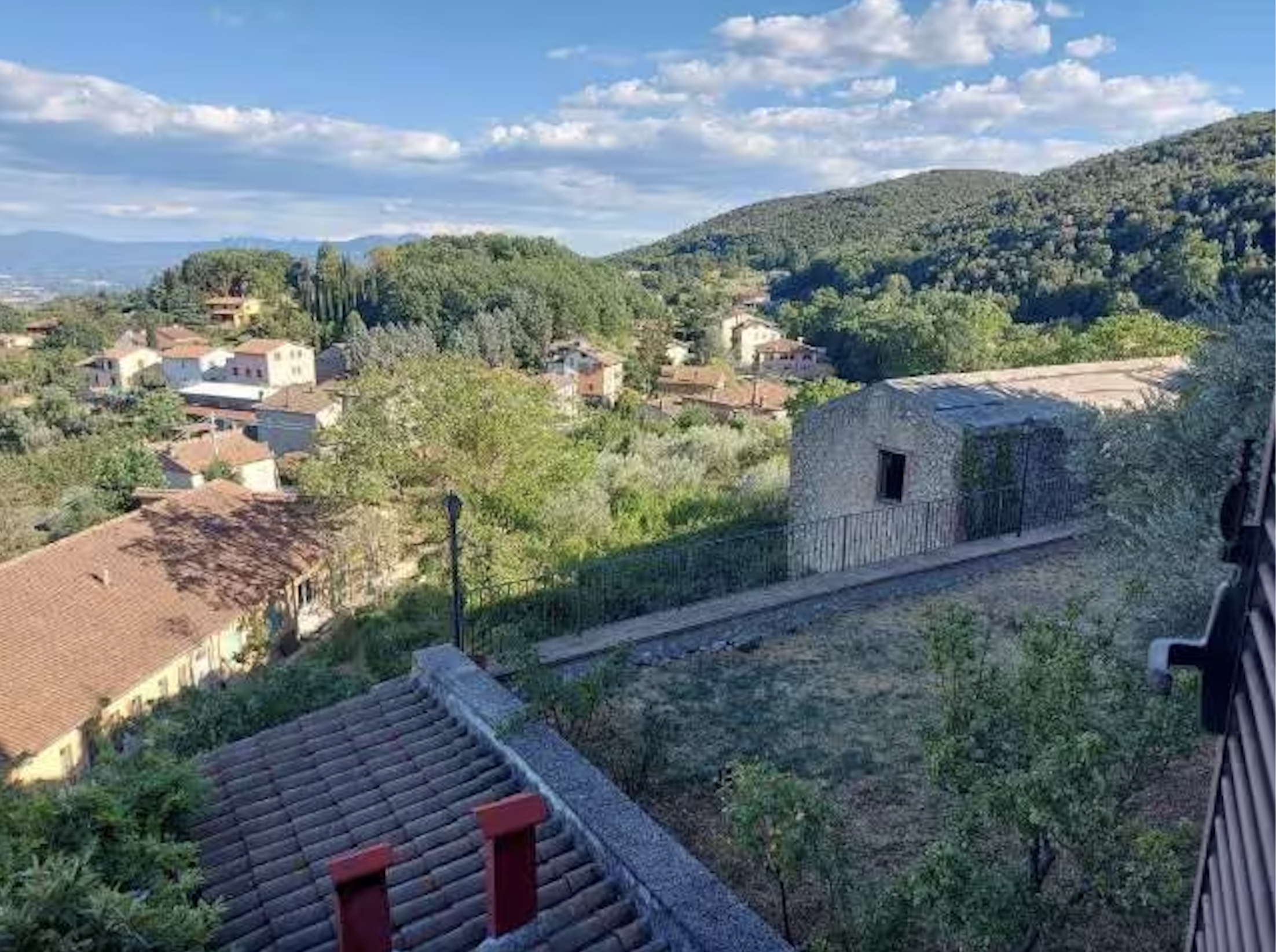
Featured: a stone home in Umbria you could move into without a hard hat
Capitone (Narni), Umbria · ~€48,000 (~$52,000)
Okay, let's talk about this one. Capitone is a frazione (a hamlet) of Narni, a medieval hill town in the province of Terni, in southern Umbria. Fun fact: when C.S. Lewis went looking for a name for his imaginary kingdom, he found it on a map of central Italy. The Latin name of Narni is, literally, Narnia.
The house is what Italians call a porzione di fabbricato cielo-terra, a "sky-to-earth" portion of a building, meaning you own one full vertical slice from the ground floor to the roof. It is 126 square meters over three floors. The ground floor has a kitchen with a fireplace and a living room that looks out over the valley. The first floor has two bedrooms and a bathroom. The basement is a large cellar with its own bathroom – and behold! – there is a balcony.
Here is the part that makes this one the feature. Most houses at this price come with a renovation that costs more than the house. This one does not. The listing describes it as in good condition and needing no special work, which in this newsletter is close to a miracle. You would be buying a place you can live in, in the historic center of a hill town, for roughly a year and a half of rent on a small Los Angeles apartment.
The catch is the one that comes with every hamlet. Capitone is small and inland, so you will want a car, and "sky-to-earth portion" means you share walls with your neighbors (whom you do not yet know...). Terni, the nearest city, is about half an hour away for groceries and a train. This is quiet hill country, not a tourist postcard, and the nearest beach is fairly lontano (Italiano for far away).
More from Italy
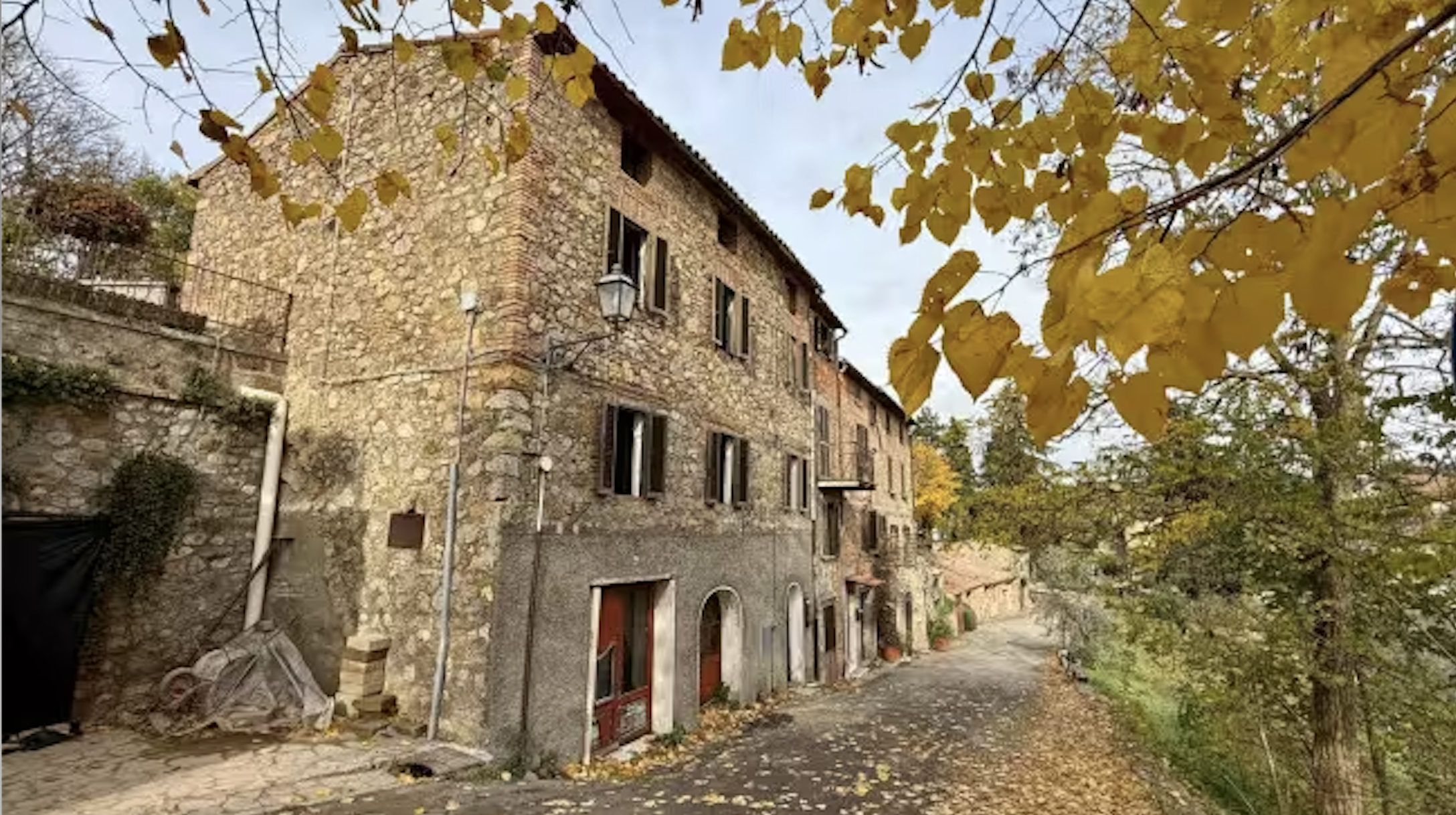
Ficulle, Umbria · ~€51,000 (~$55,700)
This one is for the romantics. It is called Palazzo Cortellini, a historic stone building in the village of Ficulle, up near Orvieto in the northern part of Terni province. It is 154 square meters over three floors, and it comes with a story on every level. The ground floor is an old cellar that once held the vats for the village wine, a space the listing suggests could become an event venue or a small distillery. The second floor is already habitable, with a kitchen, two bedrooms, a bathroom, original terracotta floors, and exposed wooden beams. The first floor is an apartment that still needs renovating, and the top floor is a big open attic waiting for an idea. It has methane heating with radiant panels, a comfort you do not usually get at this price, and an energy rating of G, which you usually do. This one is part move-in, part project, all rustic, straight outta a gothic novel, character. Ghosties? Maybe.
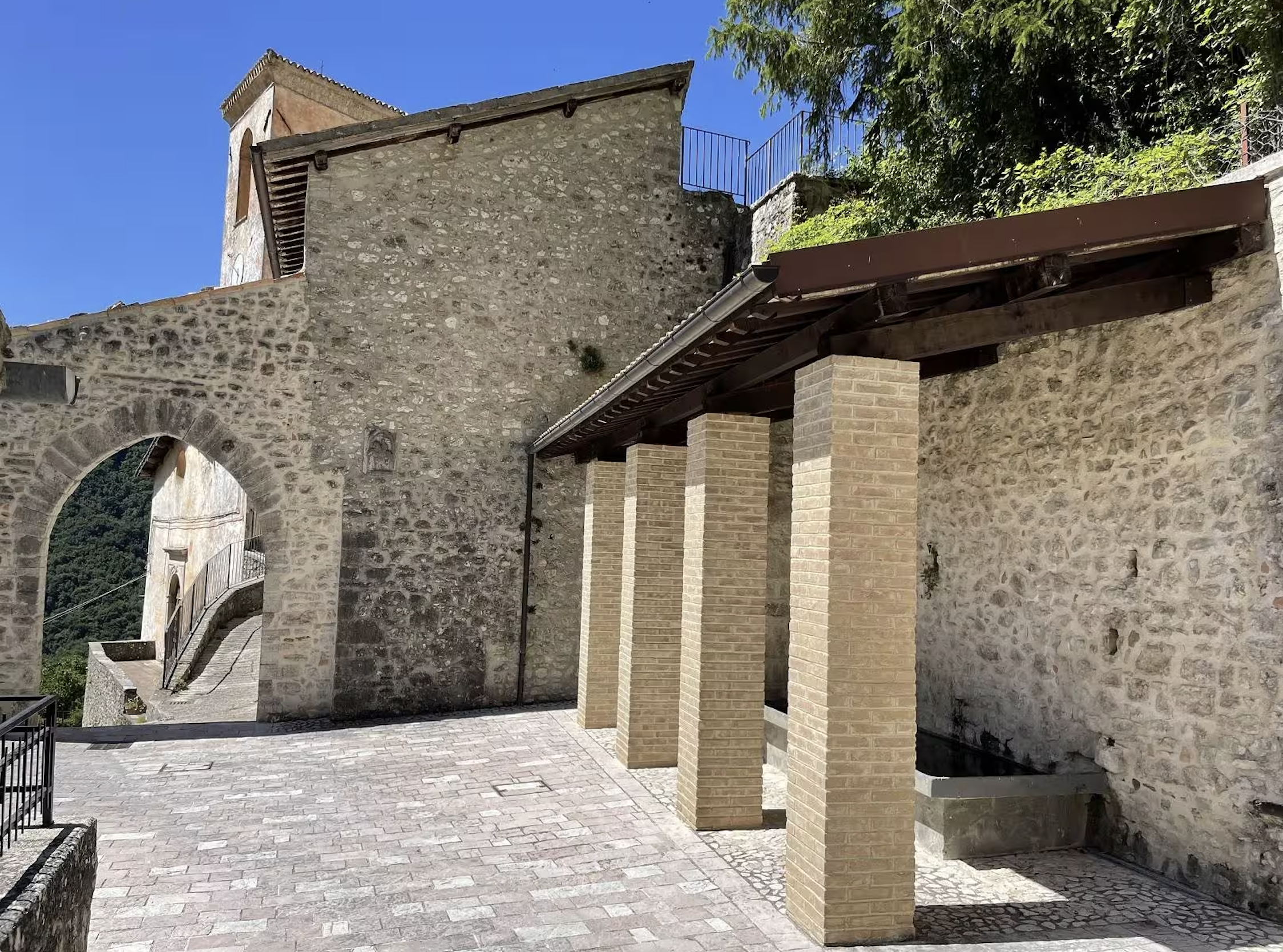
Gavelli (Sant'Anatolia di Narco), Umbria · ~€37,000 (~$40,600)
Here is our altitude option. Gavelli is a mountain hamlet in the municipality of Sant'Anatolia di Narco, in the Valnerina, sitting at over 1,100 meters above sea level. The house is a small semi-detached, 70 square meters on two levels, with a living area, kitchenette, and fireplace downstairs and two bedrooms and a bathroom upstairs. It was renovated in the late 1990s and is in good condition, with double-glazed windows and aluminum shutters, which up here is less a luxury than a survival strategy. You get clean air, mountain views, and the slow pace of a small, rural village. You would get real winters. Bring a snow shovel.
Ireland
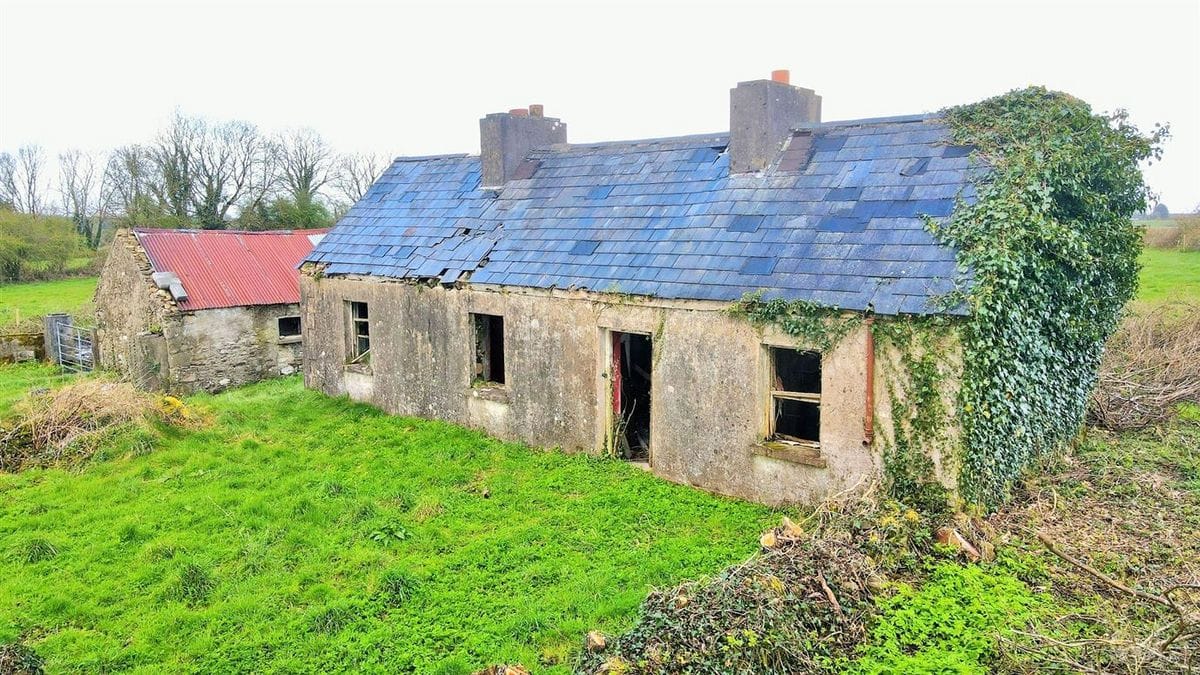
Featured: a cottage that costs less than the grant to fix it
Cloonaweema, Charlestown, Co. Mayo · €39,000 (~$42,000)
Okay, this one is a different kind of math. Cloonaweema is a townland outside Charlestown, in County Mayo, in the green and rainy west of Ireland. It is two kilometers from town, ten minutes from Ireland West Airport Knock, and a long way from anything resembling a crowd. The asking price is thirty-nine thousand euros, about forty-two thousand dollars, or roughly one year of daycare for two children in Los Angeles.
What you get for that is a derelict single-storey cottage on about three-quarters of an acre: a traditional three-room cottage with a rear extension, listed as two bedrooms, plus a traditional stone outbuilding. The listing does not hide the work. The cottage needs a full refurbishment, and it has no services connected, so water, power, and septic are part of the project rather than a given.
Here is the part that makes this one special – Ireland has a Vacant Property Refurbishment Grant that pays up to €50,000 to renovate a long-empty home, and up to €70,000 if the property is classed as derelict. This cottage is described as derelict, which means the grant available to fix it could be larger than the price of buying it. The conditions: the place has to have been vacant for at least two years, built before 2008, and you have to live in it or rent it out once the work is done. The money also arrives as a reimbursement after the work, not a check up front.
Charlestown gives you shops, schools, and buses to Galway, Sligo, and Dublin Airport. Knock airport, ten minutes away, flies to the UK and Europe, which makes this one of the more connected remote places we have featured. The rest is fields, weather, and quiet.
The Practical Details
A few articles from our research this week, in case you want to keep going.
If you go looking for an Italian house, the first surprise is that there is no central listing system. Italy has no MLS, the shared database that powers most American real estate. Each house belongs to a particular agent, so finding the right place often means finding the right agent first, one village at a time. This is where piano piano earns its keep. The second surprise is the one-euro house, which is rarely the bargain it looks like. The price is the smallest number in the whole project: renovations routinely run €20,000 to €100,000, fees and taxes add another 7 to 15 percent, and there are documented cases of buyers spending six figures on a house they bought for a euro. The houses in this issue are not one-euro houses, which is the point. International Living's breakdown of what you can actually buy in Italy is a good place to start.
Ireland's Vacant Property Refurbishment Grant is the program behind the Mayo cottage above. It is funded through the Croí Cónaithe (Towns) Fund and pays up to €50,000 for a vacant home or €70,000 for a derelict one. The property has to have been empty for at least two years and built before 2008, and you have to live in it or make it available to rent once the work is finished. Travel + Leisure's explainer walks through how the program works and who qualifies.
The Lifestyle Section
A day in the life...
In Umbria you wake up landlocked, which is the regional personality. There is no coast, so the region leans into hills, oak woods, olive oil, and truffles instead. From Capitone you have Narni and its medieval streets nearby, Terni for a supermarket and a train, and the whole green middle of Italy within a drive. Days are slow and the social center is the piazza. You will need a car and a little Italian. It is a calm life, but mind the gossip! This is a small town, and you would be an outsider. At least at first. The question, as always, is whether you would thrive there or slowly lose your mind.
In Mayo you wake up to weather. The west of Ireland is green for a reason, and the reason falls out of the sky most days. From Cloonaweema you have Charlestown two kilometers off for the basics, the pubs and the shops and the church, and Knock airport ten minutes away for the days you want to be somewhere else by lunch. The Atlantic coast, Achill Island, and the Wild Atlantic Way are an easy drive west. Pack accordingly: a good raincoat, wellies, and a dehumidifier.
What we're cooking
Here are two dishes from this week's countries. From Umbria, strangozzi al tartufo, the region's eggless hand-rolled pasta tossed with butter, parmigiano, and shavings of black truffle, a dish built on restraint rather than showing off. From Ireland, a proper brown bread, the dense wholemeal soda loaf that turns up at every meal and takes about ten minutes to put together. Tradition says the cross you cut in the top is there to let the fairies out.
- Strangozzi al tartufo nero, via PastaLove
- Irish brown bread, via King Arthur Baking
- Adding also a recipe for blackberry jam via Food.com to go with the soda bread in honor of the new Tana French (The Keeper) – Malia is currently reading, she is a big fan and this is the last book of the trilogy. If you get it you get it.
What we're reading
Here are five things from our tabs this week.
- A region-by-region list of which Italian villages are actually running €1-house schemes in 2026, via idealista. Some towns have finished their first rounds, some reopen the scheme periodically, and a few are brand new to it. It is a useful reality check before you fall for a headline.
- Trentino is offering up to €100,000 to people who restore and live in its abandoned villages, via idealista. The money is aimed at the empty hamlets of the Dolomites, with conditions around residency and renovation. It is Italy's version of the same bet Ireland and Switzerland are making.
- A beginner's guide to Italy's ghost towns selling houses for €1, via Messy Nessy Chic. It is older now, but it is still the most charming map of how these schemes started and which towns kicked them off.
- A plain rundown of Ireland's 2026 vacant and derelict property grants, via Rentsmart. The grants are the carrot. The new tax on leaving places empty is the stick. Both halves are worth reading.
- The Keeper, a novel by Tana French (see above)
What we're watching
This week we watched this video from International Living full of great, simple tips for buying property in Italy. It paints a picture of the the no-MLS, one-agent-at-a-time, reality behind the daydream, but also feels rife with possibility. The main suggestion is to consider steering clear of one euro houses as there are lots of properties that are move-in ready or close to it that cost less that the renovations would, without the program requirements and restrictions. Food for thought.
Live from our group chat
This is the part where we tell you what the rabbit hole looked like for us this week.
Malia: I spent an evening daydreaming about the wine cellar of the Ficulle palazzo. Imagine, you could store root vegetables, olive oil, barrels of local wine. A friend was recently telling me about their mother who had a side hustle when they were growing up in Ethiopia, distilling and selling a special liquor out of their home. She made a decent income on her hooch and it was apparently pretty good. That could be me!
Wally: I went looking for the most affordable house on the list and found the one at 1,100 meters in Gavelli, and then I lost two hours to the question of how you get a heating-oil delivery to a mountain in February. The answer, as far as I can tell, is piano piano. I wonder if the views are worth it? Let's move to Italy.
That is issue two. Thanks for reading.
Until next week, Wally & Malia
Remnant is a weekly newsletter about distressed and beautiful houses around the world. We are not real estate agents. We just got a little obsessed and started digging. What will you do with what we find?