
Remnant — Issue No. 1


Abandoned houses in Japan and Portugal, from $5k akiyas to stone ruins. Plus relocation grants and visa pathways worth investigating this week.
Hi! We're Wally and Malia, and this is the very first issue of Remnant, so let's do introductions.
We're writers with kids living in Los Angeles, which is a wonderful place to be if you have some sort of arrangement with the underworld gods of riches and plunder. We have not. So we do the thing. You know the thing. It is late, you have checked your bank balance recently, and you open a tab and type "cheap houses Japan" into the search bar. Two hours later you are forty listings deep, you have learned the word "akiya," and you are running the math on a stone farmhouse in Portugal that costs less than a year of rent.
We have done the thing more times than we can count. So we decided to make it a newsletter.
Here's the deal. Every week we send you property listings from places that genuinely want people to move in and fix them up. A surprising number of countries will straight-up pay you to do this. We source the listings from across the globe, we look into the area, we tell you a little about what seems great and what seems like it is going to be a problem, and you get to decide whether this is a fun fantasy or an actual plan.
A note on the name: a remnant is something left behind. In the textile sense, it's a piece of cloth too small for the bolt but still useful, good, even perhaps uniquely special. Remnant Guide seeks out those one of a kind pieces (properties) and teases out a few threads. Pull on them if you dare.
This week we are perusing Japan and Portugal. We have the empty houses of Shikoku and Tohoku, some stone houses in the middle of Portugal, two featured properties, a few extras, some practical details, and a lifestyle section at the bottom with snacks, reading, and a look at our own group chat.
Portugal
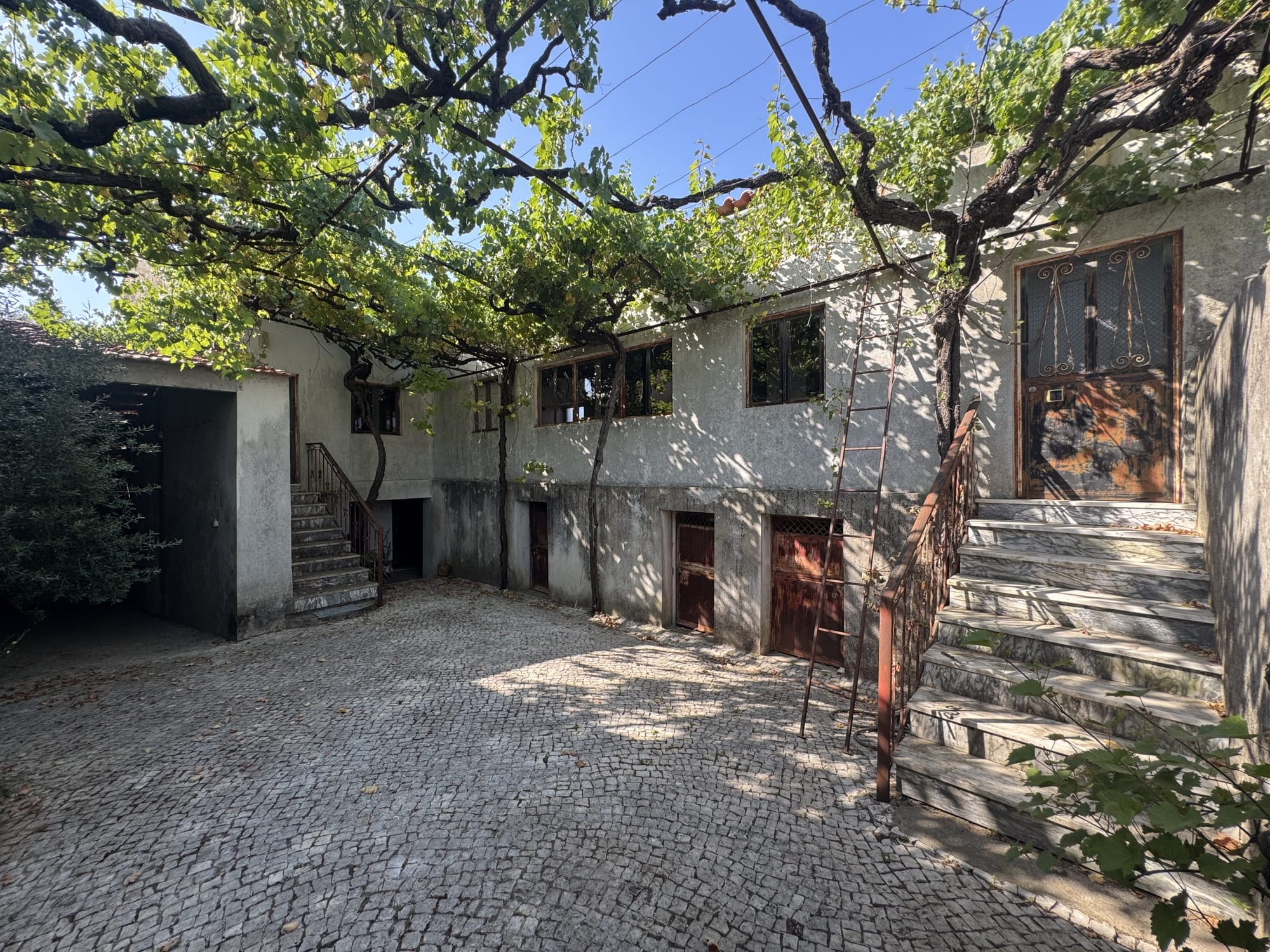
Featured: move-in ready with storage hall/ workshop space
Salaborda Nova, Central Portugal · €114,000 (~$123,120)
This is the splurge of the week, and it is the one you could actually move into. It is a two-part property in a small farming village in central Portugal, and the house is move-in ready, which in this newsletter means it has a roof that works, a functioning kitchen, and a functioning bathroom. The land is already working for you, with mature, producing fruit and nut trees, olives, and grapes. There is also a big storage hall, which could keep your produce or become a workshop or a studio. Honestly probably shouldn’t be posting it because we kind of want it for ourselves.
Japan
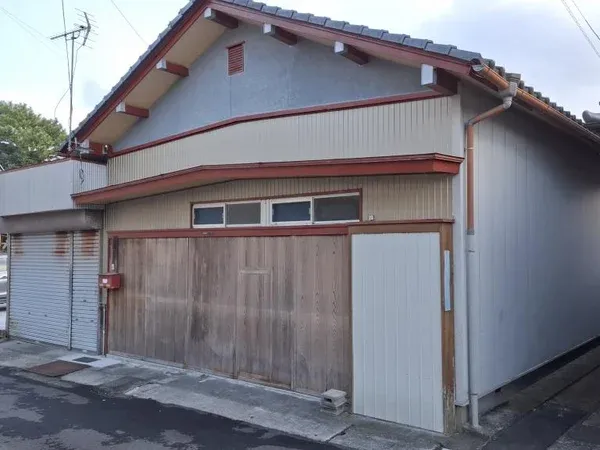
Featured: a little coastal house in Kochi that already did the scary part
Susaki, Kochi, Japan · ¥3,500,000 (~$23,000)
Okay, let's talk about this one. Susaki is a small city on the Pacific coast of Kochi, which is the least crowded corner of Japan's least crowded big island. The municipal government here will help pay you to renovate an empty house, because a house with a person in it is cheaper for the town than a house slowly falling down.
The house is 264 square meters of single-story wood on a 264-square-meter lot, three rooms plus a dining-kitchen, and you can move in immediately. It has a garden, a parking spot, and a train station two minutes away by car. In summer you can see the fireworks over Tosa Bay from the property.
Here is the part that makes this one special. Most houses at this price come with a giant invisible asterisk: they have not had their earthquake retrofit, and that retrofit is expensive. This one already did it. The seismic diagnosis and the renovation are both done. That matters a lot here, because the southern coast of Shikoku sits in the projected zone for the next big Nankai Trough quake, so the costly, non-negotiable job is already checked off.
The catch is the weather. Only amphibious types need apply. Kochi is the wettest prefecture in Japan, with heavy rains June through September and typhoon season July through October. The capital, Kochi city, is an hour east and very manageable, known for its Edo period castle, its historic Sunday street market, and its bonito (katsuo).
More from Portugal
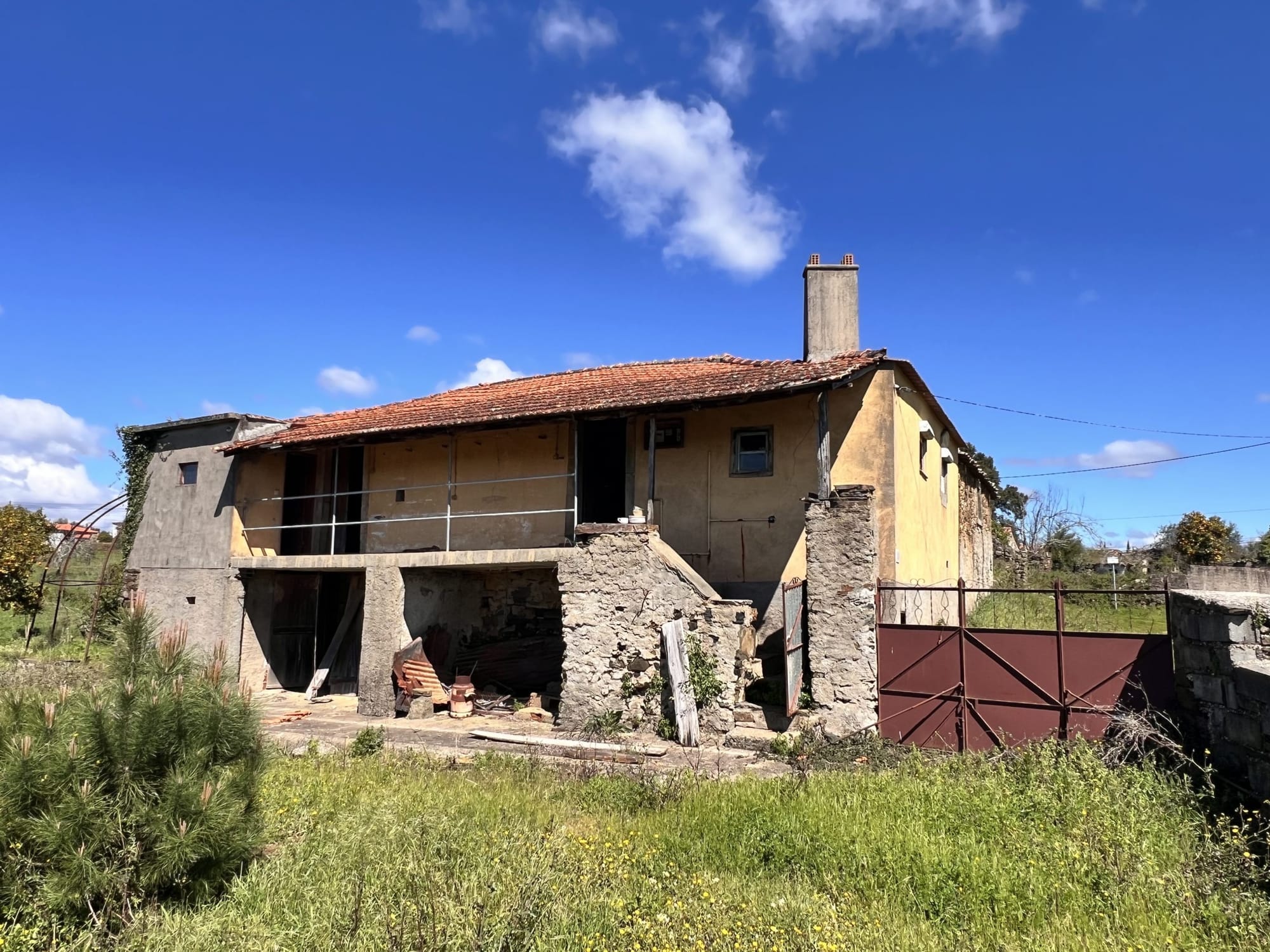
Quintal da Mó Grande, Central Portugal · €49,000 (~$52,920)
This one is a project with a capital ‘P’. It is about a two-and-a-half-hour drive north of Lisbon, and the listing comes with several registered buildings: a main house that needs renovation, plus two adjacent natural-stone structures that are officially classified as ruins. “Ruins” sounds bad, but in Portugal it is sort of good news, because you are allowed to rebuild within the original footprint, and the rural construction laws still make room for that. The land is flat and good for farming, there is a large old well, and orange, mandarin, and cherry trees. The work is no joke: the main house needs a roof, probably new floor joists, and new plumbing, and the two stone buildings need to be rebuilt from the footprint up. At forty-nine thousand euros, this is priced for someone who can vision what it could be and is ready to do (or pay for) heavy duty construction. Word is many folks around here stay cool by visiting the abundance of river beaches in central Portugal.
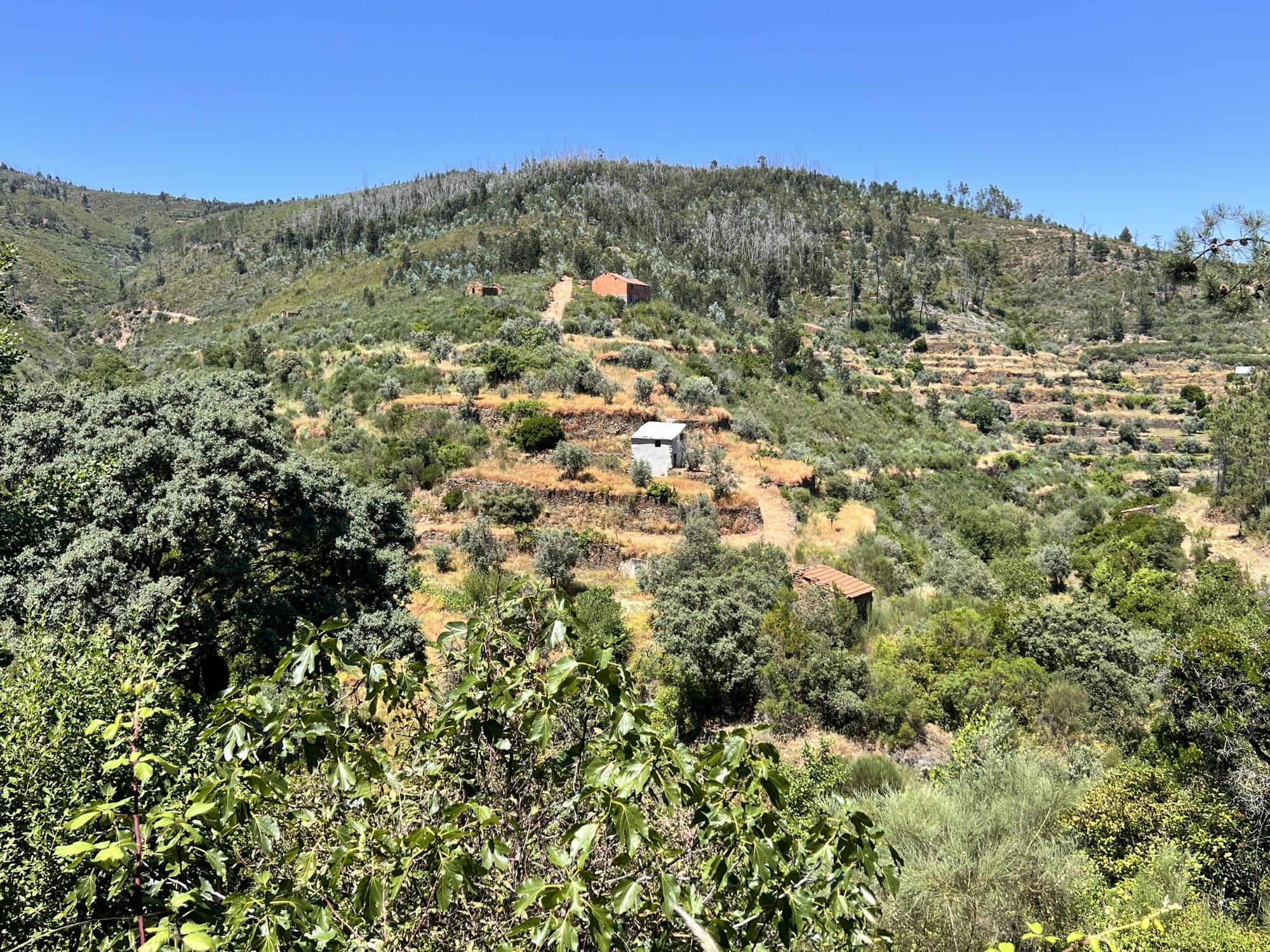
Alvito da Beira, Beira Baixa · €45,000 (~$48,600)
This another adventure pick for those with a vision for living off the land. It is a stone house in the Beira Baixa, with year-round water running through the valley below, which counts for a lot in interior Portugal, where the summers are long and dry. This is the type of project that could take over your life, for better or worse. (You could get a donkey).
More from Japan
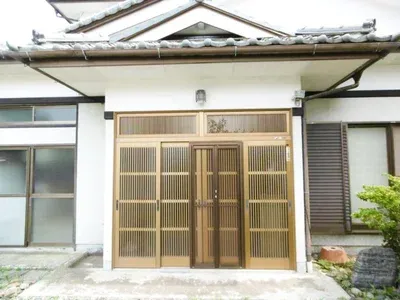
Iwate, Tohoku · ¥5,600,000 (~$37,333)
A traditional structure on 260 square meters up in Iwate, which is long-winter, deep-snow country. The prefecture stretches from the Pacific Ocean, inland, meaning parts of it are right on the coast while its inland regions are deeply mountainous. Spooky fun fact: this is Japanese folktale headquarters. The Tōno Monogatari, a well-known collection of stories about yōkai (spirits), dragons, and shapeshifting foxes, originated here. The price of this one lets you know either needs serious interior work or sits a long way from services, and our money is on "both." This is wooden construction, probably post-and-beam timber. Live out your own Studio Ghibli fantasy in Iwate?
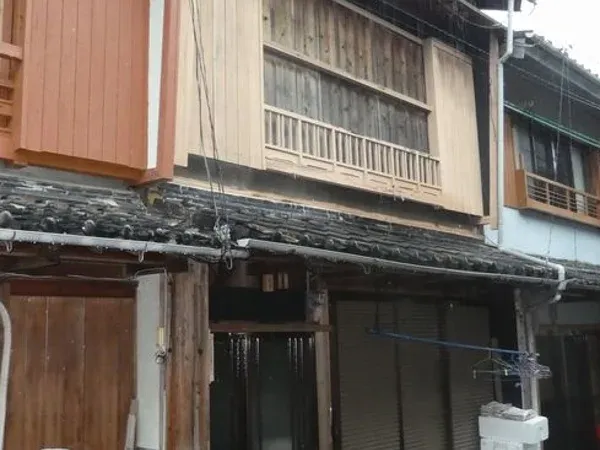
Kihoku, Mie · ¥800,000 (~$5,333)
Yes, that price is real, and yes, this one is the adventure option. The house is wooden, built in 1959, and the listing's amenities make you feel like you're in a Minecraft world: electricity is connected (check), the gas is bottled propane (ok), the sewage is "manual collection" (what?!)– but the water supply is apparently in working order (yay). Kihoku sits in Mie Prefecture near the Kumano Sea, surrounded by forests, clear rivers, very good seafood, and the hiking trails of the Kii Mountains. The area has some of the oldest shrines in Japan. This one is not for the faint of heart, but it costs eight hundred thousand yen, around 5k; that's one season of youth club soccer tuition in Los Angeles.
The Practical Details
A few articles from our research this week, in case you want to keep going.
Italy, Spain, Ireland and Greece all have 2026 programs that will pay you to move to the countryside. Portugal's program is called Emprego Interior MAIS. You move to one of the rural interior regions the government is trying to repopulate, you live or work or open a business there, and the country sends you up to €6,000 for your trouble. Those regions, conveniently, are exactly where the houses in this issue actually are. The Alvito da Beira place costs €45,000. The grant would knock about a seventh off that. This article, via Yahoo Finance, cover basic eligibility requirements and links if you want to dig further.
Portugal has four main visa pathways for non-EU folks. The D7 is the retiree pick, for people with passive income. The D8 is for digital nomads with a remote job. The D2 is for entrepreneurs and the self-employed. The Golden Visa is the path for people willing to drop €500,000 or more into a qualifying Portuguese investment. Wise's guide to moving to Portugal is for an international audience and includes info about healthcare, taxes, renting vs. buying, and pros and cons of different cities.
The Lifestyle Section
What a week looks like there
In Susaki you have a train station two minutes away, the Pacific close enough for fresh, fresh seafood, and Kochi city an hour east when you feel the urge to visit castle, a Sunday street market, and partake of the regional obsession with bonito. The trade-off is rain, and there is a lot of it. Pack accordingly: poncho, rain boots, vitamin D supplements.
In central Portugal, you're looking at long hot dry summers that will likely compel you to explore the river beaches of the region. With the Salaborda Nova place, breakfast is whatever the fruit and nut trees are doing that month, and the nearest city is far enough that you would need to schedule that trek. It is a quiet life. The question is: Would you thrive there or absolutely lose your mind?
What we're cooking
Two things we want to make this week. From Kochi, the Shun Gate write-up on the prefecture's local cooking sent us down a list that includes Japanese knotweed stir fry, vinegared ryukyu, garlic leaf nuta, lightly roasted bonito, and inakazushi. We had heard of exactly one of those. From Portugal, we want the feijoada à transmontana, the slow bean stew from the rural north, via DelishGlobe.
What we're reading
Here are four things from our tabs this week.
- A village in Sardinia running three repopulation experiments at once, via inItaly. Ollolai is offering €1 houses to renovators, €1-a-month rentals to remote workers, and reduced rent plus family support to anyone who commits to staying. It is a good look at how much scaffolding a town has to build to get people to actually come home.
- Seven European countries are competing for your remote job, with tax breaks layered on, via Travel and Tour World. Spain just joined a club that already included Portugal, Croatia, Estonia, Malta, Greece, and Italy, each offering some version of a digital nomad visa. The smaller countries on that list, like Estonia and Malta, are going to be the thirstiest of the bunch.
- What if the empty house became a studio?, via MONO JAPAN Foundation. AKIYA AIR places artists and researchers in vacant houses in rural Shimane for about three months. It is a residency, not a way to buy in, but it is a low-stakes way to test whether you could stand the quiet. The open call closes June 5.
- Nine million empty houses, and what they actually mean, via Seoul Economic Daily. Japan's akiya count hit roughly nine million in 2025, double the 1993 number. The piece argues these are a symptom rather than a real estate opportunity, and that a one-yen house does not do much once the schools, clinics, and trains are gone.
Live from our group chat
This is the part where we tell you what the rabbit hole looked like for us this week.
Malia: I sent Wally the Mie house at 9pm with no message attached, just the number, eight hundred thousand yen. He replied " the sewage is 'manual collection,'" and we both shut it down and went to bed. Maybe it's a little gross, but we have not stopped thinking about it. Your therapist will say not to fall in love with potential, but sometimes it's hard to keep a clear head.
Wally: I spent an embarrassing amount of Tuesday learning what a Nankai Trough megaquake is, which is how the Kochi house ended up as our featured property. Knowing the seismic retrofit was already done felt like waking up one morning to find that a truck fairy had already taken Suzy [1990 Trooper] down to Mexico for her own much needed paint job and retrofit!.
Both of us, to our children, several times this week: we are not moving to Japan. We are probably not moving to Portugal... We are keeping the tabs open.
That is issue one. Thanks for reading.
Until next week, Wally & Malia
Remnant is a weekly newsletter about distressed and beautiful houses around the world. We are not real estate agents. We just got a little obsessed and started digging. What will you do with what we find?